- Licensed CA Contractor·
- ADA Compliant Installs·
- Serving All of Southern California·
- Free Estimates·
- Licensed, Bonded & Insured
Rubber Surfacing for Parks and Recreation Departments
Planning, procurement and phasing for tot lots, splash pads, trails and accessible routes across a park system.
WE DESIGN. WE INSTALL. WE SERVICE.
INSTALLATION SERVICES PROVIDED.
From playgrounds to parking structures — find the right solution for your project.
Ready to get started?
Quick answer
Turbo Surfacing installs poured in place rubber in parks for tot lots, splash pads, trails and accessible routes. We help park departments plan phases, document scopes for public bids and maintain surfaces over time. We are licensed, bonded and insured and respond to estimate requests within 24 hours.
Key takeaways
- Start with a surface inventory that ranks sites by risk and use.
- Poured rubber suits tot lots, splash pads, accessible routes and plazas.
- Accessible routes matter as much as the surface under equipment.
- Public bids follow prevailing wage rules and require license and insurance documents.
- Phase projects across sites and years with consistent scopes and details.
A park system is a portfolio. A department may manage dozens of play areas, a few splash pads, miles of trail and a long list of surfaces that are aging at different rates. Budgets are limited, public bids are required and every decision is visible to the community.
This page is written for park and recreation staff and for the consultants who work with them. It covers how to inventory surfaces, which park areas suit poured rubber, how procurement works, how to phase projects across years and how to keep surfaces in service once they are installed.
Start with a surface inventory
Before you plan a project, list what you have. For each play area, splash pad, trail and plaza, record the age of the surface, the equipment on it, its condition and how heavily it is used. Add photos and a note about drainage and shade. A simple inventory lets you rank sites by risk, usage and cost, and it makes the case for funding.
We are glad to review a site list with you and to walk a few representative parks. A short field visit usually reveals patterns, such as which sites have drainage problems and which have worn edges, that help you plan across the system.
Park areas that suit poured rubber
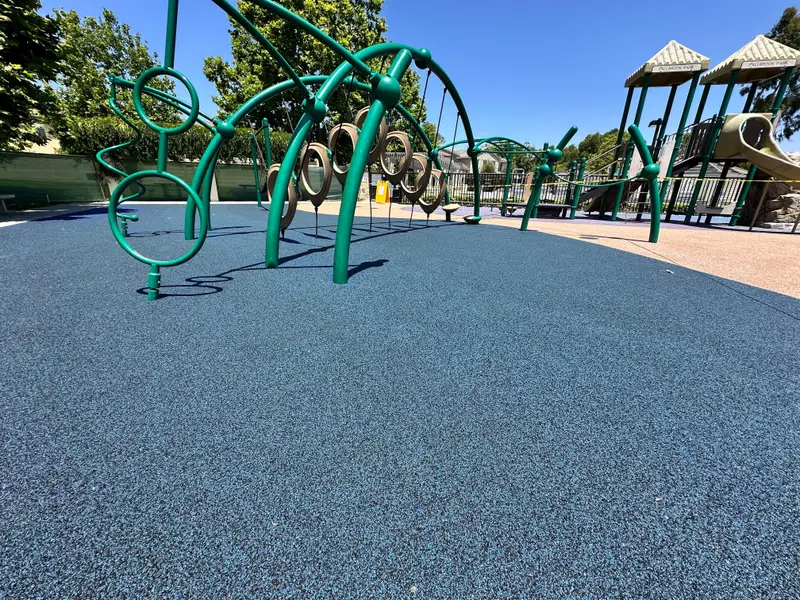
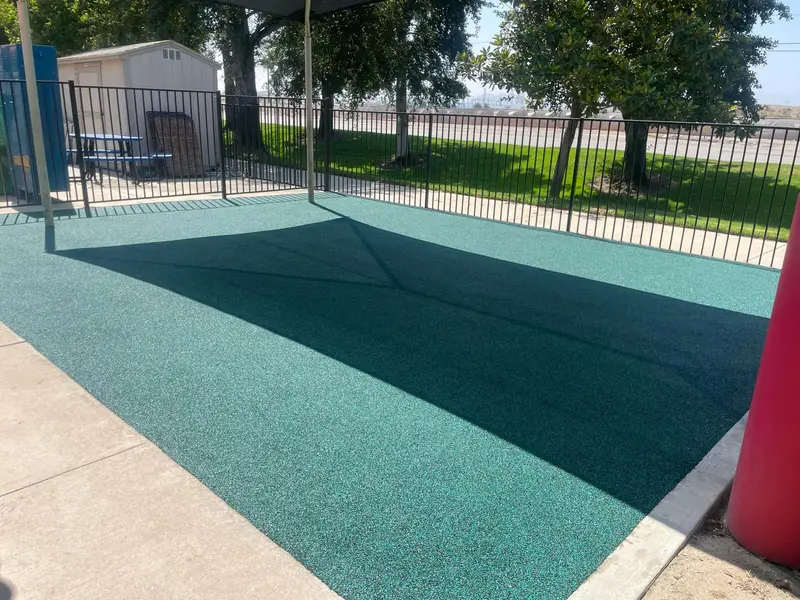
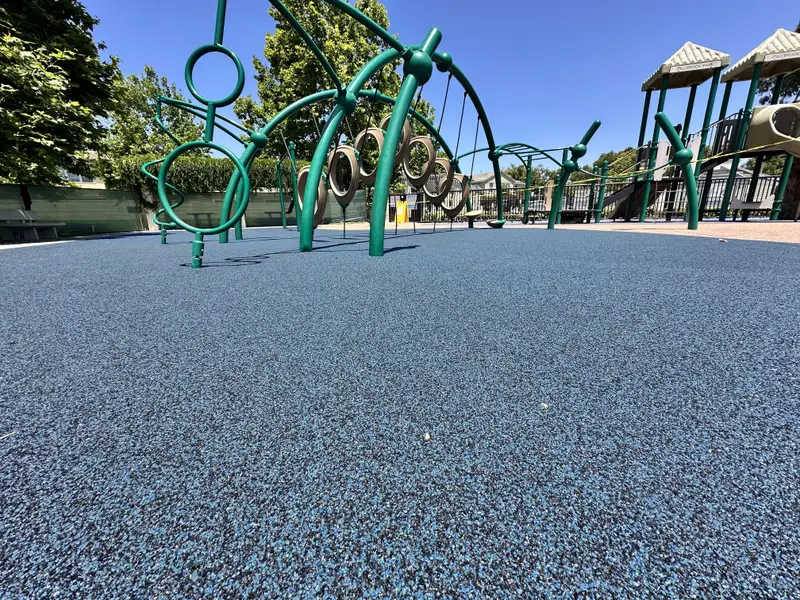
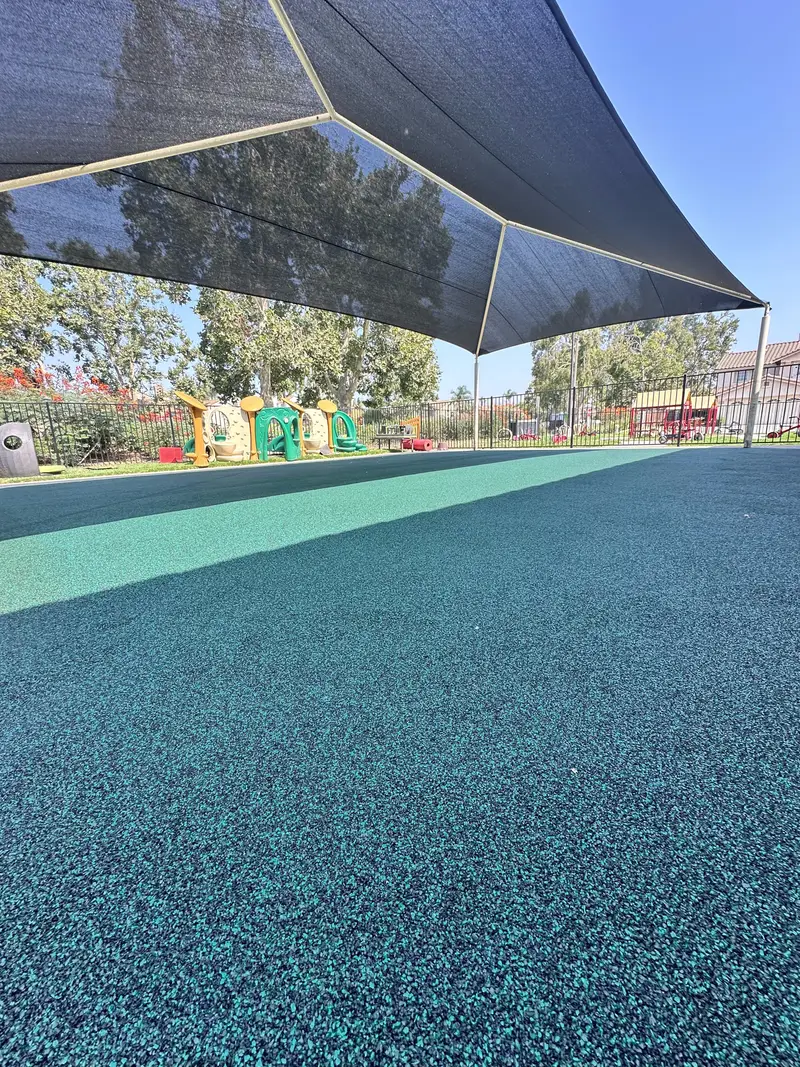
Poured rubber suits tot lots and play areas, splash pads and spray grounds, accessible routes to play areas, short trail segments, fitness stations and plaza areas where a soft, seamless surface is useful. It is less suited to long, rugged trails where gravel or decomposed granite may be more practical, and to areas that take heavy vehicles.
For play areas, thickness is specified from equipment fall height, following ASTM F1292. For splash pads, drainage and slip resistance drive the design. We look at each site and tell you which surface suits it.
Accessible routes to the play area
A play area is only accessible if people can reach it. Park departments often find that the surface under equipment is fine but the path from the parking lot or sidewalk is not. A firm, level route to the play area, with accessible entries and transitions, matters as much as the surface itself.
We review slopes, edges and thresholds and note what we recommend in the written scope. If your department has an accessibility transition plan or a consultant, we are glad to coordinate.
Procurement and public bidding
Public park projects follow public contracting rules. Publicly funded work generally follows California prevailing wage rules, with contractor registration and payroll reporting. Agencies often require proof of license, insurance and references with a bid. We are licensed, bonded and insured, and we tell you early what documentation we can provide.
Send the bid package or requirements with your request. A clear written scope, with area, thickness, colors, base work, schedule and any alternates, helps staff compare bids on equal terms and makes approval easier.
Phasing across sites and years
Few departments can replace every surface at once. A phased program works best when it is planned from the start: sites ranked by risk, scopes written to a consistent standard and colors and details selected so that different phases look like part of one system. Packaging several small sites into one bid can reduce mobilization costs compared with many separate projects.
Plan for expansion too. If a play structure is going to be replaced with a taller one, the surface under it may need to change. Tell us what is planned, and we will help you coordinate.
Wear, vandalism and community use
Parks take heavy use and occasional abuse. Rubber wears at swing and slide exits, at entries and where people congregate. Cigarette burns, graffiti and cuts happen. Small damage can often be repaired locally if it is reported promptly, and a quick repair prevents it from spreading.
We discuss common wear points at the site walk and recommend details, such as edge treatments and color choices, that hide wear and are easier to maintain. A good maintenance plan, with inspection, small repairs and periodic cleaning, extends surface life across a whole system.
Community input and design
Park surfaces are public, and residents notice them. Many departments gather input before a major replacement, through surveys, public meetings or school and neighborhood groups. Colors, themes and designs can reflect the neighborhood or the park, such as local colors, nature themes or a simple pattern that helps children find their way around.
We provide samples, color options and design drawings for community review, and we note what each choice means for cost and maintenance. If your department has a design standard for park furnishings, we are glad to match it.
Maintenance programs
Rubber needs sweeping, rinsing and regular inspection. Create a simple routine for crews: debris removal, rinsing, a visual inspection of edges and transitions, and a log of what was found. Report lifting edges, loose granules and hardened spots early.
Warranty terms vary by product and system and are provided in writing with each estimate. We explain what care keeps coverage in place and provide care instructions you can give to crews.
Next steps
Send photos and rough dimensions through the free estimate form and we respond within 24 hours. Site walks are available the next day or later, depending on availability, and you receive a written scope after the visit. Related pages: cities, parks and public works, playgrounds and rubber splash pads.
What to know before you start
Mark where seasonal recreation equipment will be stored while the rubber is closed. Temporary stacks of benches or goals should not become an unplanned load on a newly finished area.
Frequently Asked Questions
Sources
- California Department of Industrial Relations, public works enforcement
- U.S. Access Board, ADA accessibility standards
- 22 CCR section 101238.2, Outdoor Activity Space
Last reviewed:
By Turbo Surfacing Solutions team · Planning updated:
Explore More Poured-In-Place Rubber
Top applications, cities we install in, pricing, and the latest poured-in-place rubber insights — all curated from this hub.
Most-Requested Installs
- PIP Rubber InstallationProfessional Installation
- PIP Installation ProcessOur Process
- PIP Rubber MaintenanceMaintenance Guide
- Surfacing ApplicationsApplications
Ready to Get Started with Parks & Recreation Surfacing?
Get a free, no-obligation estimate for your project. Our team responds within 24 hours.
Request Parks & Rec Quote