- Licensed CA Contractor·
- ADA Compliant Installs·
- Serving All of Southern California·
- Free Estimates·
- Licensed, Bonded & Insured
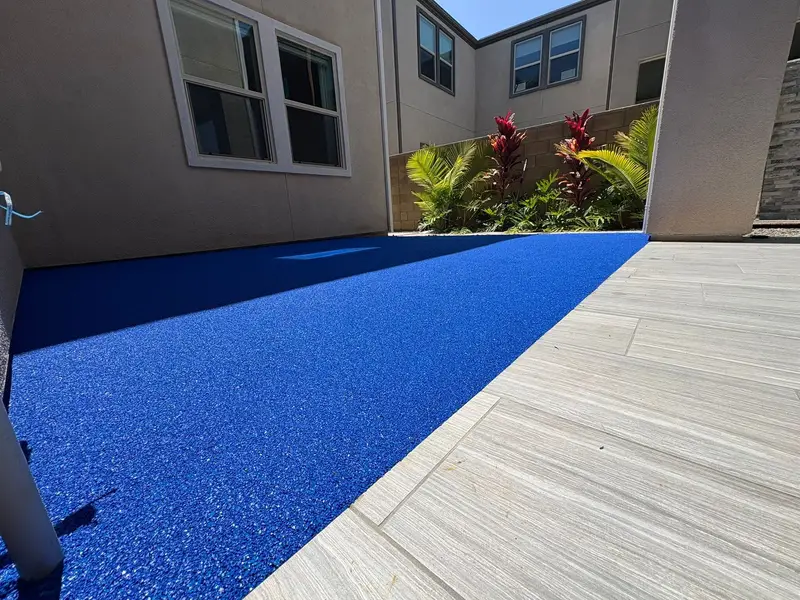
Poured-in-Place Rubber Trails and Multi-Use Paths
Soft, durable surfaces for walking, jogging and biking paths, with drainage and edge details built for outdoor use.
Quick answer
A poured-in-place rubber trail is a continuous, cushioned path laid over a graded, compacted base with drainage and defined edges. It is easier on joints than concrete and holds up to walkers, joggers, strollers and light bikes. Turbo Surfacing is licensed, bonded and insured, and builds trails for parks, campuses and communities.
Key takeaways
- Rubber is softer than concrete.
- Drainage and edges are planned first.
- Width fits the mix of users.
- Repairs are local and simple.
Trails invite people outside, but surfaces matter. Dirt turns to mud, decomposed granite washes out and concrete is hard on joints. Rubber gives a comfortable alternative that works year round.
This page explains how rubber trails are laid out and built, how drainage and edges are handled and what upkeep looks like.
Why rubber on a trail
Rubber is softer than concrete and more stable than loose fill. It drains well when sloped, resists erosion and gives joggers, walkers and strollers a consistent surface. It stays usable in wet weather, which keeps trails open longer.
Color can mark loops, distances and zones.
Layout and planning
Trails follow the landscape and the needs of users. We map the route, grade, width and connections to trailheads, parking and restrooms. Gentle curves and consistent slopes make trails comfortable.
We stake the route and check it with owners before material is ordered.
Base preparation
Trail bases are graded, compacted and finished to a smooth plane. Soft spots are corrected, and roots or rocks are removed where possible. Geotextile or aggregate layers help stabilize difficult soils.
A solid base keeps the surface from cracking or shifting.
Width, lanes and passing
Width depends on use. A quiet footpath can be narrow, while a multi-use trail needs space for passing. Painted or inlaid lines can separate walkers from bikes, and dotted lines can mark centers.
We plan intersections and crossings with clear colors and signs.
Slopes, grades and runoff
Trails on hillsides need careful drainage. Cross slopes shed water, and swales, culverts and drains carry it away. Steep sections may use texture or steps for traction. Water must not run down the surface.
We coordinate with civil engineers and landscape architects on grading.
Edges and borders
Edges hold the rubber and guide users. Concrete curbs, steel edging and compacted shoulders are common. In natural areas, soft edges may be used with plantings to blend the trail into the landscape.
Strong edges protect against erosion and wear.
Bikes, scooters and strollers
Rubber suits light bikes, scooters and strollers on well built trails. Heavy vehicles and maintenance trucks need a different build-up. Speed limits and signs keep mixed use safe.
Tell us which vehicles will use the trail, so we can size the base and thickness.
Trees, wildlife and environmental concerns
Many trails pass trees and habitat. We plan routes to protect roots, limit disturbance and avoid sensitive areas. Rubber can be laid over a raised, leveled base to bridge roots.
Environmental reviews are handled by the owner or consultants, and we supply material information as needed.
Accessibility
Trails that serve everyone have gentle slopes, firm surfaces and rest areas. Rubber is stable for wheelchairs, walkers and strollers, and edges can be marked for visibility. Benches, shade and water stations improve comfort.
We review plans with accessibility consultants.
Color and wayfinding
Color helps users find their way. Different colors can mark distance, direction or difficulty. Earth tones blend with the landscape, while bright accents improve visibility at crossings.
Mile markers and signs can be inlaid in the surface.
Cleaning and maintenance
Blow or sweep leaves and debris, rinse as needed and clear drains. Trim plants that crowd edges, and keep an eye on roots pushing up from below. Inspect after storms for erosion and damage.
A seasonal routine keeps trails in good shape.
Repairs and resurfacing
Cracks, washouts and worn patches can be patched. A new top layer refreshes color and traction when the surface ages. Records of materials make repairs match.
Quick repairs prevent small issues from growing.
Sun, heat and shade
Dark rubber warms in sun, so trails with long exposed stretches benefit from lighter colors or shade trees. Rest areas under trees or shade structures help hot-weather users.
We discuss exposure when selecting colors.
Schedule and phasing
Trails can be built in sections. We start at one end, move along the route and keep the finished portions closed until cured. Weather windows and public access are planned with the owner.
Clear signs and barriers keep people safe.
Park systems and regional trails
Parks departments manage trails for walking, running and biking. Rubber can serve short connectors, loops around playgrounds and fitness courses. It is especially helpful on segments that wash out or flood.
We work with staff to prioritize sections, starting with the busiest or most damaged stretch.
Campus and corporate trails
Universities and employers build trails for wellness and recreation. Rubber gives a quiet surface between buildings, with mile markers and exercise stations. Lighting and signs complete the system.
We coordinate with landscape architects so the trail fits the campus plan.
Fitness courses and training stations
Fitness trails often include pull-up bars, balance beams and stretching pads. Rubber under stations protects joints and handles repeated impact. Pads can be inlaid in contrasting colors so users see them from the path.
Signs with exercise instructions can be mounted on posts beside the pads.
Lighting and safety
Trails used early or late need lighting, emergency call points and clear sight lines. We coordinate conduit, pole bases and trenches with electricians before the surface is placed. Reflective markings improve night visibility.
Keeping vegetation trimmed along the edges also helps users feel safe.
Weather windows and cure time
Trails stretch across long distances, so weather is a bigger factor. We plan work in sections, check forecasts daily and keep cured and uncured portions separate. Rain delays are communicated promptly.
A simple map shows owners which segments are open at any time.
Dogs, wildlife and trail rules
Trails attract dogs and wildlife. Rubber handles normal use, and waste stations keep paths clean. Owners should post rules for leashes and cleanup. In natural areas, fencing or signs can keep animals off sensitive sections.
We help owners plan signs and stations along the route.
Signs, markers and amenities
Trail users appreciate benches, water fountains, bike racks and maps. We coordinate footings and conduit with the amenity supplier, and we leave clean cutouts for posts. Distance markers and directional arrows are inlaid in the surface for lasting visibility.
Planning these details early avoids damage to finished rubber.
Funding and phasing
Trail projects often rely on grants, bonds and donations that arrive over time. Phased construction lets owners complete a usable segment now and extend it later. Written scopes and drawings support applications and board reports.
We help owners structure phases so each segment stands on its own.
Starting a trail project
Sketch the route on an aerial map, note slopes, trees and crossings, and list the users you expect. We will visit the site, test the soil and recommend a build-up. You receive a scope with options for width, color and phasing, plus a schedule that respects weather and park hours.
Getting an estimate
Our poured-in-place rubber cost guide explains what moves the price. Send photos and rough dimensions through the free estimate form and we respond within 24 hours. Site walks are available the next day or later, depending on availability, and you receive a written scope after the visit.
What to know before you start
Choose repeat inspection points at trail entrances and changes of direction. Those references make it easier to locate a damaged rubber section when a maintenance team reports it without a street address.
Frequently Asked Questions
Sources
Last reviewed:
By Turbo Surfacing Solutions team · Planning updated:
KEEP EXPLORING.
Other Southern California surfacing projects we specialize in — handpicked because they share the same materials, standards, or installation crew as this page.
Related Poured-In-Place Rubber & Resources
Sibling services, cities where we install this, and blog posts that go deeper.
More Poured-In-Place Rubber
- PIP Rubber InstallationProfessional Installation
- PIP Installation ProcessOur Process
- PIP Rubber MaintenanceMaintenance Guide
Cities We Serve
- Poured-In-Place Rubber in Chula Vista
- Poured-In-Place Rubber in San Diego
- Poured-In-Place Rubber in Oceanside
Get a Quote for PIP Rubber Trails
Get a free, no-obligation estimate for your project. Our team responds within 24 hours.
Request Trail Quote