- Licensed CA Contractor·
- ADA Compliant Installs·
- Serving All of Southern California·
- Free Estimates·
- Licensed, Bonded & Insured
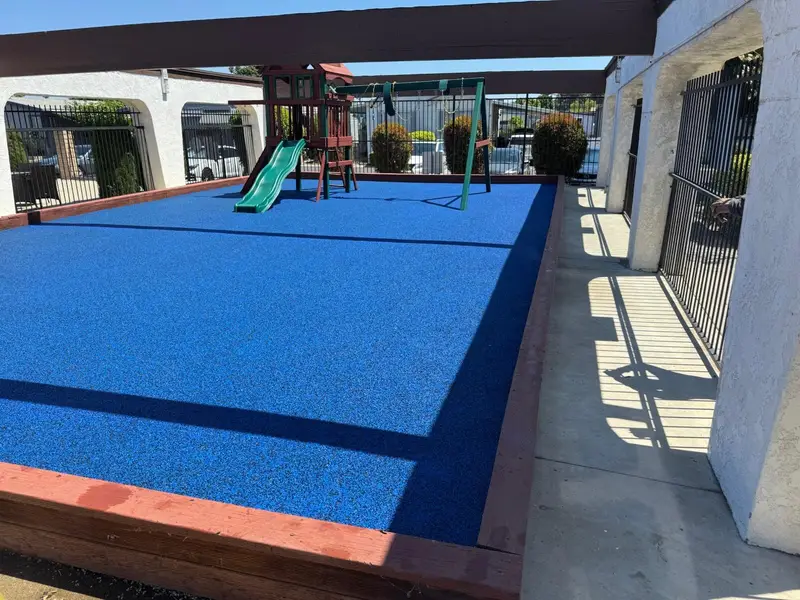
Rubber Surfacing for Splash Pads and Water Play Areas
Slip-resistant, colorful, fast-draining surfaces for parks, communities, schools and backyard water play.
Quick answer
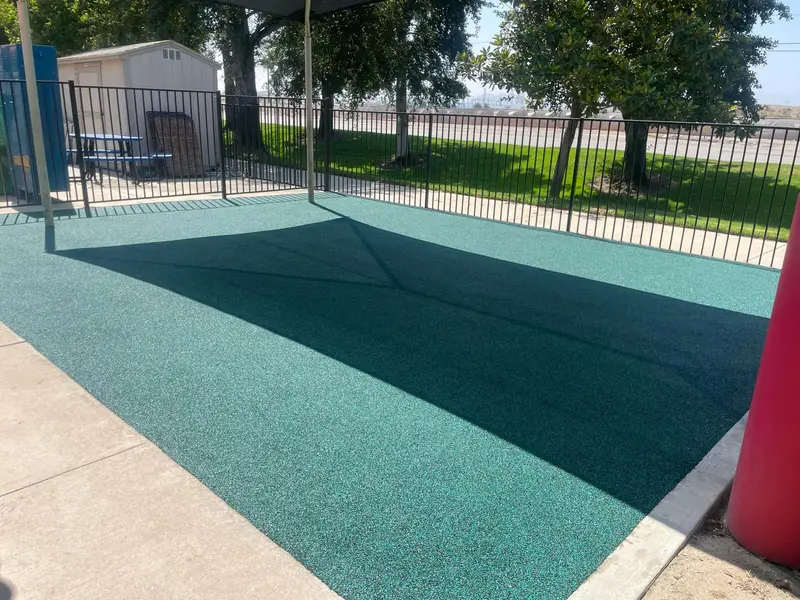
Rubber splash pad surfacing is a textured, slip-resistant layer that sheds water toward drains and stays comfortable underfoot. It is installed over a sloped, sound base with careful edge and drain details. Turbo Surfacing is licensed, bonded and insured, and coordinates with splash pad designers, plumbers and pool contractors.
Key takeaways
- Slopes and drains keep splash pads dry.
- Texture provides traction.
- Coordinate fixtures before pouring.
- Regular rinsing protects color.
Splash pads are some of the busiest outdoor features in a park, and they are hard on surfaces. Constant water, sunscreen, chlorine, heat and bare feet demand a floor that is soft, grippy and quick to dry.
This page explains how rubber is designed for splash pads, what drainage details matter and how to keep the area clean.
Why rubber suits water play
Concrete is hard and slick when wet, and tile can crack in the sun. Rubber gives bare feet traction and a bit of cushion, and it drains quickly when sloped. Colors and patterns make the space playful, and the seamless surface avoids places where dirt collects.
Cities, schools and neighborhoods all choose rubber for this reason.
Slopes, drains and water flow
A splash pad should never hold water. We design slopes of the right pitch toward drain inlets, trench drains or landscape. Drain covers are set flush, and edges are sealed so water cannot undercut the rubber.
Wet testing before opening confirms that water leaves the surface as planned.
Base requirements
Rubber needs a sound, level base with a proper slope. Concrete slabs are common, and they must be free of heaving, major cracks and standing water. We repair, prime and moisture test the slab before pouring.
If the base is not suitable, we discuss replacing or overlaying it.
Texture and traction
Texture makes the difference between a safe floor and a slippery one. Wearing courses can be finished with slightly different textures, and the right choice depends on the age of users and the features nearby. We show test patches so you can walk on them with wet feet.
Regular cleaning keeps the texture consistent.
Colors, patterns and themes
Splash pads often follow a theme such as ocean, jungle or space. Color blends and inlays create waves, footprints, animals and sun shapes. Bright colors attract families, while lighter blends reduce heat.
We coordinate with the designers of the water features to match their colors.
Heat and comfort
Dark surfaces warm in direct sun, but water keeps splash pads cooler. Lighter colors and shade structures help in dry areas. A rinse before the pad opens cools the surface for early visitors.
We suggest color placement based on shade and sun at different times of day.
Chemicals, minerals and cleaning
Splash pads may use treated water, and minerals in tap water leave spots. Rinse regularly and scrub algae or mineral deposits with a mild cleaner. Avoid harsh acids and solvents, which can harm the binder.
A maintenance plan keeps colors bright and traction reliable.
Fixtures, nozzles and plumbing
Spray features, pipes and drains need to be coordinated with the surface. We confirm sleeve locations, boxes and elevations with the plumber and equipment supplier before pouring. Cutouts are made cleanly and sealed.
Good coordination avoids leaks and uneven edges.
Accessible routes and inclusion
Splash pads should welcome every child. Smooth rubber supports wheelchairs, walkers and strollers, and gentle slopes lead to the entrance. Seating and shade nearby help caregivers.
Accessible surfaces can be evaluated with ASTM F1951 when a project calls for it.
HOAs, schools and private pads
Homeowner associations and schools often add small splash pads to existing play areas. We design for the available space and budget, and we match colors to existing equipment. Backyard pads are also possible, with timers and drains that suit the property.
We provide drawings and samples for approval.
Seasonal shutdown and winter care
Splash pads often close in cooler months. Before shutdown, we recommend a deep clean, a full inspection and any repair work. During the off-season, keep debris off and drains clear.
When the season opens again, rinse the surface and check fixtures.
Repairs and refreshing
Water, sun and traffic wear the surface. Small chips and cracks can be filled, and larger worn areas can be replaced. A new wearing layer can refresh a tired splash pad without a full rebuild.
Early repairs prevent water from getting under the rubber.
Schedule and weather
Splash pad rubber is placed in dry weather and left to cure before the water is turned on. We coordinate with plumbers, inspectors and city staff so the opening day is realistic. Delays can happen when slabs or fixtures are late.
A written schedule keeps everyone on the same page.
Safety checks before opening
Before opening, we walk the site with the owner to look at traction, slopes, drains, edges and signs. Water is run to test flow, and any puddles are marked for correction. Staff are trained on cleaning and inspection routines.
Daily checks help catch loose covers, lifted edges and debris.
Designing the pad layout
Spray features, tunnels and buckets need room around them, and children move in unpredictable paths. We help designers plan clear zones, benches and shade, and we draw slopes and drains over the equipment plan. A good layout keeps traffic flowing and prevents crowding at popular features.
Quiet zones for toddlers and caregivers can be separated with color, borders or planting.
Surrounding decks and landscape
The area around the pad matters as much as the pad itself. Dry zones for towels and shoes, shaded seating, drinking fountains and lawns all shape the visitor experience. We design transitions that keep grass, soil and mulch off the rubber.
Where landscape slopes toward the pad, we add drains or swales to catch runoff before it floods the surface.
Water reuse and recirculation
Some splash pads recirculate water through filters, while others drain to the sewer or landscape. Each approach has different needs for slope, drains and cleaning. We coordinate with the plumber to match the surface to the system.
Knowing the water source and treatment method early prevents surprises with stains and cleaning.
The first season
New splash pads draw crowds. Staff should walk the pad each morning, test the surface for slipperiness and clear debris. Small fixes in the first weeks, such as a drain cover adjustment or an edge touch-up, keep problems from growing.
We check in after opening to hear what staff and visitors notice.
Little ones and wet-weather play
Toddlers crawl and sit on the surface, so cleanliness matters. Daily rinsing, removal of debris and checks for hot spots keep the area comfortable. Soft rubber at low features reduces bumps, and shallow spray zones suit small bodies.
Lighting, shade and evening use
Some splash pads stay open into the evening. Lighting should not create glare on wet rubber, and shade structures should be placed so that shadows do not hide edges. We coordinate pole and footing locations with the lighting designer before pouring.
Seating under shade invites caregivers to stay and watch.
Getting an estimate
Our poured-in-place rubber cost guide explains what moves the price. Send photos and rough dimensions through the free estimate form and we respond within 24 hours. Site walks are available the next day or later, depending on availability, and you receive a written scope after the visit.
What to know before you start
Locate removable spray fittings on the surface plan and ask how they will be serviced without cutting an improvised opening in the rubber. Keep the fitting locations in the handover record.
Frequently Asked Questions
Sources
Last reviewed:
By Turbo Surfacing Solutions team · Planning updated:
KEEP EXPLORING.
Other Southern California surfacing projects we specialize in — handpicked because they share the same materials, standards, or installation crew as this page.
Related Poured-In-Place Rubber & Resources
Sibling services, cities where we install this, and blog posts that go deeper.
More Poured-In-Place Rubber
- PIP Rubber InstallationProfessional Installation
- PIP Installation ProcessOur Process
- PIP Rubber MaintenanceMaintenance Guide
Cities We Serve
- Poured-In-Place Rubber in Chula Vista
- Poured-In-Place Rubber in San Diego
- Poured-In-Place Rubber in Oceanside
Get a Quote for Splash Pad Rubber Surfacing San Diego
Get a free, no-obligation estimate for your project. Our team responds within 24 hours.
Request Splash Pad Quote