- Licensed CA Contractor·
- ADA Compliant Installs·
- Serving All of Southern California·
- Free Estimates·
- Licensed, Bonded & Insured
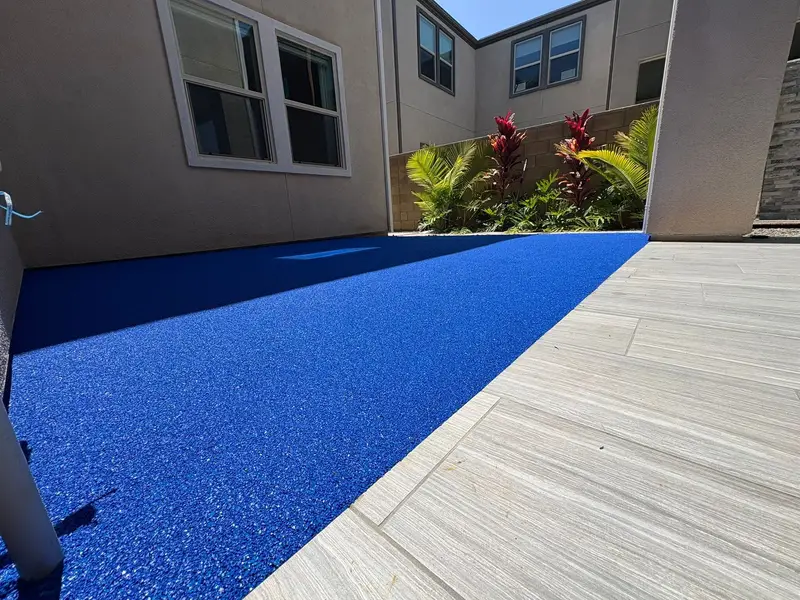
Poured-in-Place Rubber Sidewalks and Pedestrian Paths
Flexible, smooth walking surfaces that resist root damage and reduce trip hazards on public and private paths.
Quick answer
Poured-in-place rubber sidewalks are seamless, flexible walking surfaces installed over a prepared base, often used where tree roots lift concrete or where a softer path is wanted. They can be cut, patched and recolored as needed. Turbo Surfacing is licensed, bonded and insured, and works with cities, campuses, HOAs and property managers.
Key takeaways
- Rubber flexes where concrete cracks.
- Roots can stay in place.
- Edges are finished flush.
- Repairs are local and simple.
Tree roots lift slabs, cracks open and corners rise. Trip hazards on walkways lead to injuries and claims. Rubber offers another way to keep paths smooth and safe.
This page explains how rubber sidewalks are built, where they make sense and what owners should know about cost, upkeep and agency review.
Why consider rubber for a sidewalk
Concrete is rigid and breaks when roots or soil move. Rubber flexes with small movements, and a single layer can cover uneven areas without hard edges. It is softer underfoot and dries quickly, which suits busy paths near schools and parks.
It is not meant for every walkway, and we help you decide when it fits.
Tree roots and uneven slabs
Large trees are valuable, and cutting roots can harm them. Rubber paths can be built over a leveled base that bridges raised areas, so tree roots stay in place. Gentle ramps replace sharp lips, and the surface follows the shape of the ground.
Arborists often prefer this approach because it protects roots and keeps pedestrians safe.
Base and subgrade
Rubber needs a stable base. Aggregate is graded and compacted, or an existing slab is repaired and primed. Soft or wet areas are corrected before surfacing begins. A well drained base prevents heaving and movement.
We evaluate the site with a probe and a level before recommending a build-up.
Thickness and flexibility
Walking paths use thinner rubber than playgrounds, though they still need enough thickness for durability and flex. Areas near roots may use more material to bridge the surface. We explain the options and the reasons for each.
Thickness can vary along the path to match the ground.
Drainage and cross slopes
Water should leave the path quickly. Gentle cross slopes direct water to landscape or storm drains. Porous rubber is another option when water needs to pass through the surface, covered on its own page.
We show slopes and drains on the plan before work begins.
Edges, curbs and transitions
Paths meet curbs, driveways, lawns and existing sidewalks. We finish edges flush, so wheelchairs and strollers roll across. Where rubber meets concrete, a clean cut and a beveled edge create a smooth change.
Strong edges hold the surface in place during years of use.
Working with city and campus review
Public sidewalks are managed by cities, school districts and campuses. They may have approval steps, standard details and insurance requirements. We provide product data, samples and drawings to support those reviews.
Early conversations with the agency avoid wasted effort.
Accessibility and slopes
Paths must work for everyone. Slopes, landings and cross slopes are designed with the site's accessibility consultant. Rubber is stable and firm, so wheelchairs and walkers roll easily.
We coordinate with the project architect to confirm that the design meets agency expectations.
Colors and wayfinding
Color can mark pedestrian zones, crossings and bike lanes. Subtle earth tones blend with landscape, while brighter colors improve visibility. Inlays can mark directions, distances or names.
We provide samples and mockups for approval.
Heat and sun
Rubber warms in direct sun, but pedestrians are shoes-on and generally comfortable. Lighter colors reduce heat, and shade trees help. Paths used by dogs and barefoot children benefit from lighter blends.
We discuss orientation and tree cover during the site walk.
Cleaning and upkeep
Sweep or blow debris, rinse with water and remove gum and stains with mild methods. Keep vehicles off the path unless it was built for them. Inspect for cracks, loose edges and roots pushing up from below.
Small repairs are easy to patch, and colors can be matched.
Repairs and changes over time
If roots grow or soil moves, sections can be cut out and replaced without rebuilding the whole path. Utility work can be patched cleanly. Records of color and thickness make future repairs match.
Planning for change keeps maintenance simple.
Risk management and trip hazards
Owners and agencies want to reduce claims from trip and fall injuries. Documenting inspections and repairs shows care, and rubber lets crews fix lifted edges quickly. A smooth, flexible path is easier to maintain than a slab that keeps cracking.
Walking the path with your risk manager helps prioritize repairs.
Schedule and disruption
Paths can be built in sections, so people always have a route. Detours, signs and barriers are placed in advance, and work happens during dry weather. Rubber cures quickly enough for reopening in a short time.
We give property managers and agencies a written schedule.
Schools, campuses and shared paths
School districts and universities have thousands of footsteps each day, plus bikes, scooters and carts. Rubber paths near classrooms reduce noise and soften falls. Color can mark safe routes, drop-off zones and crossings.
Work is often scheduled for summer or holiday breaks so students return to finished paths.
HOAs and private streets
Homeowner associations manage sidewalks, entry paths and trails that tree roots damage. Rubber can replace dangerous slabs one section at a time, using reserve funds and phased plans. Documentation helps boards explain the work to owners.
We provide drawings, samples and clear scopes for board packets.
Retail centers and commercial properties
Shopping centers and offices want safe, attractive walkways. Rubber paths around landscaping, patios and building entrances can be colored to match the brand. Smooth surfaces reduce complaints and claims, and repairs are fast.
We schedule work at night or in sections so shops stay open.
Utilities, trenching and future work
Sidewalks are often cut for water, gas and fiber. Rubber can be patched cleanly after trenching, with colors blended and edges sealed. Keeping a map of the build-up helps utility crews restore the path properly.
Plan for access when new lines are expected.
Comparing rubber, concrete and asphalt
Concrete lasts a long time on stable ground and is the standard for many public sidewalks. Asphalt is quick to place but can crack and heave with roots. Rubber costs more per foot than either in many cases, though it solves root conflicts and reduces claims. We lay out the tradeoffs honestly.
Documentation and handoff
We deliver a plan showing path widths, thickness, base details and colors, plus a care sheet and contact information. Agencies can file these records with asset inventories, and property managers can share them with new staff.
Good records make future repairs fast and inexpensive.
Getting started with a path project
Photograph the trouble spots, note tree species and measure the length you want to replace. Send them with any agency standards, and we will schedule a walk. You receive a scope with options for thickness, color and phasing, plus samples to show decision makers.
Getting an estimate
Our poured-in-place rubber cost guide explains what moves the price. Send photos and rough dimensions through the free estimate form and we respond within 24 hours. Site walks are available the next day or later, depending on availability, and you receive a written scope after the visit.
What to know before you start
Record the covers of utility boxes separately from the rubber edge. Ask who must open each cover later so the finish is not inadvertently specified across a serviceable lid.
Frequently Asked Questions
Sources
Last reviewed:
By Turbo Surfacing Solutions team · Planning updated:
KEEP EXPLORING.
Other Southern California surfacing projects we specialize in — handpicked because they share the same materials, standards, or installation crew as this page.
Related Poured-In-Place Rubber & Resources
Sibling services, cities where we install this, and blog posts that go deeper.
More Poured-In-Place Rubber
- PIP Rubber InstallationProfessional Installation
- PIP Installation ProcessOur Process
- PIP Rubber MaintenanceMaintenance Guide
Cities We Serve
- Poured-In-Place Rubber in Chula Vista
- Poured-In-Place Rubber in San Diego
- Poured-In-Place Rubber in Oceanside
Get a Quote for PIP Rubber Sidewalks
Get a free, no-obligation estimate for your project. Our team responds within 24 hours.
Request Sidewalk Quote