- Licensed CA Contractor·
- ADA Compliant Installs·
- Serving All of Southern California·
- Free Estimates·
- Licensed, Bonded & Insured
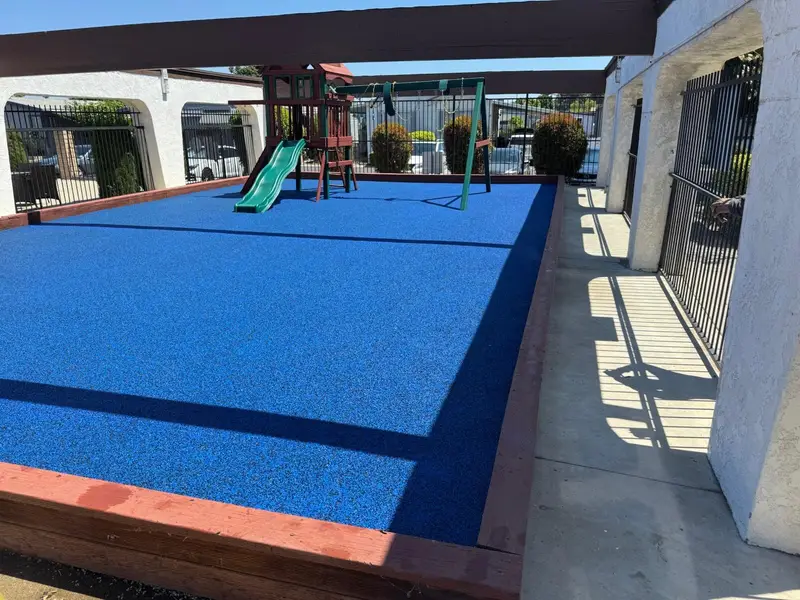
Multipurpose Rubber Surfacing
One seamless surface that handles play, walking, seating and events, with zones tuned to each use.
Quick answer
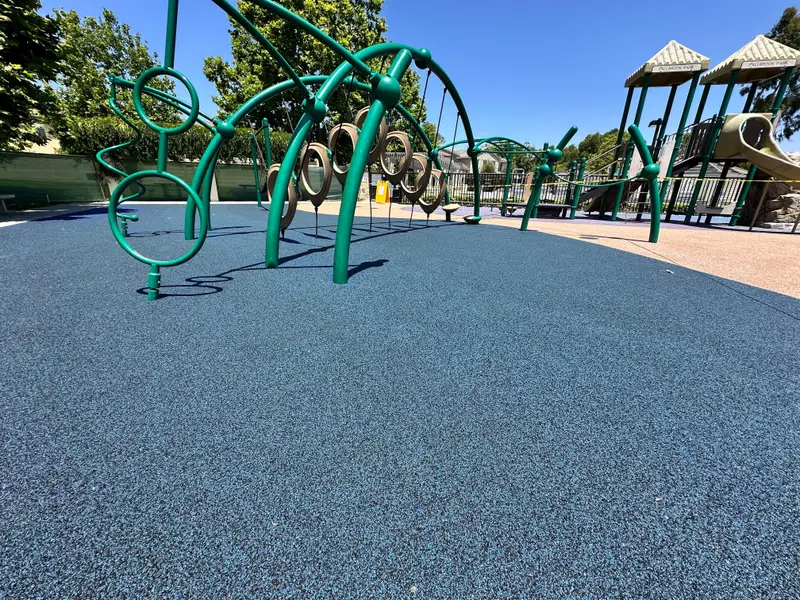
Multipurpose rubber surfacing uses one seamless poured-in-place system for areas that combine play, walking, seating and events. Zones differ in thickness, color and texture to suit each use. Turbo Surfacing is licensed, bonded and insured, and plans mixed-use courtyards, plazas and campuses so one pour looks planned and performs well.
Key takeaways
- Zones match thickness to use.
- Color shows where each use begins.
- Drainage is planned across zones.
- Phased builds can join cleanly.
Many outdoor spaces serve several jobs at once. A school courtyard holds a play structure, a lunch area and a path to class. A community plaza hosts markets, strollers and skateboard-age kids. One uniform surface rarely fits every use.
This page explains how a multipurpose rubber surface is zoned, what changes from zone to zone and how to plan it.
Zoning one surface
A multipurpose layout divides the area into zones. Play zones get a thick cushion, paths get a thinner firm layer and seating areas get a stable, easy-to-clean finish. Color and edge details tell people where each zone begins.
A zoning sketch is the first thing we draw.
Different thicknesses in the same pour
Thickness can change inside a single surface. Crews set edge forms and slopes so the transition is smooth and wheelchair accessible. Ramps replace steps, and the wearing course continues across the zones for a seamless look.
Good transitions keep the surface from looking patched together.
Color as wayfinding
Color separates uses without fences. A blue ring might mark a play area, a green path might lead to the entrance and a gray border might frame seating. Inlays can carry arrows, games, maps or names.
We test color combinations on site before the final pour.
Events, markets and gatherings
Plazas host farmers markets, concerts and festivals. Rubber handles tables, chairs and foot traffic, and it rinses clean after messy events. Heavy stage equipment and vehicles need planning, and we mark where stakes and loads can go.
An event guide helps staff protect the surface.
Play zones inside shared spaces
Play areas in shared spaces sit close to walking routes. We separate them with color, benches or planting, and we size thickness to the equipment's fall height. Sight lines let adults watch children from seating.
Equipment suppliers and our team agree on elevations before the pour.
Paths, crossings and access
Paths cross play zones and open areas. We keep them wide and flush, with gentle slopes and clear contrast at the edges. Wheelchairs, strollers and walkers should move across the surface without turning corners awkwardly.
Accessible routes are reviewed with the site's consultant.
Seating, tables and furniture
Benches and tables need stable footing. Rubber pads under legs prevent sinking, and anchor points are set before the pour. Movable furniture should have glides, and heavy items are spread over larger feet.
We coordinate furniture layouts with the owner's designer.
Drainage across zones
Water must leave every zone. We shape slopes to drains, landscape beds or swales and avoid low spots where zones meet. Porous rubber can be used in selected areas where runoff is a concern.
A drainage sketch accompanies every zoning plan.
Shade, sun and comfort
Mixed-use spaces need shade for seating and play. Trees, sails and pergolas make areas usable all day, and lighter colors reduce surface heat. Orientation matters, so we study sun paths before choosing placement.
Misters and fountains help on hot days.
Schools and campuses
School courtyards combine lunch tables, play structures and walkways. A multipurpose surface makes supervision easier and cleanup quicker. Summer breaks are the usual installation window.
Staff and parent committees can review the plan at a meeting.
Community plazas and parks
Community spaces serve toddlers, teenagers and seniors at once. Zoned rubber provides a safe play area, a gentle path and quiet seating without separate surfaces. Local colors and artwork can be built in.
Public review is easier with clear drawings and mockups.
Care and repairs
Sweep, blow and rinse the surface, and wipe spills quickly. Worn zones can be repaired without disturbing the rest. Records of each zone's thickness and color make patches blend.
Walk the site each season and note issues.
Phasing a mixed-use project
Large spaces are often built in phases. We can complete one zone at a time, starting with the most urgent. Edges are planned so future phases join cleanly.
A master plan prevents mismatched colors later.
Budgeting by zone
Different zones cost different amounts because thickness, color and detail change. We price zones separately, so owners can see where money goes and choose what to include now. Alternates help committees stay on budget.
A zoned price sheet is easier to review than a single lump sum.
Starting a multipurpose project
Send a sketch or photos, a rough size and a list of the uses you want. We will visit, measure and return a plan with zones, colors and options.
Signs, rules and supervision
Mixed-use spaces work best when people know the rules. Signs can ask skaters, cyclists or dogs to stay off play zones, and color helps reinforce the message. Staff should know where to find the care sheet and who to call for repairs.
We provide a one-page rules sheet that owners can adapt.
Evening lighting
Plazas and courtyards often stay open after dark. Lighting should show edges and changes in thickness without glare. We coordinate pole bases and conduit before the pour so nothing is cut into finished rubber.
Clear sight lines help security staff.
Storage, carts and daily setup
Shared spaces need places for tables, stacking chairs, bins and carts. A storage shed or alcove on a rubber pad keeps the plaza tidy and lets staff roll equipment out without catching wheels. Doors and gates should swing freely over the surface, so we check clearances before pouring.
Planning storage early prevents clutter on the finished surface.
Wear patterns and spare material
Every shared space develops wear paths where people cut corners, line up for doors or gather near seating. We watch for these during the site visit and thicken or reinforce those spots. Keeping notes on colors and thickness lets repairs match long after the first pour.
Walk the site monthly to see where wear starts first.
Getting an estimate
Our poured-in-place rubber cost guide explains what moves the price. Send photos and rough dimensions through the free estimate form and we respond within 24 hours. Site walks are available the next day or later, depending on availability, and you receive a written scope after the visit.
What to know before you start
List each activity's movable fixtures before approving a multipurpose layout. Resolve where those fixtures wait during another activity so the rubber does not become an unplanned storage surface.
Frequently Asked Questions
Sources
Last reviewed:
By Turbo Surfacing Solutions team · Planning updated:
KEEP EXPLORING.
Other Southern California surfacing projects we specialize in — handpicked because they share the same materials, standards, or installation crew as this page.
Related Poured-In-Place Rubber & Resources
Sibling services, cities where we install this, and blog posts that go deeper.
More Poured-In-Place Rubber
- PIP Rubber InstallationProfessional Installation
- PIP Installation ProcessOur Process
- PIP Rubber MaintenanceMaintenance Guide
Cities We Serve
- Poured-In-Place Rubber in Chula Vista
- Poured-In-Place Rubber in San Diego
- Poured-In-Place Rubber in Oceanside
Get a Quote for Multipurpose Rubber Surfacing
Get a free, no-obligation estimate for your project. Our team responds within 24 hours.
Request Multipurpose Quote