- Licensed CA Contractor·
- ADA Compliant Installs·
- Serving All of Southern California·
- Free Estimates·
- Licensed, Bonded & Insured
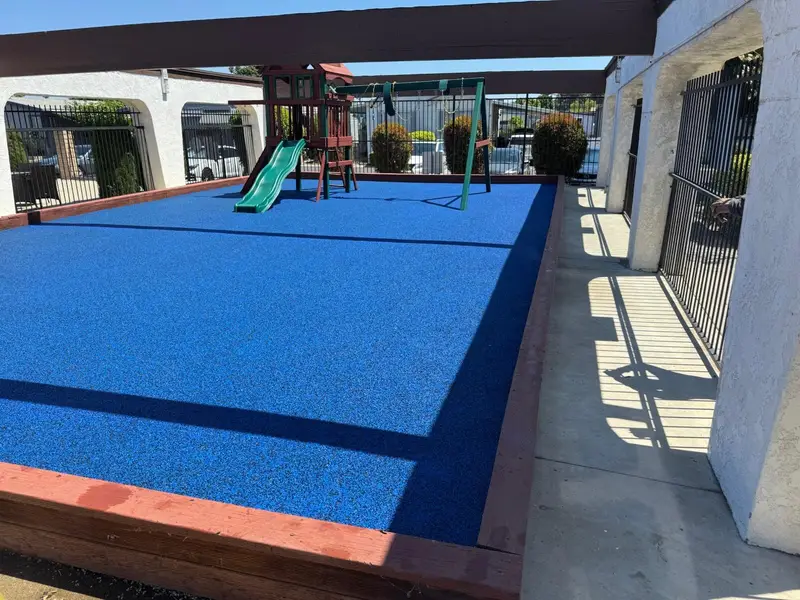
Water Park Rubber Flooring
Slip-resistant, barefoot-friendly decks and walkways that drain quickly and stay colorful in sun and spray.
Quick answer
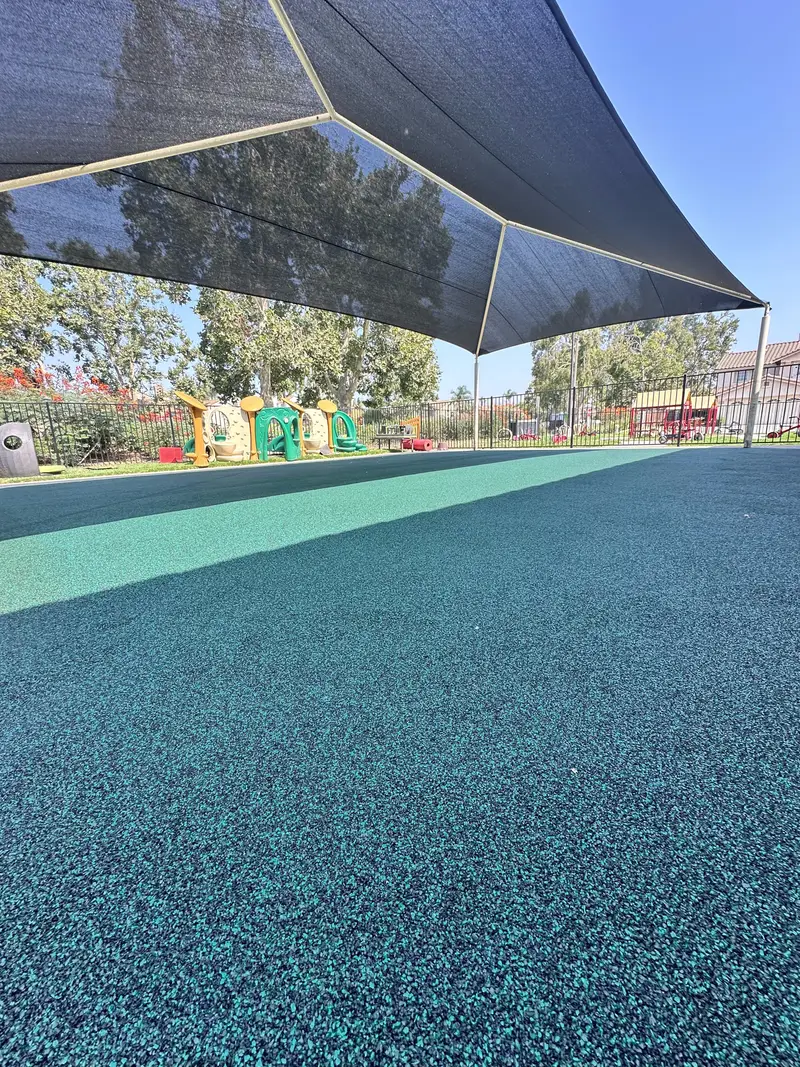
Poured-in-place rubber gives water parks slip-resistant, barefoot-friendly flooring for decks, queue lines, slide landings and walkways. It drains quickly, softens footsteps and holds color in sun and chlorinated spray. Turbo Surfacing is licensed, bonded and insured, and plans work around off-season windows and pool contractors.
Key takeaways
- Texture helps wet feet grip.
- Slopes and drains move water away.
- Off-season work fits park schedules.
- Themed color is poured in.
Water parks put wet feet on every surface. Concrete gets hot, scratches skin and turns slick with sunscreen and spray. Operators need floors that keep guests upright, cool enough for bare feet and simple for crews to rinse.
This page explains where rubber works in a water park, how it is built to drain and how installation fits the off-season.
Pool and lazy river decks
Decks around pools and lazy rivers carry guests on wet feet all day. Rubber has a fine texture that grips when wet, and lighter colors help keep it comfortable under bare feet. Slopes carry water to drains and away from walkways.
Edges at copings are detailed so water never stands near the pool.
Slide towers and queue lines
Guests wait on stairs and landings, often shivering and in a hurry. A textured rubber surface helps footing on stairs and landings, and cushioning makes long waits more comfortable. Colors help children and adults follow the line.
We coordinate with slide manufacturers on landing elevations and clearances.
Slide exits and splash landings
Exit areas see guests step out dizzy and wet. Rubber provides traction and softens missteps. Drains in the landing area keep water moving, and color contrast marks the edge of the pool.
Equipment suppliers supply the heights and clearances we design around.
Barefoot comfort
Barefoot guests notice rough, hot or sharp surfaces. Rubber is smoother than broom-finished concrete and gentler on feet. Lighter colors and shade structures reduce heat, and splash features nearby help cool the surface.
We test samples in direct sun before choosing color.
Drainage design
Water should leave decks quickly. We shape slopes to trench drains, area drains and landscape beds and keep rubber flush with each drain. Standing water attracts algae and makes surfaces slick.
We review grading with the pool contractor and civil engineer.
Chlorine, sunscreen and cleaning
Chlorinated splash, sunscreen and food stains are part of daily operation. Rubber tolerates normal pool chemistry, but concentrated cleaners and solvents can damage binders. We review your cleaning products and give you a list of safe options.
Daily rinsing and weekly scrubbing keep surfaces fresh.
Color and theming
Water parks live on bright color and fun themes. Rubber can be mixed in blues, greens, oranges and more, with inlaid shapes, waves and animal tracks. Designers can send artwork, and we make templates and mockups.
Color choices also help with wayfinding and safety zones.
Families, strollers and wheelchairs
Parents push strollers and wagons across decks, and some guests use wheelchairs. Rubber gives a continuous surface with no joints for wheels to catch. Ramps and transitions are flush, and accessible routes are planned with consultants.
Rest areas with shade and seating make long days easier.
Cabanas, lounge areas and food courts
Lounges and food courts see spilled drinks, chairs and carts. Rubber handles furniture and wipes clean. Pads under cabanas keep legs from sinking, and drains in dining areas move water away from tables.
We coordinate with food service operators on cleaning schedules.
Sun, heat and shade
Open decks bake in summer. Lighter colors, shade sails, trees and misting features all help. We evaluate orientation and shade during the site visit and recommend a color and layout that keep guests comfortable.
Splash pads and fountains cool the air around walkways.
Installing in the off-season
Water parks usually close in colder months, which gives time for installation. We schedule work in sections, coordinate with pool and plumbing contractors and cure each area before refilling or reopening. Weather windows are tracked closely.
A written plan lets managers book staff and marketing around opening day.
Coordinating with other trades
Pool contractors, slide suppliers, plumbers and electricians all work on decks. We plan the order of work so no one damages finished rubber, and we keep an updated schedule on site. Sleeves, drains and conduit are set before we pour.
One crew lead coordinates with the general contractor.
Safety and lifeguard sight lines
Lifeguards need clear sight lines and quick access. We keep walkways wide and unobstructed and mark rescue routes with color. Surfaces near lifeguard stands are textured for footing.
We review layouts with safety staff.
Repairs between seasons
Heavy foot traffic wears entrances and queue lines first. Worn sections are cut out and replaced with matching material, so operators can fix problems during the off-season. Color can be refreshed with a new top layer.
Records of colors and thickness make patches blend.
Budgets and phasing
Capital budgets in water parks are often phased over several winters. We divide work into areas that stand on their own, starting with the worst trip hazards and busiest queues. Written scopes and option pricing help owners plan.
Photos and drawings support presentations to investors and boards.
Starting a water park project
Send a site plan, photos and your off-season dates. Tell us about slide manufacturers, pool contractors and drainage issues. We will visit, measure and return a scope, schedule and samples.
Night events and lighting
Many water parks host evening events, dive-in movies and season-end parties. Surfaces should show edges and steps in low light, so we coordinate reflective strips and lighting with designers. Colors are checked under artificial light.
Conduit is placed before the pour so nothing is cut into new rubber.
Employee areas and service routes
Staff walk the same decks all day, carry heavy loads and push carts. Back-of-house routes, first aid stations and storage areas need a durable, slip-resistant surface. We design them with operations managers and mark service routes clearly.
Lighter colors guide guests and darker ones identify staff routes.
Getting an estimate
Our poured-in-place rubber cost guide explains what moves the price. Send photos and rough dimensions through the free estimate form and we respond within 24 hours. Site walks are available the next day or later, depending on availability, and you receive a written scope after the visit.
What to know before you start
Show removable attraction fittings on the wet-area maintenance plan. Leave their service boundaries identifiable so a future fitting change does not begin with exploratory cuts through rubber.
Frequently Asked Questions
Sources
Last reviewed:
By Turbo Surfacing Solutions team · Planning updated:
KEEP EXPLORING.
Other Southern California surfacing projects we specialize in — handpicked because they share the same materials, standards, or installation crew as this page.
Related Poured-In-Place Rubber & Resources
Sibling services, cities where we install this, and blog posts that go deeper.
More Poured-In-Place Rubber
- PIP Rubber InstallationProfessional Installation
- PIP Installation ProcessOur Process
- PIP Rubber MaintenanceMaintenance Guide
Cities We Serve
- Poured-In-Place Rubber in Chula Vista
- Poured-In-Place Rubber in San Diego
- Poured-In-Place Rubber in Oceanside
Get a Quote for Water Park Rubber Flooring
Get a free, no-obligation estimate for your project. Our team responds within 24 hours.
Request Water Park Quote