- Licensed CA Contractor·
- ADA Compliant Installs·
- Serving All of Southern California·
- Free Estimates·
- Licensed, Bonded & Insured
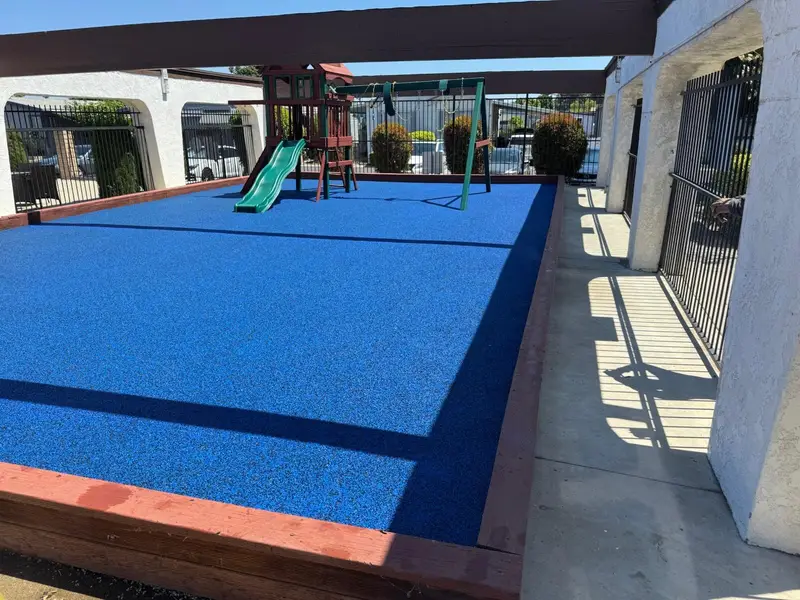
Poured-in-Place Rubber for Cities, Parks and Public Works
Durable, low-upkeep rubber surfacing for public playgrounds, paths and plazas, planned around bids, staff and community use.
Quick answer
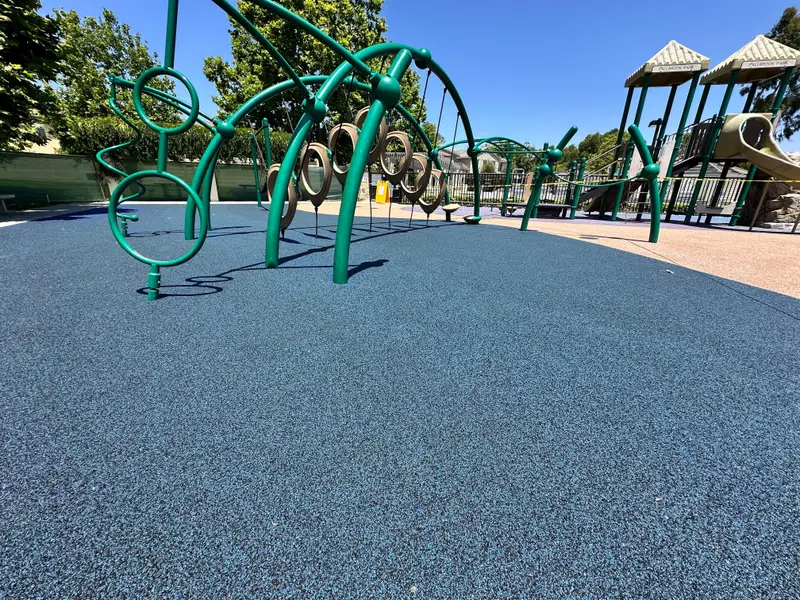
Poured-in-place rubber suits city parks, public playgrounds, plazas and paths because it is seamless, slip resistant and easy for crews to clean and patch. Projects follow bid documents, submittals and phased schedules. Turbo Surfacing is licensed, bonded and insured, and works with parks departments, public works staff and consultants across Southern California.
Key takeaways
- Specs and submittals are handled in the bid.
- Phasing keeps parks open.
- Routine care is simple for crews.
- Fall height drives the design.
Public space gets used by everyone, all day, in every kind of weather. Surfaces must handle heavy foot traffic, vandalism, litter, sun and tight maintenance budgets.
This page explains how rubber surfacing fits city and park projects, what public agencies ask for and how work is phased around residents.
Neighborhood and regional parks
City parks use rubber under play structures, around swing sets, along walking loops and near water play. A single colored surface can tie together features across different ages and abilities. Seamless rubber has no gaps where wood chips hide hazards, and it dries quickly after irrigation.
We tailor design to each park, working from the agency's master plan and community feedback.
Bid documents and submittals
Public projects start with specifications. We read the drawings, price each line item and prepare submittals that include product data, color samples, base details and manufacturer information. Questions are raised during the bid period so there are fewer surprises later.
If your agency uses standard specifications, we respond to them as written and flag anything that needs clarification.
Prevailing wage and public works paperwork
Many public projects require payroll reporting and wage rules. We keep clean records, submit the payroll reports a contract requires and cooperate with inspectors. Proof of insurance and licensing details are delivered with the bid package.
Public agencies can review our CSLB license status and the Department of Industrial Relations pages that apply to public works.
Fall height and equipment review
Every structure in a park has a fall height. We review plans from the playground supplier and size the cushion layer for the highest platform. Impact attenuation is measured under ASTM F1292, and we ask for lab or field test data for the proposed build-up.
Coordinating with the equipment installer prevents conflicts over sleeves, footings and elevations.
Accessible routes and inclusive play
Parks serve people of every age and ability. Rubber gives a firm, stable surface for wheelchairs, strollers, walkers and canes, and it is easier to roll across than loose fill. Accessible routes, transfer points and clear spaces are laid out with the agency's consultants.
ASTM F1951 provides a way to evaluate surface accessibility, and we discuss it when a project calls for it.
Vandalism, graffiti and litter
Public surfaces see abuse. Rubber is hard to damage with casual impact, though cuts, burns and graffiti happen. Many marks can be cleaned or patched, and color blends hide scuffs. Smooth edges and thorough sealing reduce places where litter and gum collect.
We provide cleaning guidance and a repair plan so crews can respond quickly.
Maintenance for public works crews
A realistic care plan is part of every public project. Weekly sweeping or blowing, regular rinsing and monthly inspections keep the surface in order. We supply a one-page checklist, product recommendations and contact information for repair requests.
Standard patching materials can be stocked by the agency for small repairs.
Phasing around park use
Parks cannot always close for long. Large projects can be broken into phases so part of the site stays open. We set barriers, signs and detour paths, and we coordinate hours with recreation programs, events and school schedules.
A clear phasing plan lets staff update residents before work begins.
Community outreach and communication
Residents notice construction. We supply simple notices that explain what is happening, how long it will last and who to call. Photos of progress help staff answer questions on social media and at council meetings.
Crews are courteous with neighbors, keep noise reasonable and clean up daily.
Trails, plazas and walking loops
Rubber is used on multi-use paths, loops around lakes, plazas near libraries and entrances to community centers. It is softer than concrete and easier on joints, and color can mark lanes, crossings and wayfinding. Slopes are designed so water sheds to landscape.
Ask about the specific trail page for details on loops, joggers and strollers.
Splash pads and water play
Water features need surfaces that stay safe when wet. Rubber provides traction, drains well when designed correctly and resists the mineral deposits that discolor concrete. Colors and patterns create a lively look that suits community pools and fountains.
We coordinate with the splash pad designer on drains, slopes and equipment locations.
Tree wells and landscape edges
Tree roots lift concrete and create trip hazards. Rubber tree well surfacing lets water reach roots while giving pedestrians a smooth walking surface. Edges follow the tree's growth, and pieces can be adjusted as the tree matures.
This keeps sidewalks safe and trees healthy.
Planning budgets and phases
Public funding is rarely unlimited. We help agencies plan phases that fit annual budgets, starting with the worst conditions or the busiest areas. Option pricing for alternate colors or added areas lets decision makers see tradeoffs.
Written scopes support grant applications and staff reports.
Scheduling and weather
PIP needs dry weather for placement, so we plan work around Southern California's rain season. Crews arrive with the materials and equipment needed for each phase, and daily reports document progress. If a delay occurs, we call before acting.
Agencies can count on clear communication from start to finish.
Coordinating with equipment suppliers
Playground suppliers, shade vendors and fencing contractors all work on the same site. We confirm elevations, sleeve locations and access routes with each one before the base is poured, and we agree on who protects finished surfaces. Clear coordination prevents rework and keeps the schedule intact.
Pre-construction meetings with agency staff settle these details early.
Site safety and public protection
Active parks need strong barriers, signs and escorted deliveries. We keep materials staged out of sight, close work areas at night and inspect fencing daily. Dust, odor and noise are managed so neighbors and park users are protected.
Safety plans are shared with agency staff before work begins.
Lifecycle planning for agencies
Public works teams think in decades, not seasons. We explain how long a typical surface lasts under heavy use, what repairs are expected and when a refresh makes sense. That information helps agencies place surfacing in capital plans and avoid surprise failures.
We also keep records of colors, thickness and base details for future phases.
After-hours use and lighting
Many parks stay busy after sunset. Lighting design affects how the surface looks and how safe it feels, and rubber colors can be chosen to reflect light without glare. We coordinate with lighting contractors so poles, conduit and footings do not conflict with the surfacing.
Clear sightlines and good lighting also discourage misuse of the space.
Records, closeout and handoff
At closeout we deliver as-built drawings, color and thickness records, product data and a care sheet. Agency staff can file them with the project record, which helps future repairs and budgeting.
Getting an estimate
Our poured-in-place rubber cost guide explains what moves the price. Send photos and rough dimensions through the free estimate form and we respond within 24 hours. Site walks are available the next day or later, depending on availability, and you receive a written scope after the visit.
What to know before you start
Give the agency reviewer a drawing that distinguishes temporary closure fencing from the permanent surface boundary. This avoids treating the construction enclosure as the finished public-access route.
Frequently Asked Questions
Sources
- California Contractors State License Board license lookup
- California Department of Industrial Relations public works
- ASTM International standards
Last reviewed:
By Turbo Surfacing Solutions team · Planning updated:
KEEP EXPLORING.
Other Southern California surfacing projects we specialize in — handpicked because they share the same materials, standards, or installation crew as this page.
Related Poured-In-Place Rubber & Resources
Sibling services, cities where we install this, and blog posts that go deeper.
More Poured-In-Place Rubber
- PIP Rubber InstallationProfessional Installation
- PIP Installation ProcessOur Process
- PIP Rubber MaintenanceMaintenance Guide
Cities We Serve
- Poured-In-Place Rubber in Chula Vista
- Poured-In-Place Rubber in San Diego
- Poured-In-Place Rubber in Oceanside
Get a Quote for PIP for Cities, Parks & Public Works
Get a free, no-obligation estimate for your project. Our team responds within 24 hours.
Request Municipal Quote