- Licensed CA Contractor·
- ADA Compliant Installs·
- Serving All of Southern California·
- Free Estimates·
- Licensed, Bonded & Insured
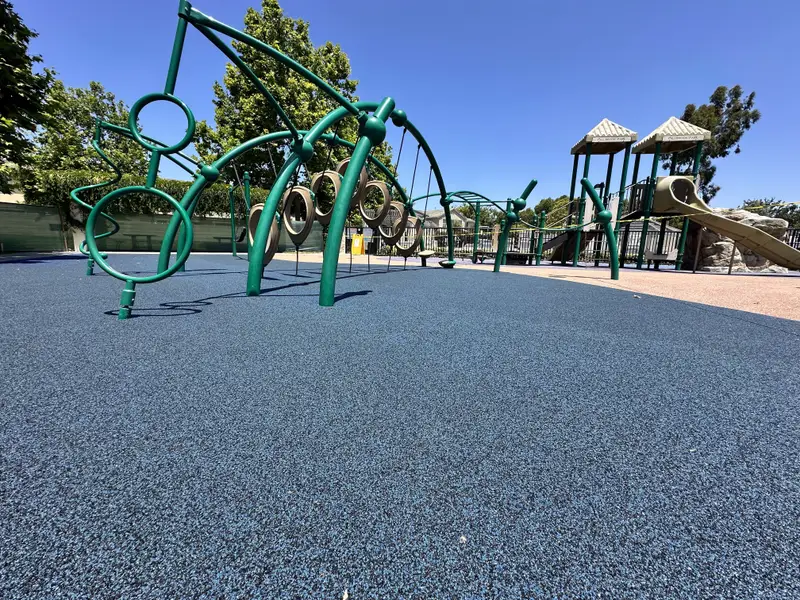
Poured-in-Place Rubber Running Tracks and Fitness Paths
Cushioned, durable tracks and walking loops with lane markings, drainage and upkeep planned for heavy use.
Quick answer
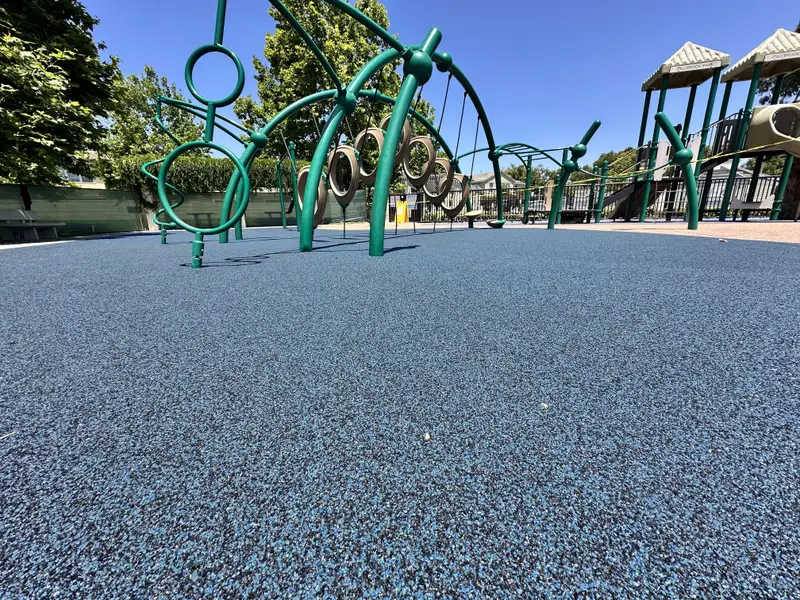
A poured-in-place rubber running track is a cushioned, seamless surface laid over a firm, sloped base, with lane lines and markings added after curing. It reduces impact compared with concrete and drains quickly. Turbo Surfacing is licensed, bonded and insured, and builds tracks, loops and fitness paths for schools, parks and campuses.
Key takeaways
- A firm, sloped base is the foundation.
- Thickness depends on use.
- Lane lines are added after curing.
- Regular cleaning protects traction.
Runners and walkers feel the surface under every step. Concrete is hard on joints, asphalt breaks down in sun, and dirt turns to mud. Rubber gives a consistent, forgiving surface that works in all kinds of weather.
This page explains how rubber tracks are designed, what drives thickness and drainage and how to keep them in good condition.
Track types and uses
Rubber is used on school tracks, community loops, fitness trails and short walking paths. Competitive tracks need precise geometry and lane markings. Community loops prioritize comfort and accessibility. We design each type with its purpose in mind.
Use shapes the plan: distance, width, lanes and surface thickness.
Layout and measurements
A full track follows set dimensions for lane width and curve radius. Community paths are laid out more freely, following the landscape. Surveyors or engineers often provide the geometry, and we build to their drawings.
We stake the layout and check it before placing any material.
Base preparation
Tracks need a firm, flat and well-drained base. Asphalt and concrete are common, and each must be smooth and properly sloped. New bases are built with compacted aggregate and paving. Cracks are repaired, and low spots are corrected.
The base decides the quality of the finished track, so we take our time with it.
Thickness and performance
Track thickness depends on use. Competitive facilities need specific build-ups for force reduction and energy return, while community paths may use thinner layers. We review specifications from athletic directors or designers and match them as closely as possible.
Thicker cushions feel softer, though extremely soft surfaces can tire runners.
Drainage and cross slope
Water should leave the track quickly. Cross slopes of a gentle pitch carry water to edges, and curbs or drains collect it. Puddles make a track unsafe and shorten its life, so we verify slopes with a level and a water test.
Tracks near fields may tie into field drainage.
Lane lines, numbers and markings
After the surface cures, lane lines, starting blocks, numbers and distance markers are painted or inlaid. Colors are chosen for visibility and school identity. Fine lines require steady hands and careful layout.
We provide a marking plan for approval before work begins.
Colors and school spirit
Many schools choose traditional red, blue or green, while others use school colors. Color choices affect heat and visibility, and we show samples outdoors. Logos and mascots can be inlaid at the start or finish areas.
Community loops can use color to mark distance, safety and zones.
Sun, heat and fading
Southern California sun is strong. Rubber tracks warm in the afternoon and can fade slowly. Lighter colors reduce heat, and good maintenance slows aging. Shade at benches and start areas makes the facility more comfortable.
Plan practices and events around peak heat.
Curbs, borders and transitions
Curbs keep rubber in place and guide water. Where the track meets grass, concrete or fencing, we finish edges flush so runners do not trip. Transitions to field entrances and gates are reinforced.
Strong edges extend track life.
Fitness stations and trail loops
Fitness loops often include stations for stretching, pull-ups and balance. Rubber pads under equipment protect joints and reduce wear. Distance markers, benches and drinking fountains create a complete experience.
We coordinate with equipment suppliers and landscape designers.
Access for walkers and wheelchairs
Smooth rubber supports walkers, canes and wheelchairs. Transitions are flush, slopes are gentle and rest points are placed along the way. Wide paths allow people to pass each other comfortably.
Accessibility planning makes the track useful to the whole community.
Schedule and closures
Track work requires dry weather and time for curing. Schools often schedule it in summer. We coordinate closures with athletic directors and plan around meets and practices.
Phasing is possible when only part of the track can close.
Cleaning and maintenance
Sweep or blow debris, rinse regularly and remove gum and stains. Do not allow vehicles or heavy equipment on the track. Spikes should match the surface manufacturer's guidelines.
Periodic inspections catch cracks, lifted edges and worn lanes early.
Repairs and resurfacing
Worn lanes and damaged sections can be patched or resurfaced. A new thin layer refreshes color and traction without a full rebuild. Lane lines are repainted as part of the work.
Plan for resurfacing when wear becomes visible.
School tracks and athletic programs
A school track is a source of pride and a serious training space. Coaches care about consistent traction, predictable footing and clear lane lines. Athletic directors also need to plan for meets, practices and physical education classes.
We work with the school's staff and architect to match specifications and build around the calendar, so teams return to a track that is ready for the season.
Park loops and community fitness
Park loops are used before sunrise and after sunset by walkers, joggers and families. Lighting, benches, shade and clear distance markers make them welcoming. Rubber offers a quiet, comfortable surface for strollers and older adults.
Planning the connections to parking, restrooms and playgrounds makes the loop part of daily park life.
Test sections and approvals
For larger projects, we can place a short test section so decision makers can walk on the surface and see the color. This also confirms texture, thickness and edge details before the entire track is poured. Adjustments are easier at this stage than later.
Samples and test sections help committees approve with confidence.
Weather windows and cure time
Tracks cover large areas, so weather matters more than on small play yards. Rain delays placement, and cold nights slow curing. We watch forecasts and plan pours in sections so no partial area is left exposed.
A cure period before the first practice protects the surface from early damage.
Wear zones and long-term planning
Starting lines, curve exits and the inside lane wear faster than other areas. Planning for those zones, with thicker material or periodic touch-ups, keeps the track even. Records of repairs and resurfacing help schools plan budgets.
An annual inspection with the athletic director is a smart habit.
Starting areas, jumps and field events
Field events such as long jump runways and shot put circles may use related rubber surfaces. Each has its own thickness and slope requirements, and we coordinate with the athletic director. Runways need consistent footing and clear markings.
Planning these areas with the track keeps materials and colors consistent.
Meets, events and temporary equipment
Meets bring timers, tents, hurdles and spectators. Rubber handles that use if equipment has wide feet and heavy items are carried rather than dragged. Protective mats at entry points and clear rules for spike length reduce damage.
We provide a one-page event guide for athletic staff.
Getting an estimate
Our poured-in-place rubber cost guide explains what moves the price. Send photos and rough dimensions through the free estimate form and we respond within 24 hours. Site walks are available the next day or later, depending on availability, and you receive a written scope after the visit.
What to know before you start
Approve lane markings against the finished track layout rather than the fence line. Record the reference points used for marking so a later localized repair can restore the alignment.
Frequently Asked Questions
Sources
Last reviewed:
By Turbo Surfacing Solutions team · Planning updated:
KEEP EXPLORING.
Other Southern California surfacing projects we specialize in — handpicked because they share the same materials, standards, or installation crew as this page.
Related Poured-In-Place Rubber & Resources
Sibling services, cities where we install this, and blog posts that go deeper.
More Poured-In-Place Rubber
- PIP Rubber InstallationProfessional Installation
- PIP Installation ProcessOur Process
- PIP Rubber MaintenanceMaintenance Guide
Cities We Serve
- Poured-In-Place Rubber in Chula Vista
- Poured-In-Place Rubber in San Diego
- Poured-In-Place Rubber in Oceanside
Get a Quote for PIP Running Tracks
Get a free, no-obligation estimate for your project. Our team responds within 24 hours.
Request Track Quote