- Licensed CA Contractor·
- ADA Compliant Installs·
- Serving All of Southern California·
- Free Estimates·
- Licensed, Bonded & Insured
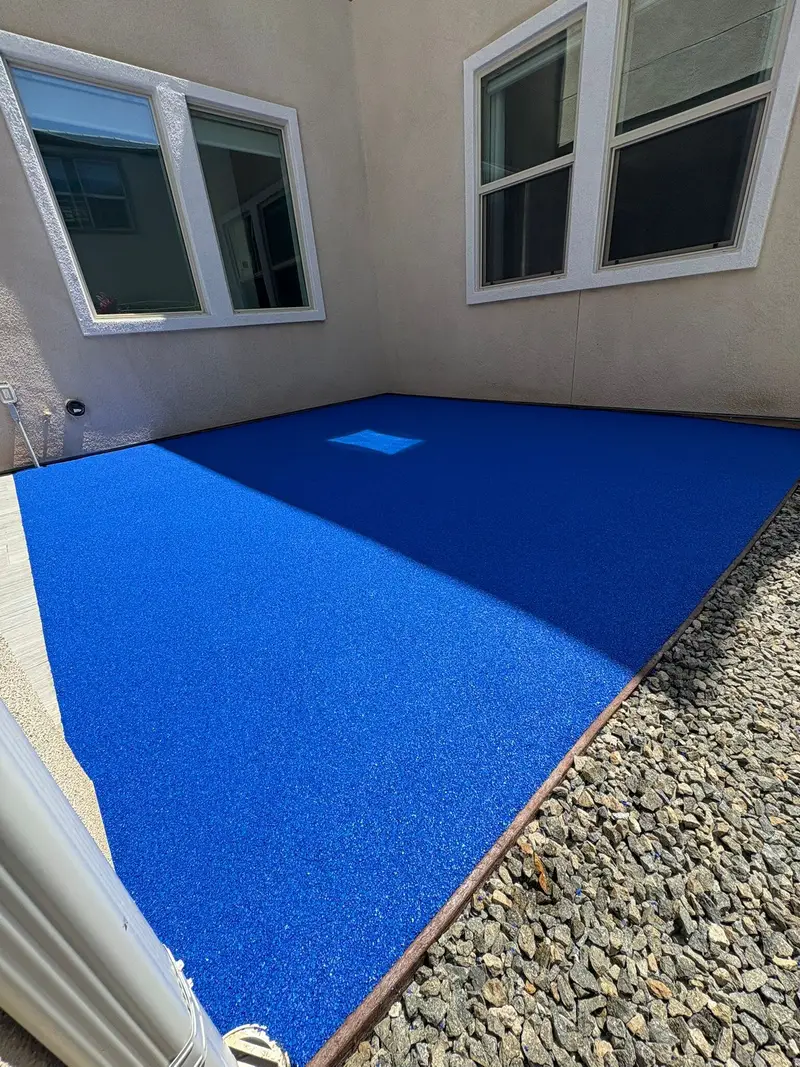
Poured-in-Place Rubber Surfacing Installation
Seamless, cushioned rubber surfaces designed around fall height, drainage and the way your space is used.
Quick answer
Poured-in-place rubber is a seamless surface made of a cushion layer and a colored wearing course, troweled over a prepared base and cured in place. Thickness is chosen from the critical fall height of the equipment. Turbo Surfacing is licensed, bonded and insured, and installs rubber surfacing for schools, parks, housing communities and homes.
Key takeaways
- Thickness is sized to fall height.
- A sound base is essential.
- Drainage and slopes are planned first.
- Colors and graphics are part of the design.
Poured-in-place rubber, often called PIP, is a soft, slip-resistant surface that is mixed on site and troweled into one continuous layer. It replaces wood chips, sand and bare dirt under play equipment, and it works for paths, pool decks and sports areas too.
This page explains what goes into an installation, what shapes the design and what to prepare before work begins.
What the system is made of
A typical PIP surface has two layers. The lower layer is a cushion made from recycled rubber granules and a polyurethane binder. The upper layer is a wearing course of colored EPDM granules bound with a similar binder. Together they form a seamless mat that flexes underfoot and sheds water.
The cushion does the work of absorbing impact, while the wearing course supplies color, grip and durability.
Thickness and fall height
Play equipment has a critical fall height, which is the highest point from which a child could fall. The cushion layer is made thicker as that height increases. We review the manufacturer data for each structure and size the build-up to match the highest platform on the site.
Impact attenuation is measured under ASTM F1292, and we recommend asking for test data for the exact build-up proposed. Surfaces under equipment should also be selected with accessibility in mind, following ASTM F1951 guidance on surface accessibility.
Base options
PIP can be placed over asphalt, concrete or a compacted aggregate base. Existing slabs must be sound, level enough and free of heaving cracks. New aggregate bases are graded, compacted and finished to a smooth, firm plane.
A good base matters more than any other single factor, because rubber follows the shape of what is under it. We evaluate the base during the site walk and tell you if repairs or a new base make sense.
Drainage and water
Rubber surfaces shed water, so slopes and drains must be planned. Gentle falls toward landscape or catch basins keep the surface from holding puddles. Where an area needs to drain through the surface, a porous system can be used over an open base, which is covered on a separate page.
We mark low spots and drain locations on the plan before any rubber is poured.
Colors, patterns and graphics
EPDM granules come in a wide range of colors, and designers use them to build paths, hopscotch grids, game boards, animals, letters and logos. Edges between colors are cut cleanly and filled so they stay crisp.
Lighter colors stay cooler under sun, and darker colors hide dirt well. We bring samples to the site so you can see them in the light they will live in.
Borders, transitions and equipment posts
Where the rubber meets a curb, sidewalk, planter or fence, we finish the edge so it feels flush and does not trip anyone. We cut around posts and sleeves in advance, so equipment remains stable and the surface is sealed around it.
Plans for transitions to walkways and gates are drawn with measurements, so the site is smooth for strollers and wheelchairs.
Where PIP is installed
Common projects include school playgrounds, preschools, churches, city parks, apartment courtyards, splash pads, running paths and backyard play areas. Rooftop terraces, pool decks and water play features also use rubber because it is soft and slip resistant when wet.
Each site gets a custom design that fits equipment, shade, drainage and the budget you have set.
Weather and timing
PIP cures by reaction with moisture in the air, and it needs dry weather during placement. Rain, heavy dew and cold temperatures can delay work. Southern California is generally friendly to this schedule, though we always watch the forecast.
We tell you in advance which days are likely to work and keep a backup window when possible.
Schedule and downtime
A small play area can often be finished in a few days, while larger schools and parks take longer. Work is scheduled around classes, services and events. After placement, the surface needs time to cure before use, and we mark the area and block access until it is ready.
Phasing is possible on larger projects so part of the site can stay open.
Removing existing surfacing
Wood chips, sand and old rubber are removed and hauled away before the new base is prepared. We protect plantings, irrigation and fences and sweep the site clean at the end of each day.
If an old surface contains hazardous material, we stop and discuss the next steps with you before proceeding.
Compared with other surfacing
Wood chips cost little upfront but need topping up, move around and hide hazards. Tiles lift and gap at the seams. Turf is attractive but needs a pad under it for fall height. PIP offers a seamless surface with a long life and little maintenance beyond cleaning.
Each option has a place, and we tell you honestly when another choice fits your site better.
Wear, sun and long-term performance
Sun, foot traffic and weather age rubber slowly. Binder dulls and color can fade a little over the years, and heavy use areas under swings and slide exits wear first. Repairs are patched with matching material, and surfaces can be refreshed with a new wearing layer when the time comes.
Keeping up with cleaning and prompt repairs extends the life of the surface.
What to prepare before we start
Clear the area of loose items and move vehicles out of the way. Tell us about sprinkler lines, utilities and any plans for new equipment. Confirm the site contact, gate access, hauling route and hours that suit the school or property.
We send a written scope after the site walk, and you receive a plan showing areas, thickness and colors.
What to look for in a quote
Compare scope lines, not just totals. A complete quote lists the square footage, the thickness of each layer, the base work, the edge details, the colors and the removal of old material. It should also note drainage, equipment sleeves and any allowance for repairs.
Vague quotes leave room for surprises, so we write ours in plain language with measurements.
Choosing between PIP and other surfaces
If equipment is tall, children are young or the area is used every day, PIP usually earns its place. For a small corner with low equipment, glued rubber mulch or tile may suit the budget. We lay out the options side by side with maintenance, lifespan and fall protection so the decision is clear. Many owners start with the play zone in PIP and use less costly materials in low-traffic borders.
Getting an estimate
Our poured-in-place rubber cost guide explains what moves the price. Send photos and rough dimensions through the free estimate form and we respond within 24 hours. Site walks are available the next day or later, depending on availability, and you receive a written scope after the visit.
What to know before you start
Before the mixing equipment arrives, identify a staging spot that will not block the accessible entrance. Mark where deliveries can turn and where uncured rubber can be protected from material carried across the site.
Frequently Asked Questions
Sources
Last reviewed:
By Turbo Surfacing Solutions team · Planning updated:
KEEP EXPLORING.
Other Southern California surfacing projects we specialize in — handpicked because they share the same materials, standards, or installation crew as this page.
Related Poured-In-Place Rubber & Resources
Sibling services, cities where we install this, and blog posts that go deeper.
More Poured-In-Place Rubber
- PIP Installation ProcessOur Process
- PIP Rubber MaintenanceMaintenance Guide
- Surfacing ApplicationsApplications
Cities We Serve
- Poured-In-Place Rubber in Chula Vista
- Poured-In-Place Rubber in San Diego
- Poured-In-Place Rubber in Oceanside
Get a Quote for PIP Rubber Installation
Get a free, no-obligation estimate for your project. Our team responds within 24 hours.
Schedule Site Walk