- Licensed CA Contractor·
- ADA Compliant Installs·
- Serving All of Southern California·
- Free Estimates·
- Licensed, Bonded & Insured
Rubber Surfacing for Theme Parks, Zoos and Attractions
Durable, colorful and slip-resistant surfaces for guest paths, queues, animal areas and children's play zones.
Quick answer
Poured-in-place rubber suits theme parks, zoos and attractions that need slip-resistant, colorful surfaces for crowds, strollers and wheelchairs. It can be themed with inlays, rinsed daily and repaired in sections. Turbo Surfacing is licensed, bonded and insured, and plans phased work around opening hours, events and animal care routines.
Key takeaways
- Inlays carry themes without paint.
- Slip resistance suits wet weather.
- Phased work keeps gates open.
- Patches avoid full resurfacing.
Attractions put thousands of feet, wheels and paws on the same surface every day. The ground has to look good in photos, handle spills and hosing and stay safe for guests who are tired, excited or distracted.
This page explains where rubber fits in a park or zoo, how it is themed and how work is staged so the gates can stay open.
Guest paths and plazas
Main paths carry strollers, wheelchairs, scooters and tour groups. Rubber offers a continuous surface with no joints for wheels to catch, and it is gentler on tired feet than concrete. Widths and slopes are planned so crowds can pass comfortably.
We map peak flow with operations staff before choosing thickness and edges.
Queue lines and entrances
Lines are where guests stand longest. Cushioned rubber reduces fatigue, and a textured surface keeps footing secure when drinks spill or rain arrives. Queue floors can carry color, arrows and brand graphics that guide people without extra signs.
Edges around rails and stanchion bases are detailed so nothing lifts.
Theming and inlays
Rubber can be mixed in nearly any color and cut into shapes. Jungle trails, ocean waves, animal tracks and logos are poured into the surface, so artwork does not wear off like paint. Designers can supply drawings and we translate them into templates.
Mockups let creative teams approve patterns before crews arrive.
Exhibit edges and animal areas
Near enclosures, surfaces must be safe for guests and compatible with animal care. We avoid materials that tempt chewing and discuss odor, cleaning products and drainage with zoo veterinarians and keepers. Where animals have access, we coordinate every detail with the care team.
Not every area suits rubber, and we say so when another surface is the better choice.
Children's play zones
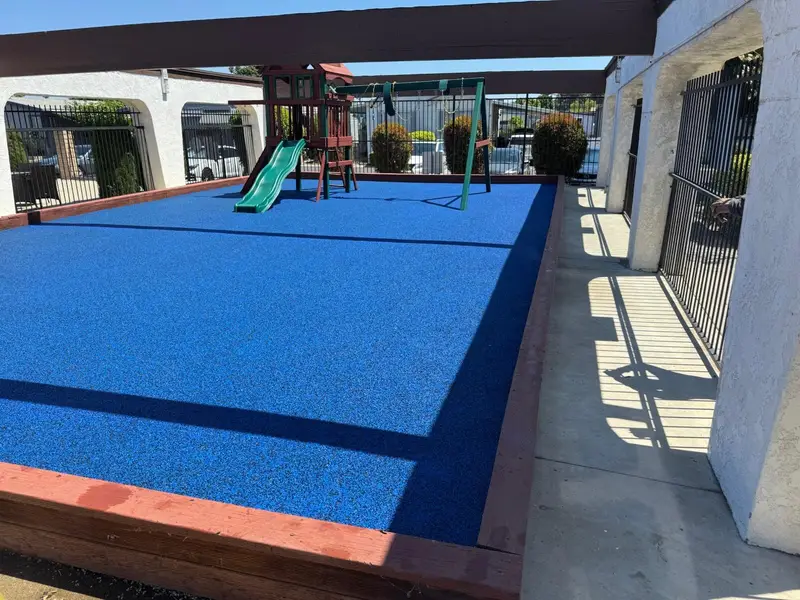
Play areas need cushioning under climbers and slides. Thickness is sized to the equipment's fall height, and colors can follow the park's theme. Splash zones and sensory gardens benefit from slip-resistant rubber that drains quickly.
Equipment suppliers and our team agree on elevations before the pour.
Wet weather and cleaning
Parks hose down paths, and rain turns smooth stone slick. Rubber keeps its grip when wet and sheds water through slopes and drains. Crews can sweep, blow and rinse the surface in minutes, and gum and spills lift with mild cleaners.
Avoid solvents and heavy petroleum products, which can soften the binder.
Accessibility for all guests
Wheelchairs, walkers and strollers need firm, level routes. Rubber is stable and continuous, and transitions at curbs and ramps are made flush. Slopes and landings are reviewed with the park's accessibility consultant.
Rest areas with shade and seating are part of the plan.
Night events and lighting
Many attractions run evening shows and holiday events. Surfaces must show edges and steps under low light, so we coordinate reflective strips and fixture locations with lighting designers. Colors are checked under artificial light as well as sunlight.
Conduit and pole bases are placed before the rubber so nothing is cut later.
Sun, heat and shade
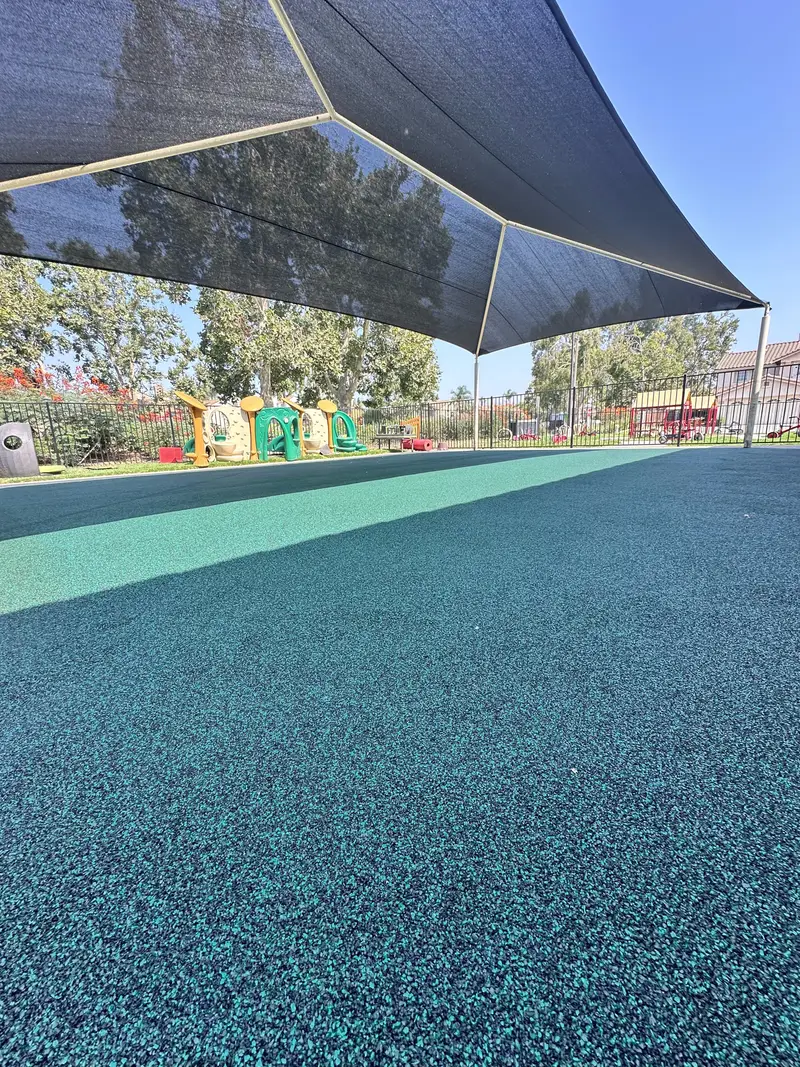
Dark surfaces warm under summer sun. Lighter colors, shade structures and tree canopies keep guests comfortable, and misting stations help on hot days. We discuss orientation, shade plans and color choice during the site visit.
Barefoot areas, such as splash zones, get the lightest blends.
Phasing around operations
Closing a park for a repave is rarely possible. We work in sections, overnight or in off-peak seasons, and use barriers and detours to keep guests safe. Each section is cured before reopening.
A weekly schedule shows operations staff what is open and what is closed.
Service vehicles and deliveries
Trucks, carts and maintenance vehicles share paths with guests. Areas that carry vehicles need a heavier build-up, and we mark service routes clearly. Turning zones get extra attention because tires twist the surface.
Tell us your heaviest regular vehicle and we will design for it.
Seasonal events and special programs
Holiday lights, festivals and school group days bring heavy crowds. Rubber handles stages, booths and queue rails when loads are spread. Event teams get a plan that shows where stakes, generators and heavy equipment can go.
Quick patches repair any damage before the next event.
Repairs and renewals
High-traffic paths wear unevenly. Worn sections are cut out and replaced with matching material, so the park never has to resurface everything at once. Records of colors and thickness make patches blend with the original.
A yearly walk with operations staff catches small issues early.
Budgeting and phasing
Capital budgets arrive in cycles. We break large projects into phases that stand on their own, starting with the worst trip hazards or the busiest plaza. Written scopes and drawings support board presentations.
Option pricing for colors and inlays helps teams compare choices.
Starting an attraction project
Send a site plan, photos and attendance patterns. Tell us about animals, vehicles and events. We will arrange a visit with operations and facilities staff, measure the areas and return a scope, schedule and samples.
Wayfinding, signs and amenities
Guests rely on maps, benches, trash cans and drinking fountains. We coordinate footings, conduit and sleeves with the amenity supplier so posts are set before the pour, and we leave clean cutouts that stay neat. Directional arrows and distance markers can be inlaid.
Planning these items early prevents damage to finished rubber.
School groups and peak days
Field trips arrive in waves, with dozens of children moving together. Wide paths, clear colors and flush edges keep groups flowing and reduce trips. Rubber also softens the noise of hundreds of footsteps in covered areas.
We study peak days with guest services staff when we set path widths.
Water features and splash areas
Fountains, wet play areas and animal pools spill onto surrounding paths. Rubber gives secure footing near water, and drains carry runoff away from walkways. Edges at pool copings and basin rims are detailed so water moves away from guests.
We coordinate with the water feature contractor on elevations and drains.
Getting an estimate
Our poured-in-place rubber cost guide explains what moves the price. Send photos and rough dimensions through the free estimate form and we respond within 24 hours. Site walks are available the next day or later, depending on availability, and you receive a written scope after the visit.
What to know before you start
Mark removable queue barriers on the rubber layout before installation. Their fixing and storage methods need review so seasonal operations do not add improvised penetrations to the surface.
Frequently Asked Questions
Sources
Last reviewed:
By Turbo Surfacing Solutions team · Planning updated:
KEEP EXPLORING.
Other Southern California surfacing projects we specialize in — handpicked because they share the same materials, standards, or installation crew as this page.
Related Poured-In-Place Rubber & Resources
Sibling services, cities where we install this, and blog posts that go deeper.
More Poured-In-Place Rubber
- PIP Rubber InstallationProfessional Installation
- PIP Installation ProcessOur Process
- PIP Rubber MaintenanceMaintenance Guide
Cities We Serve
- Poured-In-Place Rubber in Chula Vista
- Poured-In-Place Rubber in San Diego
- Poured-In-Place Rubber in Oceanside
Get a Quote for Rubber Surfacing for Theme Parks & Zoos
Get a free, no-obligation estimate for your project. Our team responds within 24 hours.
Request Attraction Quote