- Licensed CA Contractor·
- ADA Compliant Installs·
- Serving All of Southern California·
- Free Estimates·
- Licensed, Bonded & Insured
Commercial Flooring Applications for Every Kind of Building
Pick your building type to see which floor systems fit, how we schedule the work and what to expect before you ask for an estimate.
WE DESIGN. WE INSTALL. WE SERVICE.
INSTALLATION SERVICES PROVIDED.
Choose your building type
Ready to get started?
Quick answer
Turbo Surfacing installs epoxy, urethane and polished concrete floors in restaurants, hospitals, schools, hotels, warehouses, factories, parking structures and many other commercial buildings. We match the system to traffic, chemicals and cleaning, and we phase work around operations. We are licensed, bonded and insured.
Key takeaways
- Traffic, spills and cleaning decide the floor system.
- Each building type has its own guide below.
- Night and phased work protects operations.
- Preparation matters as much as the product.
Every commercial building asks something different of its floor. A restaurant kitchen needs grease and heat resistance. A hospital needs seamless surfaces that clean quickly. A warehouse needs a slab that survives forklifts all day.
This hub gathers our building type guides in one place. Pick the one closest to your property, read how we plan the work, then send photos for an estimate.
How to choose a floor for a commercial building
Start with the three things that decide almost every commercial floor: what rolls or walks across it, what spills on it and how it is cleaned. A floor that suits a quiet office lobby will fail in a loading dock, and the reverse is also true.
We ask about daily traffic, wheel types, fluids, temperature swings, cleaning equipment and hours of operation. Then we compare polished concrete, epoxy, urethane and decorative overlays against those facts. The building guides below show how those answers play out for each property type.
Food service, hospitality and retail
Restaurants, commercial kitchens, hotels and stores share a need for floors that look good and clean fast. Our restaurant flooring guide covers dining rooms, bars and back of house, while the commercial kitchen guide focuses on heat, grease and washdowns.
Guest and customer spaces are covered in the hotel flooring guide and the retail store guide. These spaces often need night work so the doors can open on schedule.
Healthcare, education and offices
Hospitals, clinics, schools and offices need floors that are quiet, safe underfoot and simple to maintain. The hospital and clinic guide explains seamless systems and cleaning access, and the school flooring guide covers hallways, cafeterias, gyms and restrooms.
For lobbies, open plans and tenant spaces, see the corporate office guide. Work in these buildings is usually phased by wing or floor and scheduled around occupants.
Warehouses, factories and industrial sites
Heavy duty properties need floors engineered for load and impact. Read the warehouse guide for forklift lanes and racking, the factory guide for production lines and chemicals and the industrial guide for plants, yards and heavy equipment paths.
Lighter production spaces are covered in the manufacturing guide, where cleanliness, static control and lean layouts often matter most.
Government, military and public buildings
Public agencies and installations have their own access and documentation needs. The government facility guide explains civic buildings, fire stations and public works yards, and the military base guide covers hangars, barracks and motor pools.
Both pages describe how we handle security procedures, escorts, safety plans and paperwork, so projects stay on schedule.
Vehicles, parking and sports
Places where vehicles and athletes move need floors with grip and durability. See the auto dealership guide for showrooms and service bays, the parking structure guide for decks and ramps and the sports facility guide for gyms, locker rooms and training centers.
Floor systems compared
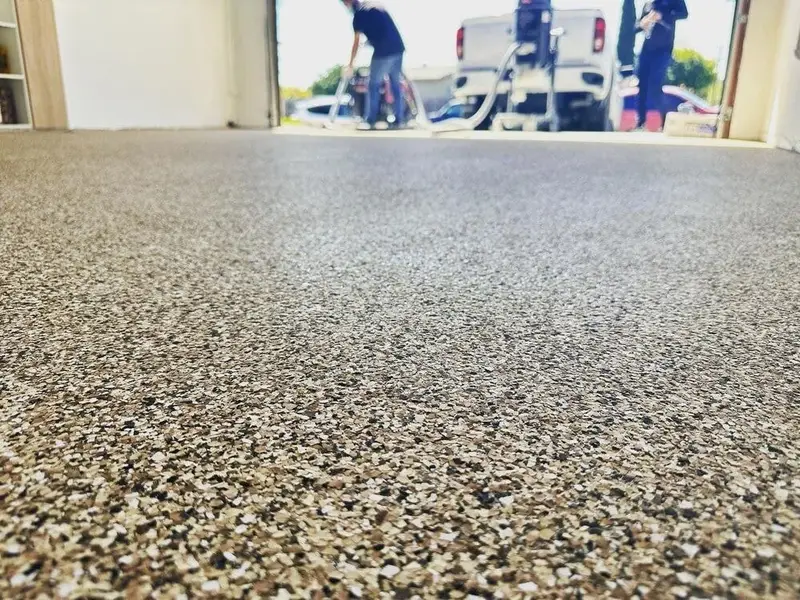
Polished concrete suits lobbies, showrooms and stores where a clean, low maintenance look matters. Epoxy suits shops, kitchens, labs and garages where chemical resistance and a seamless surface help. Urethane adds flexibility and heat tolerance, which suits kitchens, dock areas and spaces with temperature swings.
Decorative overlays and metallic finishes add color and movement where appearance counts. Many buildings use more than one system, with a tougher coating in work areas and a polished or decorative finish in public areas.
Working around your business
Closing a business costs money, so we plan around it. Common approaches include night shifts, weekend work, phased zones and fast curing materials that return areas to service quickly.
Every project gets a written schedule showing which areas close, when they reopen and what your team needs to move. We protect equipment, control dust and odor and keep exits and walkways clear. If your calendar changes, we adjust the plan with you.
Preparation decides how long a floor lasts
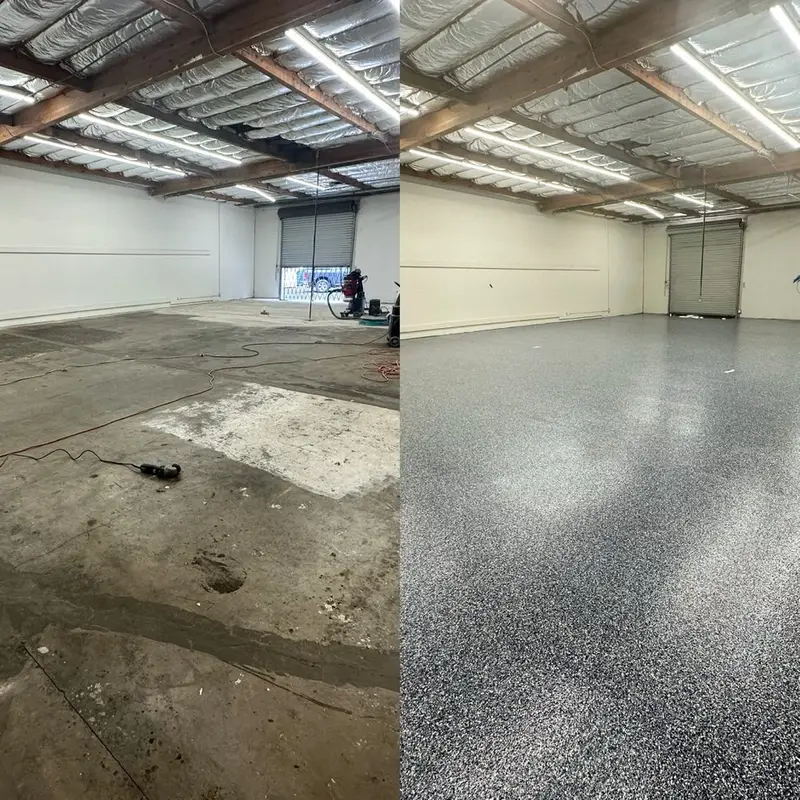
The coating is only as good as the slab beneath it. We grind or blast the surface, repair cracks and spalls and test for moisture and contamination before any product goes down.
Skipping preparation is the most common reason commercial coatings peel or bubble. We explain what we find in the slab and how it affects the system, so decisions are made with real information.
Care and long term performance
Every system lasts longer with simple care. We provide cleaning guidance, approved products and a short inspection checklist for your maintenance team.
High traffic lanes may need a refresh coat over time. A periodic walk through the building catches small problems early, when repairs are quick and affordable.
Planning the budget and the phases
Large buildings rarely get every floor done at once. We help rank areas by safety, wear and visibility, then build phases that match your budget cycle. Wet areas, loading zones and entrances usually come first because they fail first, while appearance spaces follow.
Seeing the whole plan up front keeps materials and colors consistent as work moves from one zone to the next, and it avoids paying twice for preparation.
Getting an estimate
Our epoxy floor cost guide explains what moves the price. Send photos and rough dimensions through the free estimate form and we respond within 24 hours. Site walks are available the next day or later, depending on availability, and you receive a written scope after the visit.
What to know before you start
Build the floor plan around actual equipment routes, not just room names. Mark where pallets turn, carts queue and cleaning machines stop before assigning finish systems to commercial zones.
Frequently Asked Questions
Sources
Last reviewed:
By Turbo Surfacing Solutions team · Planning updated:
Explore More Epoxy & Concrete Polishing
Top applications, cities we install in, pricing, and the latest epoxy & concrete polishing insights — all curated from this hub.
Most-Requested Installs
- Epoxy FlooringEpoxy Systems
- Metallic Epoxy FlooringMetallic Epoxy
- Epoxy Chip FlooringChip Systems
- Epoxy Quartz FlooringQuartz Systems
Ready to Get Started with Commercial Flooring Applications?
Get a free, no-obligation estimate for your project. Our team responds within 24 hours.
Request Commercial Quote