- Licensed CA Contractor·
- ADA Compliant Installs·
- Serving All of Southern California·
- Free Estimates·
- Licensed, Bonded & Insured
Epoxy Flooring Systems for Garages, Shops and Commercial Floors
How an epoxy floor is built layer by layer, and how to choose the right system for your slab and your use.
Quick answer
Turbo Surfacing installs epoxy flooring systems on prepared concrete for garages, shops and commercial floors. A system is built in layers: slab preparation, primer, body coat, optional decorative broadcast and a protective topcoat. We test the slab first and choose the system to match how the floor is used. We are licensed, bonded and insured.
Key takeaways
- An epoxy floor is a system of prep, primer, body coat and topcoat.
- Preparation and moisture testing decide how long the coating lasts.
- Finish choice affects look, texture and slip resistance.
- A UV stable topcoat helps on sun exposed floors.
- Ask for the system, thickness and cure schedule in writing.
People say epoxy floor as if it were one product. It is really a system, a stack of layers that each do a different job, applied to a slab that has been prepared to receive them. The look you see is the top of that stack. The performance comes from everything under it.
This page explains how an epoxy system is built, why preparation matters more than the product name, how different finishes fit different uses and what to ask when you compare bids for a garage, a shop or a commercial floor.
A system, not a coat of paint
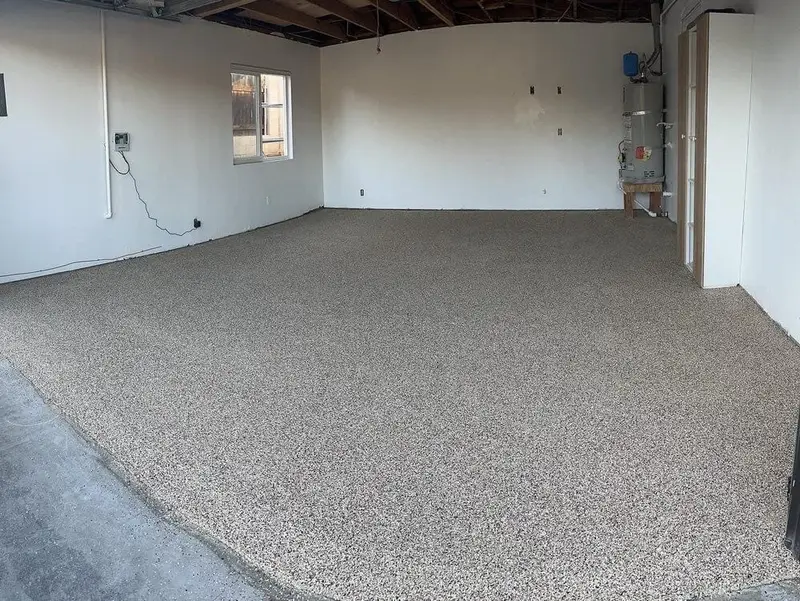
A typical epoxy system has four parts. The slab is prepared by mechanical grinding. A primer penetrates the surface and bonds the system to the concrete. A body coat builds thickness and color. A topcoat protects against wear, chemicals and sunlight. Decorative systems add a broadcast of flakes, quartz or pigments between the body coat and the topcoat.
Floor paint, by comparison, is a thin film that sits on the surface and wears through quickly. An epoxy system bonds into the concrete and builds a durable layer. The difference shows up in hot tire marks, forklift traffic and washdowns.
Preparation decides the result
Epoxy bonds to a prepared surface. Diamond grinding removes old coatings, sealers, oil residue and the weak top layer of concrete, and it opens the pores so the primer can bond. Cracks and spalled areas are repaired, and joints are treated so they do not telegraph through the finish. Dust is vacuumed before anything is applied.
If a slab is contaminated with oil, we discuss how deeply it has penetrated and what can be done. Some slabs cannot be coated reliably, and we tell you plainly when that is the case.
Moisture and why we test
Concrete slabs on grade can pass moisture vapor from the ground. Epoxy seals the surface, so vapor can build under the coating and push it off in bubbles or sheets. Testing before coating tells us whether the slab is dry enough, and if it is not, we choose a moisture mitigating primer, change the system or recommend another finish.
Older slabs without a vapor barrier, slabs near landscaping and slabs that stay damp after rain are the usual concerns. Tell us about any past coating failures or damp spots.
Body coats and film thickness
The body coat sets how much material is on the floor. Thin film systems are quick and suit light duty. Thicker, self leveling systems fill minor imperfections and give heavier protection. Mortar systems, mixed with sand, are used where a slab needs filling or where heavy impact is expected. More material usually means more cost and more time, and it also means more protection.
We recommend a build for the way the floor is used, and we note the product, the number of coats and the target thickness in the written scope so bids can be compared.
Finishes: solid, flake, quartz and metallic
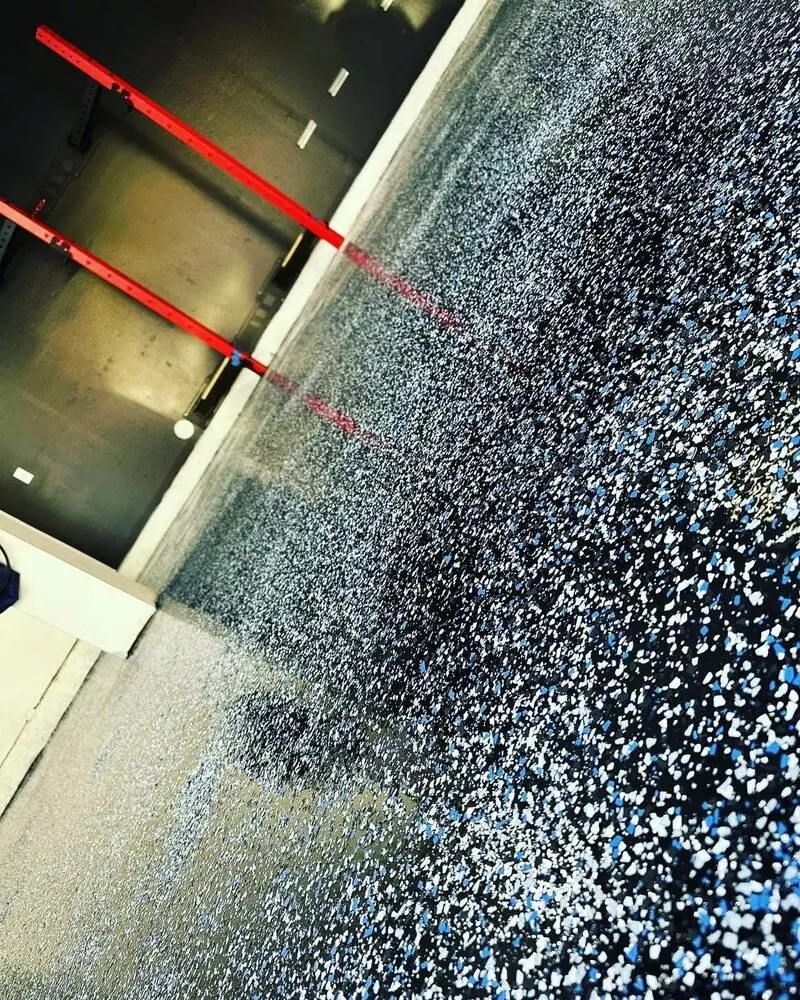
Solid color is the simplest finish and is common in shops and warehouses. Decorative flake adds texture and hides small imperfections. Quartz systems are rugged and textured. Metallic finishes create a swirled, one of a kind look. Each has its own page: solid epoxy, epoxy chip, epoxy quartz and metallic epoxy.
The finish affects appearance, texture, slip resistance and how well the floor hides dirt and wear. Tell us how the floor will be used and what you want it to look like.
Topcoats and sunlight
Epoxy is excellent at bonding and chemical resistance, and it can amber or chalk in direct sunlight over time. A topcoat of polyurethane or polyaspartic adds UV stability and abrasion resistance, and it is common on garage floors and on any floor that sees sun through windows or doors. Our page on polyurea and polyaspartic coatings explains the topcoat options.
For exterior or sun exposed areas, we discuss the topcoat first, because it decides how long the floor keeps its color.
Where epoxy floors are used
Epoxy suits garages, workshops, warehouses, retail back rooms, laboratories, showrooms and many commercial spaces. It is less suited to outdoor surfaces that see sun and rain without protection, to slabs with active moisture problems and to spaces that need a flexible coating over moving cracks.
Different spaces call for different details. Commercial kitchens need cove bases and slip resistance. Warehouses need joint treatment and chemical resistance. Garages need hot tire resistance and easy cleaning. We tailor the system to each.
Residential versus commercial systems
A home garage and a distribution center both get epoxy, but not the same system. Residential floors lean toward appearance, hot tire resistance and easy cleaning, and they usually carry a decorative finish and a UV stable topcoat. Commercial floors lean toward durability, chemical resistance, slip control and speed of return to service, and they often use thicker builds and more detailed joint treatment.
Tell us which kind of space you have and how hard the floor works. We recommend a system that fits the demand, not the most expensive one.
Cure time and return to service
Each product in the system has its own working time and cure time, and both depend on temperature and humidity. A cool, damp day slows the cure, and a warm, dry day speeds it. Foot traffic returns before vehicles, and heavy equipment comes last. We give you the schedule in the written scope, and we tell you when each kind of use can resume.
If a floor has to go back to work quickly, tell us at the estimate stage so we can choose products that fit the schedule.
Care and repair
Sweep or dust mop regularly, clean with a mild cleaner and wipe up spills such as oil and chemicals promptly. Avoid dragging heavy items, and use pads under equipment legs. Small chips and scratches can often be repaired locally, and worn areas can be recoated. Warranty terms vary by product and system and are provided in writing with each estimate, and we explain what care keeps coverage in place.
Questions to ask before you compare bids
Ask how the slab will be prepared and how it will be tested for moisture. Ask what the system is, how many coats it has and what the target thickness is. Ask how cracks and joints will be treated. Ask which topcoat is proposed and why. Ask what the cure schedule is and when vehicles can return. Put the answers in writing so bids can be compared on the same terms.
Cost and next steps
Our epoxy floor cost guide explains what moves the price. Send photos and rough dimensions through the free estimate form and we respond within 24 hours. Site walks are available the next day or later, depending on availability, and you receive a written scope after the visit.
What to know before you start
Label the primer, build coat and topcoat separately in the handover file. An epoxy color name alone is not enough to identify which layer a future repair must match.
Frequently Asked Questions
Sources
Last reviewed:
By Turbo Surfacing Solutions team · Planning updated:
KEEP EXPLORING.
Other Southern California surfacing projects we specialize in — handpicked because they share the same materials, standards, or installation crew as this page.
Related Epoxy & Concrete Polishing & Resources
Sibling services, cities where we install this, and blog posts that go deeper.
More Epoxy & Concrete Polishing
- Metallic Epoxy FlooringMetallic Epoxy
- Epoxy Chip FlooringChip Systems
- Epoxy Quartz FlooringQuartz Systems
Get a Quote for Epoxy Flooring
Get a free, no-obligation estimate for your project. Our team responds within 24 hours.
Get Epoxy Quote