- Licensed CA Contractor·
- ADA Compliant Installs·
- Serving All of Southern California·
- Free Estimates·
- Licensed, Bonded & Insured
Epoxy Chip and Flake Floors for Garages, Locker Rooms and Shops
A forgiving, textured finish that hides dust and small imperfections and cleans up easily.
Quick answer
Turbo Surfacing installs epoxy chip floors, also called flake floors, on prepared concrete. Colored flakes are broadcast into a base coat and sealed under a clear topcoat, giving texture, color variety and a forgiving surface. We are licensed, bonded and insured and respond to estimate requests within 24 hours.
Key takeaways
- Chip floors use broadcast flakes under a clear topcoat for a textured, forgiving finish.
- Flake size and blend change the look and how well dirt is hidden.
- Full broadcast is more durable than partial broadcast.
- The topcoat sets gloss, grip and UV stability.
- Worn floors can often be recoated.
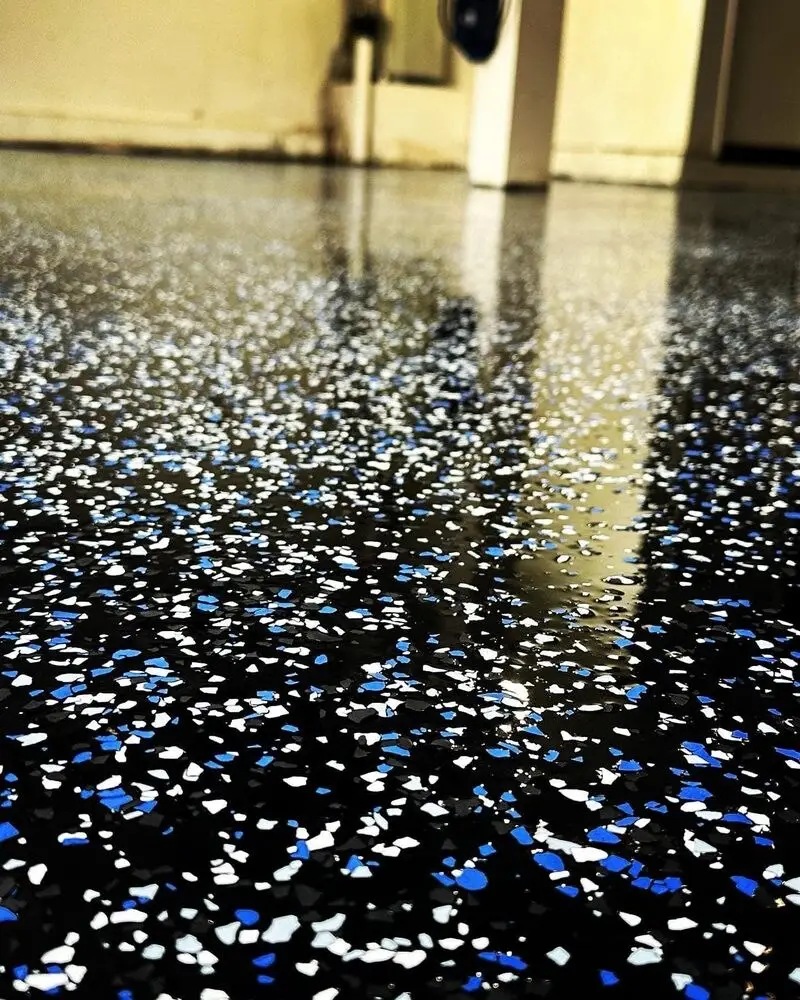
A flake floor is the finish most people picture when they think of a garage floor. Colored chips are scattered into a wet base coat, the excess is swept away and a clear topcoat locks it all in. The result is a speckled surface with a bit of texture, a lot of color variety and a good ability to hide dust, tire marks and small slab flaws.
This page explains how chip floors are built, how to choose flake size, blend and coverage, where they work best and how to care for them.
How a chip floor is built
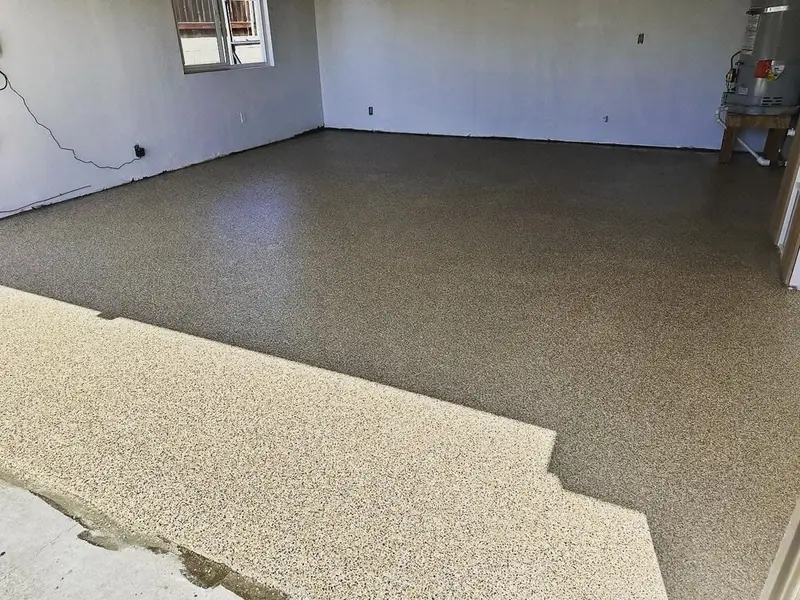
After the slab is ground and repaired, a primer and a base coat are applied. While the base coat is wet, flakes are broadcast by hand over the surface. After the base coat cures, the loose flakes are scraped and vacuumed away, and one or more clear topcoats are applied to seal the surface and give it a smooth, cleanable finish.
Each step has a window of time. Broadcasting too early or too late affects how well the flakes bond, so the crew has to work in a steady rhythm.
Flake size and blends
Flakes come in different sizes, from small chips to larger, bolder pieces, and in many color blends. Small flakes give a finer, more uniform look. Larger flakes make a bolder, more textured surface. Blends that mix several colors hide dirt and wear better than a single color.
We bring sample boards, and we recommend you look at them in the light of your space. A garage with a lot of daylight will show a blend differently from one lit only by overhead fixtures.
Full broadcast and partial broadcast
A full broadcast covers the surface until no base coat shows. It produces a dense, textured finish that hides imperfections well. A partial broadcast, also called a scatter, leaves some base coat visible for a lighter, more open look. A full broadcast is more durable and more forgiving, and it uses more flake.
We recommend full broadcast for most garages and shops, and we discuss partial broadcast where a lighter look is the goal.
Texture and slip resistance
Flake adds texture, and the topcoat determines how much grip the finished surface has. A smooth topcoat over flake is easy to clean, and an anti slip additive increases traction for wet areas such as locker rooms, pool decks and entries. The right level depends on use, and more grip means more texture to clean.
Tell us where water, oil or wet shoes will be present, and we will recommend a texture level and note it in the scope.
Where chip floors work best
Chip floors are popular in garages, workshops, locker rooms, laundry rooms, mudrooms, basements and utility areas, and in many light commercial spaces. They are less suited to spaces that need a seamless, mirror like finish, where a solid or metallic system may be better, and to areas with heavy chemical exposure or heavy impact, where quartz or mortar systems may be more durable.
Colors for common settings
Garages often use gray, tan or charcoal blends that hide tire marks and dust, with a touch of white or black for contrast. Locker rooms and pool areas use lighter, cooler blends that feel clean. Basements and utility rooms benefit from lighter blends that brighten the space. Retail and commercial areas often pick a brand color blend.
Look at blends on a large sample board. Darker blends hide dirt, and lighter blends show it, but lighter blends also reflect more light and can make a room feel larger.
Coves, steps and edges
Flake floors can curve up a wall as a cove, form a base around a room and cover steps with a nosing, so water and dust do not collect at the edges. In garages, a short cove at the garage door and along the walls gives a tidy finish. On steps, a nosing with grip prevents slips.
We note edges and transitions in the scope. If you want a cove, a border or a contrasting stripe, tell us before the base coat goes on.
Planning a garage project
Clear the garage, or plan to have it cleared, and think about where cars, tools and storage will go during the work. Tell us about oil stains, past coatings and any cracks. The garage door threshold, any floor drain and the slope toward the door deserve attention.
We grind, repair, coat and topcoat in sequence, and the garage is closed to vehicles until the schedule says otherwise. Plan to park elsewhere for a few days, and give us your key dates.
Preparation and moisture
As with every epoxy system, the slab comes first. We grind the surface, repair cracks and spalls, treat joints and test for moisture. A flake floor hides small imperfections, but it does not hide a failing bond, and moisture can push a coating off the slab regardless of the finish on top.
Topcoats and sun
A clear topcoat of polyurethane or polyaspartic protects the flake and gives the floor its shine and cleanability. UV stable topcoats help on garages and other floors that see sunlight through doors and windows. Two coats are common on heavily used floors. We note the topcoat and the number of coats in the written scope.
Repairs and recoating
Chips and scratches in the topcoat can often be repaired locally. Because flake hides small blemishes, many floors age gracefully. When a floor does wear, it can often be recoated, which refreshes the topcoat and extends the life of the system. Tell us the history of your floor, and we will tell you whether a repair or a recoat is the better choice.
Care
Sweep or dust mop regularly and clean with a mild cleaner. Wipe up spills, including oil, chemicals and antifreeze, promptly. Avoid dragging heavy objects, and use pads under equipment. Warranty terms vary by product and system and are provided in writing with each estimate, and we explain what care keeps coverage in place.
Timing and what to expect
A chip floor in a typical garage takes a few days, with the slab prepared first and the coats applied in sequence. Foot traffic returns before vehicles, and cure times depend on temperature and humidity. Plan to keep the area clear, and tell us about deadlines so we can say plainly what the season allows.
Cost and next steps
Our epoxy floor cost guide explains what moves the price. Send photos and rough dimensions through the free estimate form and we respond within 24 hours. Site walks are available the next day or later, depending on availability, and you receive a written scope after the visit. Related pages: garage floors and epoxy flooring systems.
What to know before you start
Retain a small bag of the approved chip blend with the sample panel. A brand name without the blend proportions may not explain the appearance of a localized repair.
Frequently Asked Questions
Sources
Last reviewed:
By Turbo Surfacing Solutions team · Planning updated:
KEEP EXPLORING.
Other Southern California surfacing projects we specialize in — handpicked because they share the same materials, standards, or installation crew as this page.
Related Epoxy & Concrete Polishing & Resources
Sibling services, cities where we install this, and blog posts that go deeper.
Get a Quote for Epoxy Chip Flooring
Get a free, no-obligation estimate for your project. Our team responds within 24 hours.
Get Chip System Quote