- Licensed CA Contractor·
- ADA Compliant Installs·
- Serving All of Southern California·
- Free Estimates·
- Licensed, Bonded & Insured
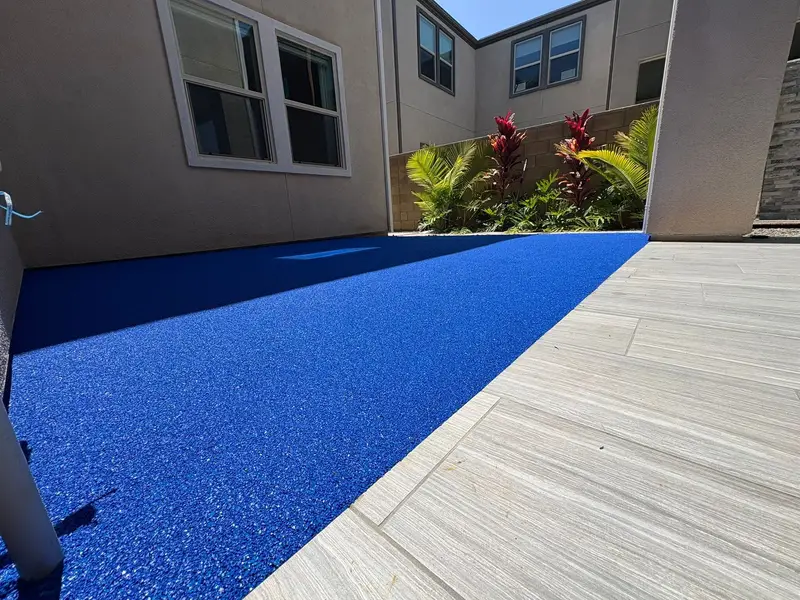
Porous Rubber Pavement and Permeable Surfaces
A permeable rubber surface that lets rain soak through to a prepared base, for paths, plazas, tree areas and play zones.
Quick answer
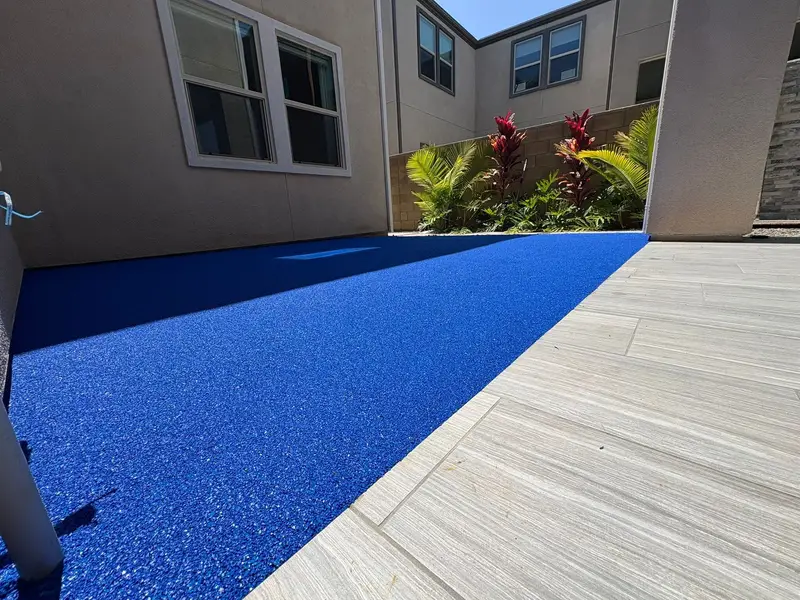
Porous rubber pavement is a poured-in-place rubber surface with open voids that let rain pass through to a graded stone base below. It reduces puddles and runoff, protects tree roots and stays comfortable underfoot. Turbo Surfacing is licensed, bonded and insured, and designs the base, slopes and overflow so the system drains as planned.
Key takeaways
- Rain passes through into a designed base.
- Overflow drains handle big storms.
- Cleaning prevents clogging.
- Solid rubber still suits some sites.
Solid surfaces shed water. Porous surfaces let it in. Porous rubber is built with a binder that leaves tiny voids between granules, so rain can pass through the surface and into a stone base designed to hold and release it.
This page explains how porous rubber works, where it makes sense, what it needs from the base and how to keep it draining.
How porous rubber works
The wearing course is mixed with less binder, so granules stick together at contact points but leave channels between them. Water passes through the layer and into an open-graded stone base beneath. From there it soaks into the soil or flows to a drain.
The surface still feels firm, cushioned and slip resistant.
The base is the system
A porous surface only works if the base can accept water. We build a layer of clean, open-graded stone sized for the area, with fabric where needed to keep soil from migrating up. Overflow drains handle storm events beyond what the base can hold.
Skipping the base design is the fastest way to a failed porous job.
Soil and infiltration
Sandy soils drain quickly, while clay soils drain slowly. Before we design, we want to know how the ground behaves, and an engineer may test infiltration. In slow soils, we add underdrains that carry water away rather than waiting for it to soak in.
Soil reports and geotechnical notes save time when available.
Tree roots and permeable paths
Roots need air and water. A porous surface lets both reach the soil, and a raised, leveled base can bridge roots without cutting them. Pairing porous rubber with a flexible edge gives trees room to grow.
Our tree wells page covers the pits and openings around trunks in more detail.
Paths, trails and walkways
Play areas and splash zones
Playgrounds often sit in low spots where water collects. A porous cushion lets rain pass through so children can play sooner after a storm. Thickness is still sized to the equipment's fall height, and the base is built to handle drainage.
Solid surfaces may suit play areas better where water access is limited.
Plazas and courtyards
Plazas with planter beds, trees and seating benefit from permeable surfaces that reduce runoff. Edge details keep soil from washing onto the rubber, and drains carry overflow away. Color and inlays work the same as on solid rubber.
Public spaces gain a surface that is quieter and gentler underfoot than pavers.
Clogging, sediment and cleaning
Voids can clog with soil, leaves and fine sediment. Keep adjacent planting beds contained, sweep or blow debris and rinse the surface when it starts to drain slowly. Avoid dumping soil or mulch onto the rubber.
We provide a short care sheet that explains how to check drainage.
Testing drainage
A simple test is to pour a bucket of water on the surface and watch how quickly it disappears. Slow drainage means it is time to clean. We encourage owners to test after installation and each season.
Records of results show whether cleaning is working.
Weather and seasons
Southern California storms are short but intense. Porous systems handle moderate rain, and overflow drains manage the rest. In dry seasons, dust can settle into the voids, so occasional rinsing helps.
We design for local rainfall and the owner's maintenance habits.
Loads, vehicles and heavy use
Porous rubber is best for pedestrians, bikes and light maintenance carts. Heavy trucks need stronger bases and may be better served by another surface. Tell us the heaviest vehicle that will cross the area.
We size the stone base and thickness to those loads.
Edges, curbs and transitions
Porous rubber needs clean edges to hold the surface in place and keep soil out. Curbs, steel edging and concrete borders are common. At doors and slabs, flush transitions protect wheelchairs and strollers.
Water should have a path to the base, so edges are detailed to avoid blocking it.
When solid rubber is the better choice
Porous rubber is not right everywhere. Where soil is contaminated, where groundwater is high or where spills are likely, a solid surface with drains may be safer. Heavy vehicle areas also favor solid systems.
We say so plainly when another system suits the site better.
Working with agencies and engineers
Stormwater features often involve civil engineers and agency review. We supply product information, details and installation methods so designers can include porous rubber in their drawings. Early discussion avoids rework.
Clear drawings of the base and overflow help reviewers.
Color, texture and appearance
Porous rubber can be mixed in the same colors as solid rubber, though the surface may look slightly more textured. Samples show how color and texture look in sun. Lighter colors reduce heat on exposed paths.
Inlays and lines can still be cut into the surface.
Repairs and long-term care
Damaged sections can be cut out and replaced. If drainage slows over time, cleaning usually restores it. Records of base depth, stone type and thickness help future repairs.
Keep a log of drainage tests to spot trends.
Starting a porous project
Send photos, a site plan and notes about soil, drainage and trees. We will visit, probe the ground and return a scope that explains the base, overflow and surface options.
Porous rubber compared with other permeable surfaces
Permeable pavers, pervious concrete and decomposed granite all let water in, but each has tradeoffs. Pavers shift, pervious concrete is hard and can crack, and granite washes out and tracks indoors. Porous rubber is softer, quieter and more forgiving for walkers.
It costs more than some of these in many cases, and we help owners compare.
Getting an estimate
Our poured-in-place rubber cost guide explains what moves the price. Send photos and rough dimensions through the free estimate form and we respond within 24 hours. Site walks are available the next day or later, depending on availability, and you receive a written scope after the visit.
What to know before you start
Mark the locations of inspection or cleanout points on the drainage drawing before covering the base. A permeable finish does not make a buried outlet accessible for future clearing.
Frequently Asked Questions
Sources
Last reviewed:
By Turbo Surfacing Solutions team · Planning updated:
KEEP EXPLORING.
Other Southern California surfacing projects we specialize in — handpicked because they share the same materials, standards, or installation crew as this page.
Related Poured-In-Place Rubber & Resources
Sibling services, cities where we install this, and blog posts that go deeper.
More Poured-In-Place Rubber
- PIP Rubber InstallationProfessional Installation
- PIP Installation ProcessOur Process
- PIP Rubber MaintenanceMaintenance Guide
Cities We Serve
- Poured-In-Place Rubber in Chula Vista
- Poured-In-Place Rubber in San Diego
- Poured-In-Place Rubber in Oceanside
Get a Quote for Porous Rubber Pavement
Get a free, no-obligation estimate for your project. Our team responds within 24 hours.
Request Pavement Quote