- Licensed CA Contractor·
- ADA Compliant Installs·
- Serving All of Southern California·
- Free Estimates·
- Licensed, Bonded & Insured
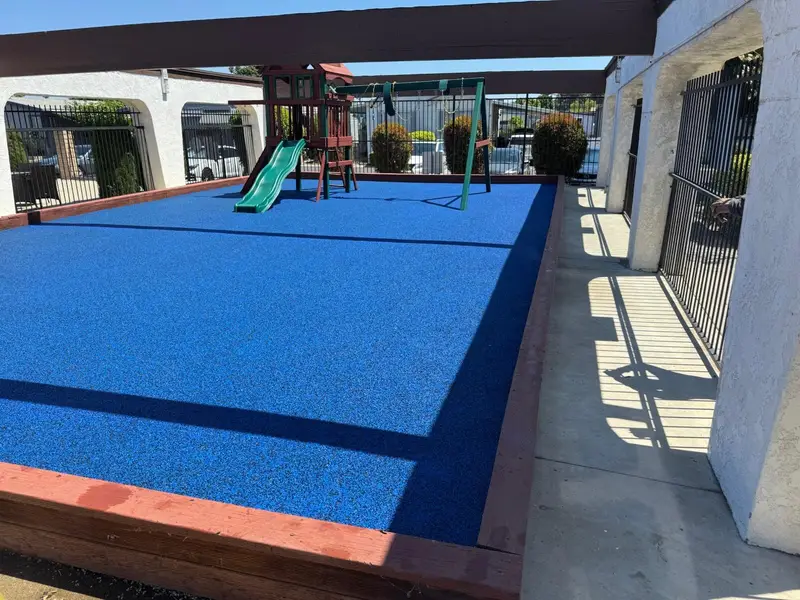
Playground Surfacing for Housing Developments in Poured-in-Place Rubber
Seamless, low-upkeep play surfaces for apartment communities, townhome projects and new neighborhoods.
Quick answer
Poured-in-place rubber gives housing developments a seamless, low-upkeep play surface that supports resident safety and sells the amenity package. It is scheduled around construction phases, turnover dates and landscape work. Turbo Surfacing is licensed, bonded and insured, and coordinates with builders, property managers and landscape contractors.
Key takeaways
- Rubber supports amenity marketing.
- Install after heavy construction.
- Turnover documents guide upkeep.
- Early coordination prevents rework.
A playground is one of the first amenities buyers and renters notice. In new housing developments, the surfacing also has to survive construction traffic, fit tight schedules and meet the expectations of owners who will care for it for years.
This page explains how rubber is planned for developments, from builders and developers to property managers and associations.
Playgrounds as marketing
A bright, clean play area signals that a community is well planned. Rubber can be colored to match branding, with inlays that echo logos or themes. Families touring a model home often walk past the playground, and what they see shapes their impression.
We bring samples and renderings that marketing teams can use.
Phasing with construction
Playgrounds are built late, after heavy equipment has left. Rubber needs a stable base and dry weather, so we plan with the general contractor. Utilities, curbs and landscape work should be done first, to avoid damage.
A shared schedule keeps trades from overlapping.
Turnover to the association or owner
At turnover, the owner or HOA receives a surface they must maintain. We provide a care sheet, a plan with colors and thickness, product data and contact information. Property managers can train staff using these documents.
Clear records reduce disputes over responsibility.
Base and drainage on new sites
New sites often have fresh fill and unsettled soil. We test and compact the base, shape drainage and coordinate with civil drawings. A stable base prevents settling that cracks rubber.
Soil reports and grading plans help us anticipate problems.
Equipment coordination
Playground suppliers set posts and structures. We coordinate elevations, sleeve locations and access, so the surface fits the equipment. Fall heights drive thickness, and impact attenuation is tested under ASTM F1292.
Early conversations avoid rework.
Multiple play areas and amenity packages
Larger developments have several play areas, plus pools, courts and paths. Rubber ties them together with consistent colors and details. We price repeated areas efficiently and keep records for future phases.
A master plan helps owners budget and schedule.
City, owner and association approvals
Plans may need review by city staff, owners and architectural committees. We provide product data, drawings and samples to support those steps. Early submittals avoid delays.
Our team can attend meetings to explain the work.
Pool decks and splash areas
Developments often include pools and splash features. Rubber gives slip-resistant, comfortable surfaces around them. Lighter colors reduce heat, and edge details at the coping keep water moving away from the pool.
We coordinate with the pool contractor on elevations and drains.
Dog parks and pet areas
Residents expect pet amenities. Small rubber runs near entrances and turf areas with rubber paths keep dogs clean and off the playground. Fencing, waste stations and shade complete the area.
We design drainage so rinse water goes to landscape.
Walking paths and fitness loops
Residents like loops and paths that connect buildings, courts and play areas. Rubber is softer than concrete and gives a quiet surface. Fitness stations and distance markers add value.
We coordinate with landscape architects on alignments.
Sun, shade and comfort
Southern California sun is strong, so shade structures, trees and lighter colors matter. Orientation should be planned with buildings, which can block or reflect sun. We review plans and suggest layouts that keep play areas comfortable.
Residents appreciate shade as much as equipment.
Maintenance for property managers
Property managers need routines that on-site staff can follow. We provide a one-page checklist and a list of safe products. Sweeping, rinsing and monthly inspections keep the surface in order.
Seasonal visits for deeper cleaning and repair are available.
Resident safety and risk management
Developers and managers care about injuries and claims. Rubber reduces hazards from loose fill and uneven surfaces. Documentation of installation and inspections shows care.
We recommend a written inspection log and posted rules.
Starting a development project
Send site plans, equipment lists, schedules and any specifications. We will review them, visit the site and return a scope with options for colors, thickness and phasing. Early involvement saves time and money.
Occupancy, renewals and resale
Renters and buyers judge a community by its amenities. A clean, intact play area suggests that the property is cared for, which supports renewals and resale value. Documenting the surface and its upkeep helps managers explain the amenity to prospects.
Photographs of the finished area are useful for leasing materials.
Podium courtyards and rooftop play
Dense developments place play areas on podiums and rooftops, over parking structures. These sites need light build-ups, careful drainage and coordination with waterproofing contractors. We never puncture membranes, and we review loads with the structural engineer.
Rubber's low weight makes it attractive for these elevated courtyards.
Resident traffic and wear patterns
Apartment playgrounds see heavy daily use. Wear shows first at swing zones, slide exits and entrances. We plan thicker areas where needed and keep spare material notes for repairs. Managers should walk the area monthly and note issues.
A simple checklist keeps small repairs from turning into big ones.
Budgeting and bids
Developers compare unit costs and ask for options. We provide clear scopes that separate base work, rubber thickness, inlays and edge details so builders can compare bids fairly. Alternates for color or area help teams meet budgets.
Early pricing guides help during pro forma planning.
Getting an estimate
Our poured-in-place rubber cost guide explains what moves the price. Send photos and rough dimensions through the free estimate form and we respond within 24 hours. Site walks are available the next day or later, depending on availability, and you receive a written scope after the visit.
What to know before you start
Ask which phase of the housing development will open first and mark its playground approach. The temporary resident route may differ from the final landscape drawing used to price rubber.
Frequently Asked Questions
Sources
Last reviewed:
By Turbo Surfacing Solutions team · Planning updated:
KEEP EXPLORING.
Other Southern California surfacing projects we specialize in — handpicked because they share the same materials, standards, or installation crew as this page.
Related Poured-In-Place Rubber & Resources
Sibling services, cities where we install this, and blog posts that go deeper.
More Poured-In-Place Rubber
- PIP Rubber InstallationProfessional Installation
- PIP Installation ProcessOur Process
- PIP Rubber MaintenanceMaintenance Guide
Cities We Serve
- Poured-In-Place Rubber in Chula Vista
- Poured-In-Place Rubber in San Diego
- Poured-In-Place Rubber in Oceanside
Get a Quote for Playground Surfacing for Housing Developments
Get a free, no-obligation estimate for your project. Our team responds within 24 hours.
Request Community Quote