- Licensed CA Contractor·
- ADA Compliant Installs·
- Serving All of Southern California·
- Free Estimates·
- Licensed, Bonded & Insured
Rubber Surfacing for Care Campuses, Senior Living and Clinics
Courtyards, walking loops and entries designed for walkers, wheelchairs and unsteady feet.
WE DESIGN. WE INSTALL. WE SERVICE.
INSTALLATION SERVICES PROVIDED.
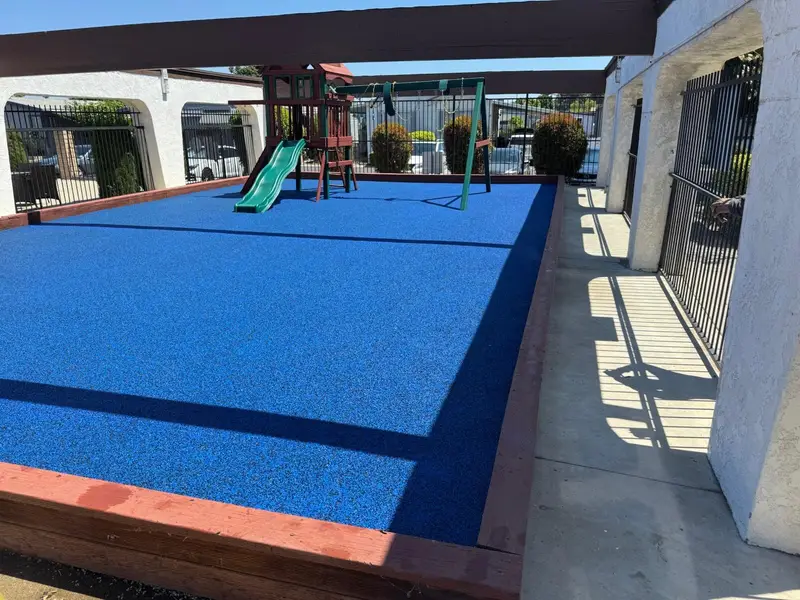
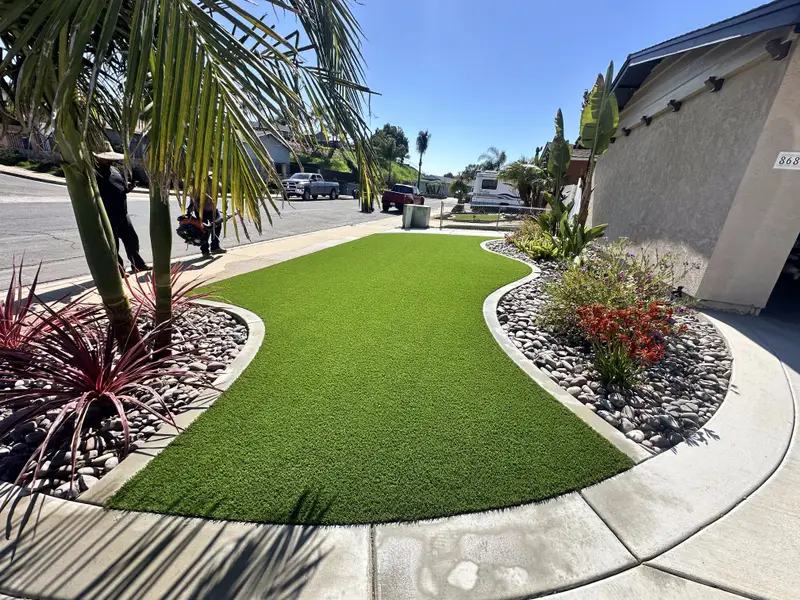
From playgrounds to parking structures — find the right solution for your project.
Ready to get started?
Quick answer
Turbo Surfacing installs poured in place rubber for courtyards, walking paths and entries at senior living, memory care and clinic campuses. A firm, slip resistant, level surface helps walkers and wheelchairs, and we plan work around residents and staff. We are licensed, bonded and insured and respond within 24 hours.
Key takeaways
- A firm, level, grippy surface helps walkers and wheelchairs.
- Color contrast at edges helps people with low vision.
- Walking loops work best with no dead ends and gentle slopes.
- Transitions at doors and between surfaces need the most attention.
- We plan installation around residents, staff and care routines.
Outdoor space matters more than most people expect in a care setting. A courtyard is where a resident sits in the sun, where a family visits and where a physical therapist walks someone through their first unsupported steps in weeks. A path that is uneven, slippery or hard to roll across turns that space into a risk.
This page is for administrators, facilities directors and designers who are planning or replacing outdoor surfaces at senior living communities, memory care programs and clinics. It covers what makes a surface work for walkers and wheelchairs, how loops and courtyards are laid out and how installation can be planned around the people who live there.
Why surface choice matters in care settings
Falls are a serious concern for older adults, and a trip on an outdoor path can have large consequences. Surfaces that are cracked, heaved or slippery when wet add risk, and so do sudden changes in level at doorways and between paving types. At the same time, residents who use walkers, canes and wheelchairs need a surface that is firm enough to roll on and level enough to stay predictable.
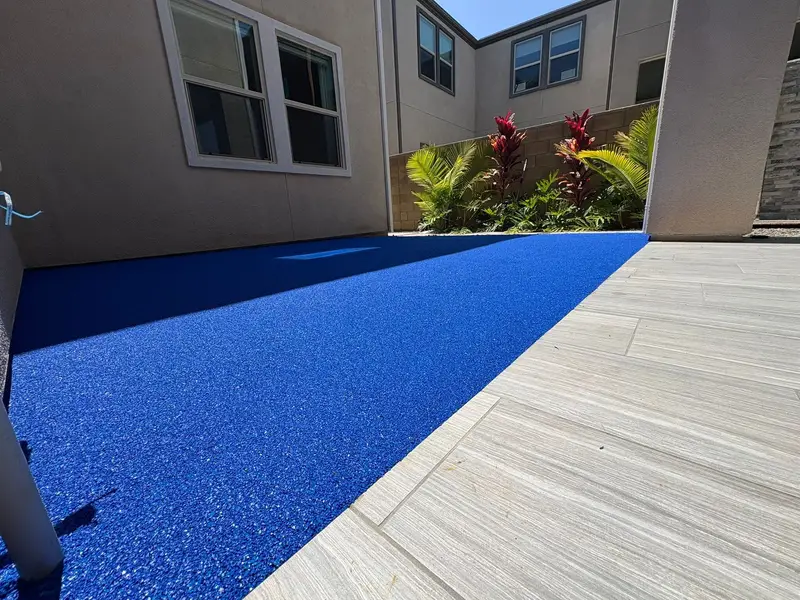
Poured in place rubber is often chosen because it is seamless, has some give underfoot and can be built with a textured wear layer for grip. It is not the only option, and it is not right for every path. We look at how the space is used and tell you plainly what suits it.
What to ask of a surface for older users
Four qualities matter most. Firmness and stability, so walkers and wheelchairs do not sink or catch. Grip, including when the surface is damp from irrigation or morning dew. Evenness, with no lips, cracks or abrupt changes in level. Visibility, because color contrast at edges, steps and transitions helps people with low vision notice a change.
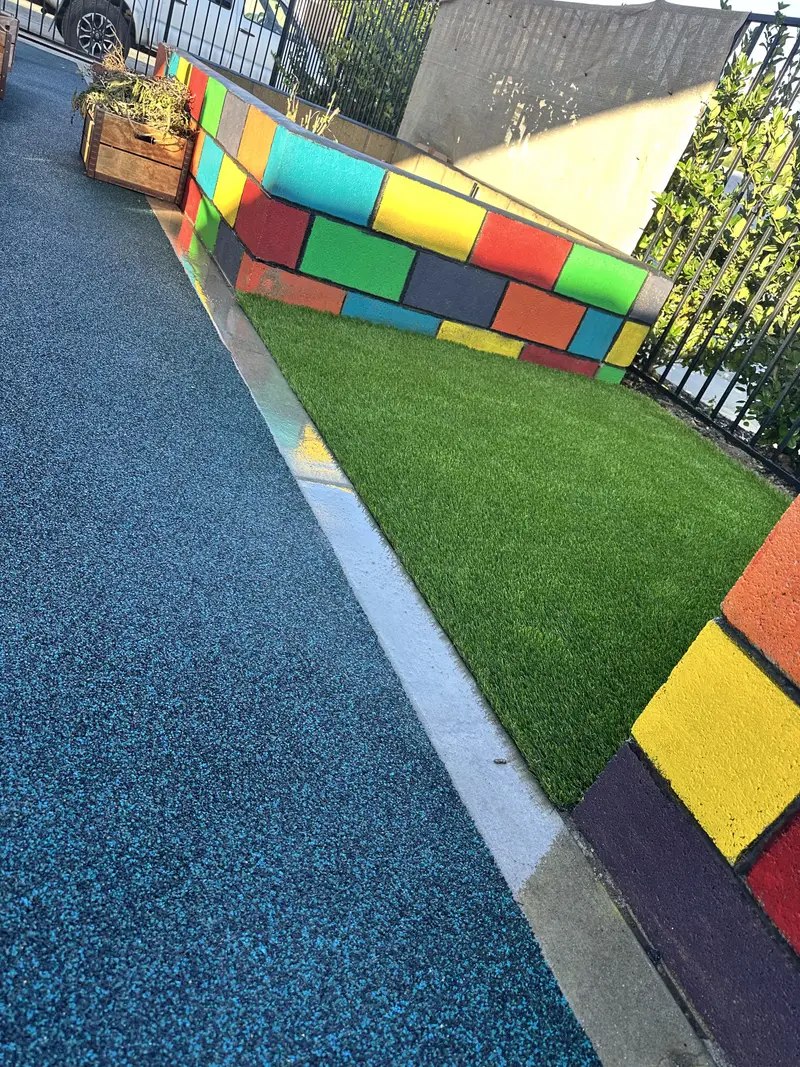
We can combine colors to mark edges, borders and path boundaries, and we discuss texture level and color for each area. Tell us who uses the space, including their mobility aids, and we will recommend a design and note it in the written scope.
Walking loops and courtyards
A walking loop gives residents a reason and a place to move. Loops work best when they have no dead ends, gentle slopes, regular places to sit and a surface that stays consistent along the way. A courtyard, particularly in memory care, benefits from a simple, enclosed layout that is easy to understand.
We look at slope and drainage so water does not collect on the path, and we plan edges so they are clearly visible and do not catch a wheel. Bring your drawings or a site plan if you have them, and we will review the loop with your team.
Doorways, thresholds and transitions
Most outdoor falls and wheelchair stops happen at transitions: from the door to the patio, from the patio to the path, from the path to a curb ramp. We look at the height difference at each of these and discuss how to bring surfaces to the same level, or to a gentle, clear slope.
Accessibility requirements apply to many care facilities, and your own licensing, operations and design standards may add more. We work with your facilities team and, where relevant, your architect, and we are glad to review requirements before the scope is written.
Drainage, irrigation and moisture
A surface that stays wet is a surface that is slippery and uninviting. We look at where water goes: roof drainage, irrigation overspray, slopes toward buildings and low spots. The base is graded and compacted with drainage built in, and we raise any issues we see so they can be corrected before the surface is installed.
Shade and sun also matter. A path that is in full sun for most of the day will be warm to the touch in summer, and a shaded area may stay damp longer. We discuss both and recommend color and layout accordingly.
Working around residents, staff and patients
Installing a surface in an occupied campus takes coordination. We agree on schedules with administrators and facilities staff, close areas clearly and keep walkways open where possible. Some materials have odors during application and cure times that depend on temperature, so we tell you in advance, and we discuss timing relative to meals, therapy sessions and visiting hours.
If your facility has infection control or safety procedures, share them early. We will plan around them, and we will tell you plainly what we can and cannot do on site.
Maintenance and inspection
A rubber path needs sweeping, rinsing and regular inspection. Walk the surface routinely, looking at edges, transitions and wear points. Report lifting edges, loose granules or hardened spots early, because small repairs are easier than replacement. A short inspection log, with dates and findings, helps with safety programs and surveys.
Warranty terms vary by product and system and are provided in writing with each estimate. We explain what care keeps coverage in place.
Next steps
Send photos and rough dimensions through the free estimate form and we respond within 24 hours. Site walks are available the next day or later, depending on availability, and you receive a written scope after the visit. Related pages: healthcare facilities and senior centers and assisted living.
What to know before you start
Include patient drop-off staff in the surface-boundary review. Their turning and waiting areas can differ from the pedestrian route shown on an architectural plan.
Frequently Asked Questions
Sources
- U.S. Access Board, ADA accessibility standards
- California Contractors State License Board license lookup
Last reviewed:
By Turbo Surfacing Solutions team · Planning updated:
Explore More Poured-In-Place Rubber
Top applications, cities we install in, pricing, and the latest poured-in-place rubber insights — all curated from this hub.
Most-Requested Installs
- PIP Rubber InstallationProfessional Installation
- PIP Installation ProcessOur Process
- PIP Rubber MaintenanceMaintenance Guide
- Surfacing ApplicationsApplications
Ready to Get Started with Healthcare & Senior Surfacing?
Get a free, no-obligation estimate for your project. Our team responds within 24 hours.
Request Healthcare Quote