- Licensed CA Contractor·
- ADA Compliant Installs·
- Serving All of Southern California·
- Free Estimates·
- Licensed, Bonded & Insured
Poured-in-Place Rubber for Hospitals, Clinics and Healthcare Campuses
Slip-resistant, easy-to-clean surfaces for healing gardens, rehab paths, courtyards and pediatric play areas.
Quick answer
Poured-in-place rubber gives healthcare campuses seamless, slip-resistant surfaces for healing gardens, rehabilitation paths, courtyards and pediatric play areas. It is easy to clean, comfortable for walkers and wheelchairs and installed in phases around patient flow. Turbo Surfacing is licensed, bonded and insured, and coordinates with facilities, infection control and safety teams.
Key takeaways
- Rubber is seamless and easy to clean.
- Traction supports safer walking.
- Work is phased around patients.
- Designs involve facilities and therapy teams.
Healthcare campuses use outdoor space for healing, rehab and relief. The surfaces must be safe for people who are unsteady, easy for housekeeping to clean and calm to look at.
This page explains how rubber is used in hospitals and clinics, what to coordinate with staff and how work is staged around patients.
Healing gardens and courtyards
Gardens give patients, families and staff a place to rest. Rubber paths wind through plantings, with seating areas at intervals. The surface is quiet underfoot and easy to roll across with wheelchairs and IV poles.
Soft colors and natural textures help the space feel calm.
Rehabilitation and therapy paths
Therapists use outdoor loops to practice walking, balance and stairs. Rubber gives a consistent surface with gentle slopes and handrails. Distance markers and rest points help patients track progress.
We design with physical therapists so the path supports real goals.
Slip resistance and traction
Rain, irrigation and cleaning make smooth floors slick. Rubber wearing courses have a fine texture that grips when damp. Drainage keeps water from collecting where patients walk.
Regular cleaning keeps traction consistent.
Cushioning and fall softening
Falls are a major concern for patients and visitors. No surface prevents every injury, though a cushioned layer can soften impact. We discuss thickness with clinical and safety staff, balancing cushioning with ease of walking and wheelchair use.
Excessively soft surfaces can tire walkers, so balance matters.
Cleaning and infection control
Surfaces must be easy to clean. Rubber is seamless, so there are no grout lines or gaps. Housekeeping teams can sweep, rinse and use mild detergents. We provide a list of safe products and ask your infection control team to review it.
Solvents and strong chemicals can harm the binder and should be avoided.
Pediatric play areas
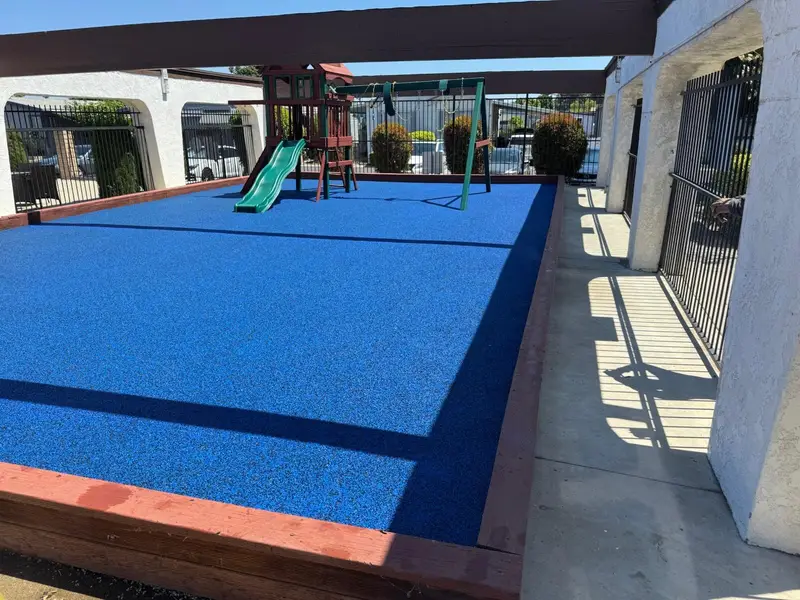
Children's hospitals and clinics often include outdoor play spaces. Rubber under swings and climbers cushions falls, and low features suit patients with limited mobility. Colors and inlays create a friendly feeling.
We size the cushion to the equipment fall height, using ASTM F1292 as a reference for impact testing.
Wheelchairs, gurneys and mobility aids
Healthcare paths must handle wheelchairs, walkers, gurneys and carts. Rubber is firm and stable, and transitions are flush. Slopes are gentle, with landings for rest. Wide paths allow people to pass each other.
We confirm routes with facilities and safety teams.
Entrances, drop-offs and ambulance areas
Entrances see heavy traffic. Rubber at drop-off zones provides traction and reduces noise, but vehicle lanes need a different build-up. We coordinate with architects and emergency staff to keep ambulance routes clear.
Clear signs and barriers protect patients during construction.
Color and calm design
Healthcare design favors calm, natural colors. Earth tones, soft greens and blues blend with plants and reduce visual stress. Strong patterns can confuse people with vision or cognitive challenges, so we use them carefully.
Samples are viewed outdoors in real light.
Phasing around patient flow
Work is staged in small sections, so entrances and paths stay open. We work around visiting hours, clinic schedules and procedures. Noise and odor are controlled, and barriers keep patients away from work areas.
Daily cleanup keeps the site presentable.
Coordinating with facilities and safety teams
We meet with facilities, safety and infection control staff before work begins. They review schedules, materials and cleanup plans. A single contact on our crew answers questions.
Clear communication keeps surprises low.
Documentation and records
We provide plans, product data, care sheets and records of colors and thickness. Facilities teams file them with building records. Having the details in one place helps future repairs and projects.
Photos before and after support quality reviews.
Sun, heat and shade
Patients and staff appreciate shade. Trees, canopies and pergolas keep surfaces cool, and lighter colors reduce heat. Seating in shade lets people rest outdoors comfortably.
We discuss orientation and sun paths during the site walk.
Maintenance and repairs
Sweep or blow debris, rinse regularly and clean spills quickly. Inspect for cracks and loose edges, and repair small problems early. Patches match the original color as closely as possible.
A seasonal routine keeps the surface in shape.
Starting the conversation
Tell us what areas you have in mind, who uses them and what constraints your campus has. We will visit with facilities staff, take measurements and return a written scope with options. Phased plans help teams with limited budgets.
Staff respite spaces
Nurses and clinicians need short breaks outdoors. A small patio with rubber paths, shade and seating offers a quiet pause. Surfaces that dry quickly and need little upkeep keep the space inviting without extra work for housekeeping.
We design these areas with facilities and wellness teams.
Visitors, families and wayfinding
Family members walk long distances between parking, entrances and waiting areas. Color-coded paths and clear transitions help them find their way. Benches at intervals and shade at turns make the walk easier for older relatives.
Directional inlays can reinforce signs without adding clutter.
Evening lighting and safety
Many healthcare campuses operate around the clock. Lighting should be bright enough to show edges and slopes without glare on wet rubber. We coordinate conduit, poles and fixtures with electricians before the surface is placed.
Security staff appreciate clear sight lines and well-lit paths.
Getting an estimate
Our poured-in-place rubber cost guide explains what moves the price. Send photos and rough dimensions through the free estimate form and we respond within 24 hours. Site walks are available the next day or later, depending on availability, and you receive a written scope after the visit.
What to know before you start
Identify maintenance access for beds or equipment moved through the healthcare courtyard. Mark that route separately from the patient seating layout before rubber boundaries are approved.
Frequently Asked Questions
Sources
Last reviewed:
By Turbo Surfacing Solutions team · Planning updated:
KEEP EXPLORING.
Other Southern California surfacing projects we specialize in — handpicked because they share the same materials, standards, or installation crew as this page.
Related Poured-In-Place Rubber & Resources
Sibling services, cities where we install this, and blog posts that go deeper.
More Poured-In-Place Rubber
- PIP Rubber InstallationProfessional Installation
- PIP Installation ProcessOur Process
- PIP Rubber MaintenanceMaintenance Guide
Cities We Serve
- Poured-In-Place Rubber in Chula Vista
- Poured-In-Place Rubber in San Diego
- Poured-In-Place Rubber in Oceanside
Get a Quote for PIP for Healthcare Facilities
Get a free, no-obligation estimate for your project. Our team responds within 24 hours.
Request Healthcare Quote