- Licensed CA Contractor·
- ADA Compliant Installs·
- Serving All of Southern California·
- Free Estimates·
- Licensed, Bonded & Insured
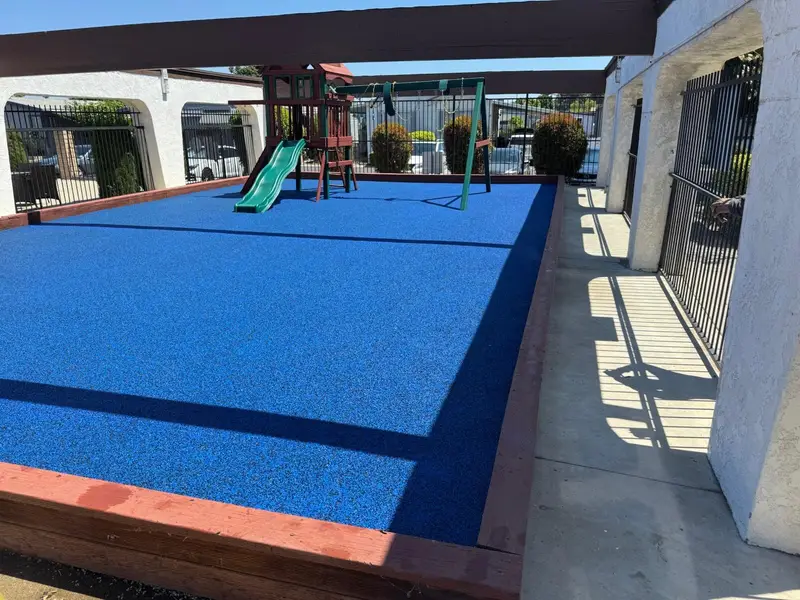
Poured-in-Place Rubber for Senior Centers and Assisted Living Communities
Cushioned, slip-resistant paths, patios and gardens that help residents walk outdoors with more confidence.
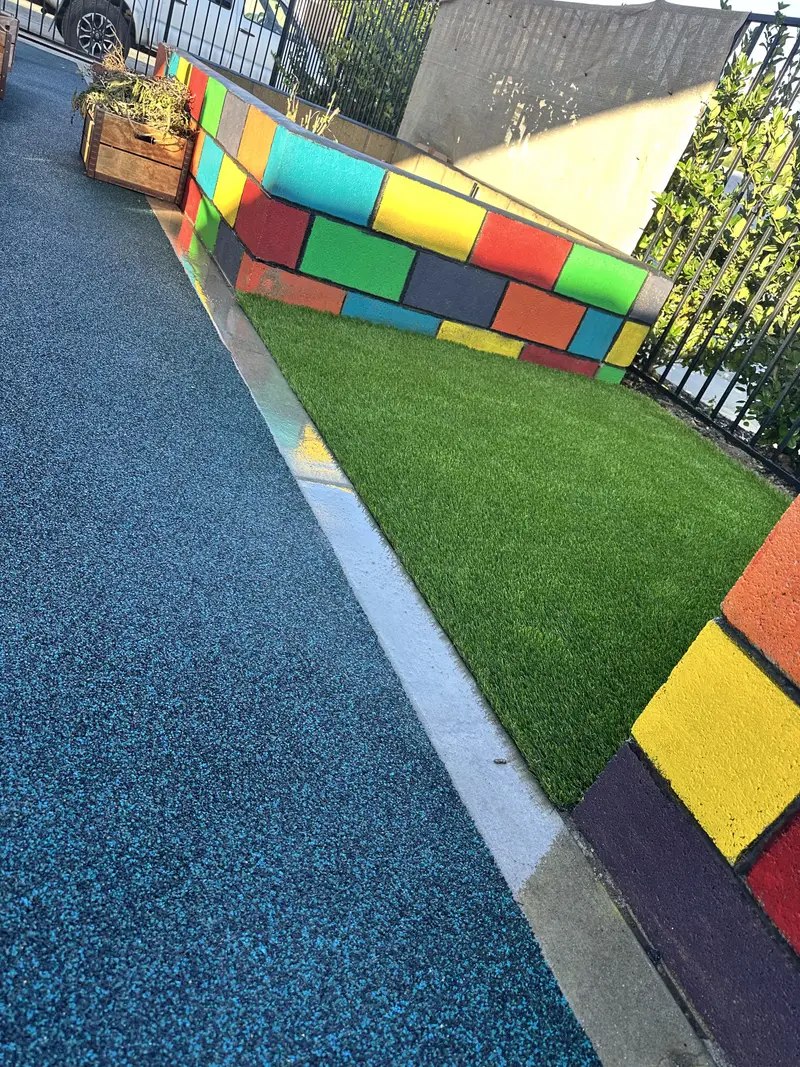
Quick answer
Poured-in-place rubber gives senior centers and assisted living communities a seamless, cushioned surface for walking loops, patios, courtyards and garden paths. It offers traction when wet, softens falls and rolls smoothly for walkers and wheelchairs. Turbo Surfacing is licensed, bonded and insured, and plans work around residents, care staff and daily routines.
Key takeaways
- Traction and cushioning support safer walks.
- Flush transitions serve walkers and wheelchairs.
- Work is scheduled around care routines.
- Phases fit community budgets.
Outdoor time matters for residents of senior communities, but cracked concrete, uneven pavers and slick tile make it risky. A better surface lets people walk, sit and visit outside with more confidence.
This page explains how rubber is used in senior living settings, what to plan with care staff and how to keep the work gentle on residents.
Walking loops and garden paths
Daily walks help residents stay strong and social. Rubber gives a firm but forgiving surface that is easier on knees and hips than concrete. Loops can be shaped around gardens, fountains and benches, with rest points placed at comfortable intervals.
We design path width so two walkers or a wheelchair and a companion can pass each other.
Cushioning and fall protection
Falls are a serious concern for older adults. No surface prevents every injury, though a cushioned layer can soften impact compared with concrete. We discuss thickness choices with administrators and wellness staff, balancing cushioning against ease of walking and wheelchair use.
Very soft surfaces can be tiring to walk on, so the right build-up matters.
Traction in wet weather
Rain, irrigation and morning dew make smooth tile and polished concrete slick. Rubber wearing courses have a fine texture that keeps traction when damp. Drainage and gentle slopes keep water from collecting where residents walk.
Regular cleaning prevents algae from forming in shaded corners.
Walkers, canes and wheelchairs
Mobility aids need smooth, stable surfaces. Rubber has no gaps or lifted edges, and transitions at doors and curbs are made flush. Slopes are kept gentle, and landings are planned for rest.
We review the layout with occupational therapists or activity directors who know how residents move.
Memory care courtyards
Secure courtyards give residents with memory loss a safe place to walk. Loops that lead back to the start help avoid confusion, and calm colors reduce visual stress. Strong contrast at edges helps with depth perception, while avoiding patterns that may look like steps or holes.
We coordinate with staff on fencing, gates and sight lines so the space feels open yet secure.
Colors that support orientation
Color choices matter in senior settings. Soft, solid colors are easier to read than busy patterns, and edges that contrast with the surroundings help people see where the path ends. Dark patches can look like holes to some residents, so we use them carefully.
We show samples in daylight and discuss them with staff.
Shade, heat and seating
Older adults are more sensitive to heat. Shade structures, trees and lighter rubber colors keep the surface comfortable. Benches under shade give residents a place to rest and visit.
We plan seating around paths so no one has to walk far to sit.
Raised beds and gardening areas
Many communities offer gardening programs. Rubber around raised beds is easy to clean and gentle on kneeling gardeners. Smooth paths between beds allow wheelchairs to roll up to the planters.
We coordinate with horticultural therapists on bed heights and water access.
Pool decks and therapy areas
Pool decks and therapy pools benefit from slip-resistant surfaces that drain well. Rubber is softer than concrete and dries quickly, which makes entries safer. Edge details at the coping keep water moving away from the pool.
Colors can mark steps, ramps and safe walking zones.
Entrances, drop-offs and ramps
Entry areas see wheelchairs, walkers, delivery carts and visitors. Rubber surfaces at ramps and drop-off zones provide traction and reduce noise. Transitions are flush, and edges are clearly marked.
We work with facilities teams to avoid blocking access during construction.
Working with staff and residents
Construction can be stressful for people who value routine. We schedule work with administrators, set up barriers and keep noise and odor low. Residents are informed with simple notices, and one crew member serves as the point of contact.
Our team treats the community as a home, not a job site.
Scheduling around meals, activities and care
Work is staged to avoid mealtimes, activities and medication rounds. We can complete sections in short phases, so a courtyard or path remains open. Weather windows are planned in advance.
A clear calendar helps staff keep residents safe and informed.
Cleaning and care
Staff can sweep, blow and rinse the surface with water and mild soap. Avoid solvents, and clean up spills quickly. Inspect weekly for cracks, loose edges and wear, and report problems right away.
A one-page checklist makes it easy for different team members to share the work.
Budgets and phasing
Senior communities often renovate in phases. We can start with the busiest path or the memory care courtyard and expand later. Written scopes and drawings support board approvals and capital planning.
Option pricing for colors and added areas helps administrators compare choices.
Quiet, calm outdoor spaces
Residents often value quiet. Rubber softens footsteps and the rattle of walkers and carts, and it does not echo like stone. Pair it with plants, water features and shade, and a courtyard becomes a calm place to visit, read or watch birds.
Staff notice that residents linger longer on comfortable surfaces, which supports social time and fresh air.
Visiting families and grandchildren
Families visit with children, strollers and sometimes pets. A small play corner beside a patio gives grandchildren a safe place to move while adults talk. The cushioned surface suits both toddlers and older residents who sit nearby.
Clear sightlines from seating areas to play zones help caregivers stay relaxed.
Events, music and outdoor dining
Many communities hold barbecues, concerts and holiday gatherings outdoors. Rubber patios handle tables, chairs and wheelchair traffic, and spilled drinks wipe up quickly. Edges are flush so carts roll smoothly from kitchens to tables.
We plan power, lighting and shade with activity directors so events run well.
Staff, vendors and emergency access
Delivery trucks, ambulances and maintenance carts must be able to reach doors. We map routes and keep them open during construction, and we choose build-ups that suit the vehicles that will actually use them.
A short meeting with the facilities director settles access before work begins.
Wellness programs and therapy
Physical therapists and activity directors use outdoor paths for gait training, balance practice and group walks. Rubber gives them a consistent surface with known texture and slope. Distance markers and handrails at rest points help residents track progress.
We design with the therapy team so the path supports real goals.
Starting the conversation
Bring a simple sketch or photos of the courtyard, the paths you walk most and any trouble spots. Tell us how residents move, who helps them and what routines matter. We will suggest a site walk, take measurements and return a written scope with options, so administrators and families can review it together.
Getting an estimate
Our poured-in-place rubber cost guide explains what moves the price. Send photos and rough dimensions through the free estimate form and we respond within 24 hours. Site walks are available the next day or later, depending on availability, and you receive a written scope after the visit.
What to know before you start
Walk the proposed closure detour with the facility's transport staff. Mark where a wheelchair and an accompanying caregiver can wait without obstructing another resident's entrance.
Frequently Asked Questions
Sources
Last reviewed:
By Turbo Surfacing Solutions team · Planning updated:
KEEP EXPLORING.
Other Southern California surfacing projects we specialize in — handpicked because they share the same materials, standards, or installation crew as this page.
Related Poured-In-Place Rubber & Resources
Sibling services, cities where we install this, and blog posts that go deeper.
More Poured-In-Place Rubber
- PIP Rubber InstallationProfessional Installation
- PIP Installation ProcessOur Process
- PIP Rubber MaintenanceMaintenance Guide
Cities We Serve
- Poured-In-Place Rubber in Chula Vista
- Poured-In-Place Rubber in San Diego
- Poured-In-Place Rubber in Oceanside
Get a Quote for PIP for Senior Centers & Assisted Living
Get a free, no-obligation estimate for your project. Our team responds within 24 hours.
Request Facility Quote