- Licensed CA Contractor·
- ADA Compliant Installs·
- Serving All of Southern California·
- Free Estimates·
- Licensed, Bonded & Insured
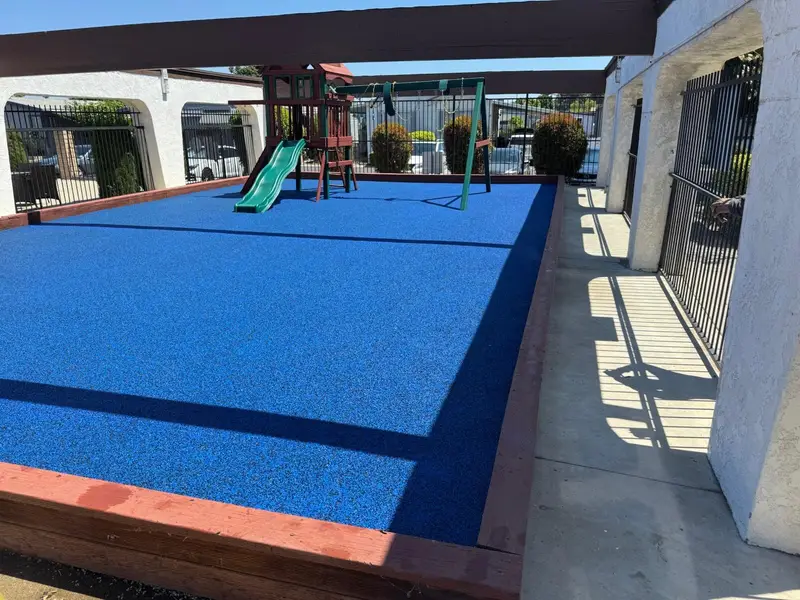
Early Childhood Playground Surfacing with Poured-in-Place Rubber
Gentle, clean play surfaces for the youngest children, designed around crawling, climbing and first steps.
Quick answer
Early childhood playground surfacing with poured-in-place rubber creates a soft, seamless, easy-to-clean surface for infants, toddlers and preschoolers, sized to the heights of low equipment. Colors and textures support sensory play. Turbo Surfacing is licensed, bonded and insured, and designs infant and toddler yards around crawling zones, nature play and teacher sight lines.
Key takeaways
- Soft, smooth surfaces suit crawling.
- Thickness matches equipment height.
- Cleaning is quick and simple.
- Layouts support teacher sight lines.
The youngest children crawl, mouth objects, pull up on rails and tumble often. Their play yards need a surface that is gentle, hygienic and easy for teachers to watch over.
This page covers how rubber is planned for infant, toddler and preschool yards and how to keep them clean and inviting.
Crawling and first steps
Infants crawl on the surface, so smooth, clean rubber matters. It has no splinters, no loose stones and no gaps that trap debris. Low rolling mounds, textured paths and shallow ramps give new walkers room to practice.
Soft edges and clear boundaries keep very young children safely inside their zone.
Heights and cushioning
Equipment for young children is low, though falls still happen. We review manufacturer data for each piece and size the cushion to match. Impact attenuation is tested under ASTM F1292, and we ask for test information for the proposed build-up.
Thin builds can work for very low equipment, which helps budgets.
Sensory play and textures
Different textures, patterns and colors stimulate young children. Rubber can include raised dots, wavy paths and bright shapes that invite touching and walking. Quiet corners with soft colors support calm play.
We work with teachers to match features to developmental goals.
Nature play and mixed surfaces
Many programs combine rubber with sand, water, logs and plants. Borders keep each material in its place, and rubber paths guide children between zones. Drainage planning prevents mud near water play.
Natural elements add variety, and the rubber provides stable footing around them.
Hygiene and cleaning routines
Babies and toddlers put hands and objects in their mouths. Rubber can be swept, rinsed and wiped, and it dries quickly. Staff can follow a daily routine that keeps surfaces fresh.
We provide a care sheet that lists safe cleaners and tools.
Sight lines and supervision
Teachers need to see every child at all times. We design layouts with open sight lines, low fences and benches placed for observation. Colored zones help children understand where to play.
Clear paths allow adults to reach any child quickly.
Strollers, wagons and ride-on toys
Many early programs use strollers, wagons and tricycles. A smooth, firm surface lets them roll easily, and loops keep traffic organized. Edges are flush so wheels do not catch.
Dedicated paths separate riding from crawling.
Shade, sun and heat
Infants and toddlers are sensitive to heat. Shade sails, trees and canopies protect them, and lighter colors keep surfaces cooler. A quick rinse before outdoor time lowers the surface temperature.
We discuss sun paths during the site walk and sketch shade supports.
Licensing and documentation
Child care programs have licensing visits and insurance reviews. We supply plans, product data and installation records, along with photos before and after. Directors can share these documents with inspectors and insurers.
Early planning with the licensing contact avoids surprises.
Parents and community
Parents notice clean, welcoming yards. A good surface and thoughtful design give families confidence in the program. We provide drawings and photos for newsletters and open houses.
Fundraising committees can use them too.
Scheduling and closures
Work is planned during breaks, weekends and holidays. We close the area while it cures and protect doors and walkways. Programs can keep using indoor space, and a written schedule helps families plan.
Weather windows are watched closely so delays stay short.
Maintenance and repairs
Sweep or blow debris, rinse regularly and check for cracks and loose edges. Small repairs are patched and blended. Plan periodic refreshes as the surface ages.
A simple log helps staff and inspectors see that care is consistent.
Budgets and phasing
Early childhood centers often have tight budgets. We can start with the infant yard or the toddler zone and add areas later. Clear scopes and option pricing help directors and boards decide.
Grants and donations can support phased work.
Getting started
Measure your yard, list your equipment and note how many children use each zone. Send photos, and we will arrange a visit. You will receive a scope, drawings and samples to share with your board and staff.
Teacher input and daily routines
Teachers know how children move, where messes form and which corners are hard to watch. We ask them to walk the yard with us and mark trouble spots. Their input shapes paths, benches, storage and shade, and it makes the finished yard feel like theirs.
Staff meetings during design prevent costly changes later.
Storage, bikes and equipment
Tricycles, balls, buckets and loose parts need homes. A storage shed on a rubber pad keeps the yard tidy and lets children help put things away. Doors and gates should open freely over the surface, so we check clearances before pouring.
Outdoor shelves and bins encourage independence.
Water play and wet days
Water tables, sprinklers and rainy days make rubber wet. It dries quickly, and slopes carry water to drains. Textured finishes keep footing secure for barefoot children, and mats at entrances limit mud tracked inside.
Plan towel and change areas near the door.
Allergens, mold and pests
Mulch holds moisture, which invites mold, insects and rodents. Rubber stays cleaner and gives pests fewer places to hide. Regular rinsing keeps dust and pollen down, and staff can spot hazards more easily on a smooth surface.
Families with sensitivities often notice the difference.
Getting an estimate
Our poured-in-place rubber cost guide explains what moves the price. Send photos and rough dimensions through the free estimate form and we respond within 24 hours. Site walks are available the next day or later, depending on availability, and you receive a written scope after the visit.
What to know before you start
Review portable play-item storage at the same time as fixed equipment. Small movable items still need an agreed set-down area while the early-childhood rubber surface is curing.
Frequently Asked Questions
Sources
Last reviewed:
By Turbo Surfacing Solutions team · Planning updated:
KEEP EXPLORING.
Other Southern California surfacing projects we specialize in — handpicked because they share the same materials, standards, or installation crew as this page.
Related Poured-In-Place Rubber & Resources
Sibling services, cities where we install this, and blog posts that go deeper.
More Poured-In-Place Rubber
- PIP Rubber InstallationProfessional Installation
- PIP Installation ProcessOur Process
- PIP Rubber MaintenanceMaintenance Guide
Cities We Serve
- Poured-In-Place Rubber in Chula Vista
- Poured-In-Place Rubber in San Diego
- Poured-In-Place Rubber in Oceanside
Get a Quote for Early Childhood Playground Surfacing
Get a free, no-obligation estimate for your project. Our team responds within 24 hours.
Request Early-Childhood Quote