- Licensed CA Contractor·
- ADA Compliant Installs·
- Serving All of Southern California·
- Free Estimates·
- Licensed, Bonded & Insured
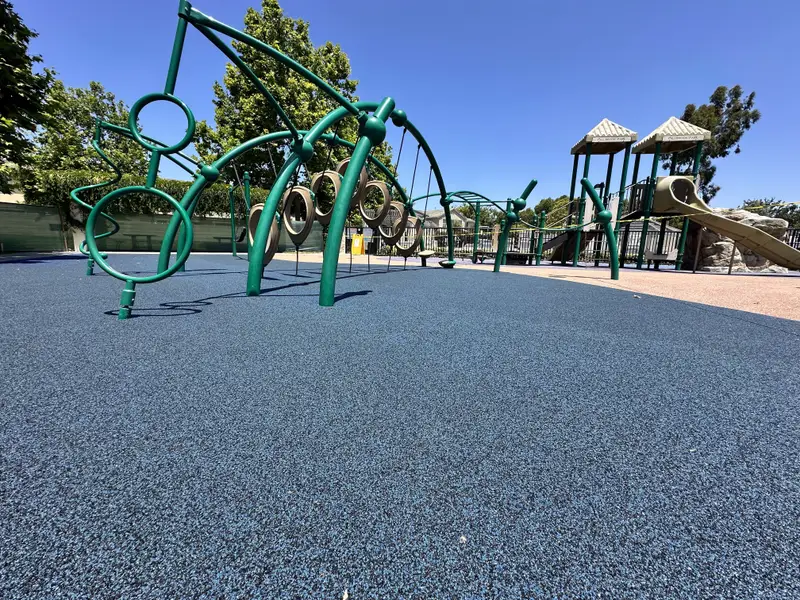
Poured-in-Place Rubber for Corporate Campuses and Business Parks
Soft, colorful, easy-care surfaces for courtyards, fitness loops, play areas and rooftop amenities.
Quick answer
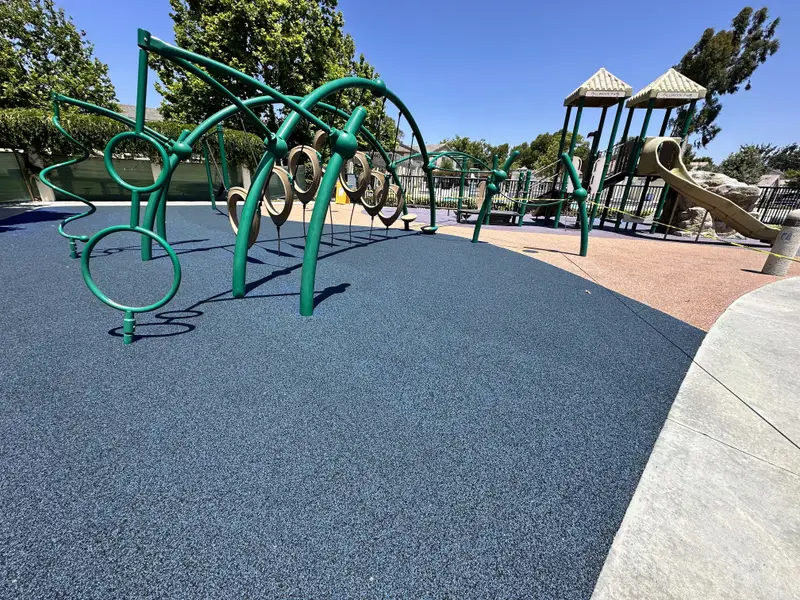
Poured-in-place rubber gives corporate campuses soft, slip-resistant surfaces for courtyards, fitness loops, childcare play yards and rooftop terraces. Color and inlays support branding, and the seamless finish is easy for facilities teams to clean. Turbo Surfacing is licensed, bonded and insured, and schedules work around business hours and tenant needs.
Key takeaways
- Rubber suits courtyards, loops and rooftops.
- Color and logos support branding.
- Work is staged around business hours.
- Care is simple for facilities teams.
Employers compete for talent with amenities, and outdoor spaces are some of the most visible. A well-designed courtyard, walking loop or play area tells employees and visitors that the campus is cared for.
This page explains how rubber surfacing is used on corporate sites, what facilities teams should consider and how work is scheduled around busy buildings.
Courtyards and gathering spaces
Courtyards are where lunches, meetings and events happen. Rubber gives them a soft, quiet floor that handles tables, chairs and crowds, and color can mark seating zones, paths and focal points. Because the surface is seamless, there are no grout lines or loose pavers to trap heels.
We design with landscape architects so the surface works with planting, furniture and lighting.
Fitness trails and running loops
Wellness programs often include walking paths, running loops and outdoor workout stations. Rubber is easier on joints than concrete, offers reliable traction and can include distance markers, lanes and exercise pads. Slopes and drains are planned so water does not pool.
Colors and inlays turn a simple loop into a feature people want to use.
On-site childcare and play yards
Campus childcare centers need play surfaces that are safe, clean and attractive to parents. We size the cushion layer for the equipment fall height, using ASTM F1292 as a reference for impact testing. Drains, shade and edges are planned with the center's director.
Teachers like how quickly rubber dries after rain and how easily it is wiped clean.
Rooftop terraces and amenity decks
Rooftop terraces need light surfaces that protect the membrane and drain properly. Rubber can be installed in thin layers over suitable substrates, with coordination from roofers and engineers. Slip resistance and comfort underfoot make it popular for yoga decks and lounges.
Rooftop details, including wind, drains and load, are reviewed with building management.
Branding, logos and wayfinding
Colored granules and inlay techniques allow company colors, logos and directional markings to be built into the surface. Paths can lead visitors from parking to entrances, and signs and symbols can mark fire lanes and pedestrian crossings.
Samples and mockups are provided so marketing and facilities teams can approve the look.
Scheduling around business hours
Work can be staged in sections, on weekends or during off hours, so employees keep access to entrances. We place barriers, post signs and coordinate with security, parking and delivery teams. Daily cleanup keeps the site presentable for visitors.
A written plan outlines each phase and the areas affected.
Sound and comfort
Soft rubber reduces footstep noise and absorbs some of the echo that hard courtyards produce. Employees on breaks enjoy the more comfortable surface, and it helps outdoor meetings remain quiet.
For areas near windows or open offices, the acoustic benefit is a real plus.
Drainage and stormwater
Campus drainage is often designed with swales, trench drains and landscape basins. We coordinate with civil drawings so rubber slopes lead into the existing system. For projects that want water to pass through the surface, a porous rubber system can be considered over an open base.
Clear plans avoid trouble with ponding and slippery spots.
Sun, shade and temperature
Dark rubber can feel warm in direct sun. Lighter colors, shade structures and trees help, and a quick rinse lowers the temperature. We discuss orientation during the walk and suggest layouts that keep seating comfortable.
Facilities teams can also schedule watering of nearby planting to cool the surrounding area.
Facilities maintenance
Janitorial or grounds teams can maintain rubber with brooms, blowers and hoses. We provide a care sheet that lists safe cleaners, tools to avoid and signs that repair is needed. Spot repairs are available for cracks, burns or damage from furniture.
Regular inspections keep the surface looking professional.
Multi-building and multi-site programs
Companies with several buildings often want consistency. We keep records of colors, products and thickness so future work matches earlier phases. A master plan can set priorities across sites, with a schedule that fits capital budgets.
This keeps the whole campus looking unified over time.
Safety and incident prevention
Slips and trips on outdoor surfaces create liability. Rubber provides grip when wet and has no lifted edges when installed and maintained properly. Transitions to concrete and landscaping are flush, with clear colors to mark changes in level.
Walking the site with your risk manager helps us address concerns before they become issues.
How a campus project runs
We start with a site walk and a conversation about goals and constraints. A written scope, plan and schedule follow. After approval, we prepare the base, place the rubber and finish edges, then clean up and review the work with you.
You receive a punch list, a care sheet and a point of contact for questions.
Events, tents and temporary loads
Campus events bring tents, stages, food trucks and rental furniture. Rubber can handle normal event use when weight is spread, but sharp stakes and heavy wheels cause damage. We provide guidelines for event teams, including boards under legs and protected routes for carts.
Setting these rules before the first event protects the investment.
Landscape, shade and sustainability
Rubber made from recycled content can support a campus sustainability story. It also pairs well with drought-tolerant planting, shade structures and permeable edges. We work with landscape architects so surfaces and plants support one another.
Photographs and product data are available for sustainability reports.
Tenant improvements and lease considerations
Multi-tenant properties need clear boundaries between landlord and tenant work. We separate scopes, supply insurance proof and coordinate access with property managers. Lease language about exterior changes should be reviewed before work begins.
Early conversations with the building owner save time and avoid disputes.
Dog runs and pet relief areas
Many campuses now welcome dogs. A small rubber run near the entrance gives pets a clean, quick-draining spot, and it is easy to rinse. Fencing, waste stations and shade complete the area.
We design drainage so rinse water goes to landscape and not onto walkways.
Ramps, steps and transitions
Slopes, ramps and steps between buildings can be surfaced with rubber for traction. Edges are marked with contrasting colors, and handrails are coordinated with the site's architects. The result is a safer connection between parking, entries and courtyards.
We review every change in level for trip hazards.
Documentation for facilities teams
At the end of the job we provide a package for facilities staff: a plan with colors and thickness, product names, a care sheet and contact information. New team members can use it to understand what is installed and how to care for it.
Having the details in one place makes future work much easier.
Getting an estimate
Our poured-in-place rubber cost guide explains what moves the price. Send photos and rough dimensions through the free estimate form and we respond within 24 hours. Site walks are available the next day or later, depending on availability, and you receive a written scope after the visit.
What to know before you start
Identify building entrances used by deliveries as well as employee foot traffic. A campus rubber path should not become the unplanned waiting point for loaded carts during the cure closure.
Frequently Asked Questions
Sources
Last reviewed:
By Turbo Surfacing Solutions team · Planning updated:
KEEP EXPLORING.
Other Southern California surfacing projects we specialize in — handpicked because they share the same materials, standards, or installation crew as this page.
Related Poured-In-Place Rubber & Resources
Sibling services, cities where we install this, and blog posts that go deeper.
More Poured-In-Place Rubber
- PIP Rubber InstallationProfessional Installation
- PIP Installation ProcessOur Process
- PIP Rubber MaintenanceMaintenance Guide
Cities We Serve
- Poured-In-Place Rubber in Chula Vista
- Poured-In-Place Rubber in San Diego
- Poured-In-Place Rubber in Oceanside
Get a Quote for PIP for Corporate Campuses
Get a free, no-obligation estimate for your project. Our team responds within 24 hours.
Request Corporate Quote