- Licensed CA Contractor·
- ADA Compliant Installs·
- Serving All of Southern California·
- Free Estimates·
- Licensed, Bonded & Insured
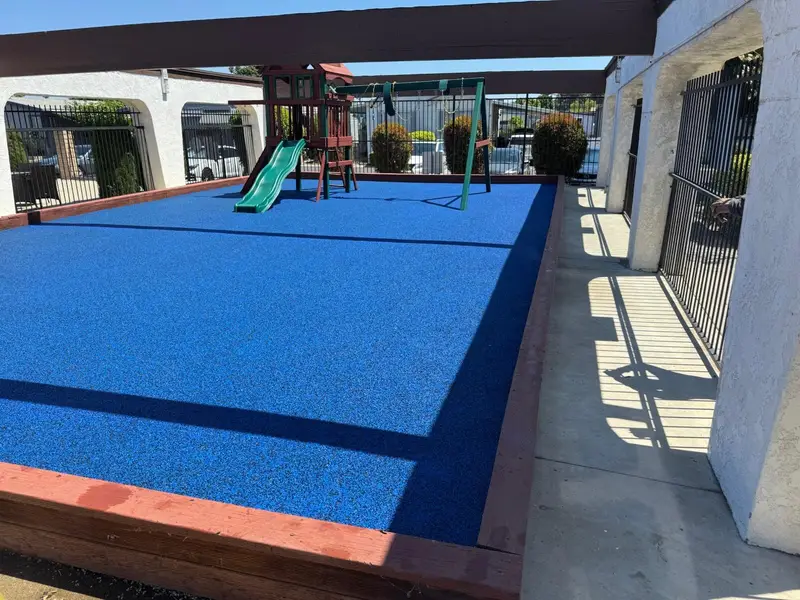
Military Base Safety Surfacing in Poured-in-Place Rubber
Durable, cushioned surfaces for base playgrounds, child development centers, fitness trails and housing areas.
Quick answer
Poured-in-place rubber gives military installations durable, cushioned surfaces for playgrounds, child development centers, fitness courses and family housing areas. Work is planned around base access, security checks and mission schedules. Turbo Surfacing is licensed, bonded and insured, and prepares the paperwork and crew lists that gate access requires.
Key takeaways
- Plan for base access early.
- Submittals speed approvals.
- Rubber suits playgrounds and fitness courses.
- Schedules respect mission needs.
Military communities depend on safe outdoor space for families and service members. Playgrounds, fitness courses and training grounds see constant use, and base projects add access, security and scheduling steps that civilian jobs rarely face.
This page explains how rubber surfacing is used on installations and how we plan around base requirements.
Family housing playgrounds
Housing areas often include playgrounds that were built years ago with wood chips or worn tiles. Rubber replaces them with a seamless, cushioned surface that stays in place and needs little upkeep. Colors can match housing community themes.
We work with housing offices and property managers to schedule around residents.
Child development centers
Child development centers have strict routines and inspection schedules. Rubber yards give infants, toddlers and preschoolers a soft, clean surface that staff can rinse and sanitize. Layouts include separate zones for age groups, shade and clear sight lines.
Impact attenuation is tested under ASTM F1292, and we size cushion layers to equipment heights.
Fitness courses and training areas
Outdoor fitness courses and obstacle areas see heavy use. Rubber under stations absorbs impact and reduces wear on joints. It drains quickly and holds up in sun, wind and dust. Distance markers and station numbers can be inlaid.
We coordinate with morale and recreation staff on layouts.
Running tracks and walking paths
Base tracks and loops serve physical training and recreation. Rubber is easier on joints than asphalt and gives reliable traction. Lanes, distance markers and unit colors can be added.
We design with athletic and facilities staff, using their specifications where they exist.
Base access and security
Most installations require background checks, vehicle inspections and escorted entry. We submit crew lists early, bring required identification and plan deliveries around gate hours. Equipment and materials are inspected at the gate.
Clear communication with the contracting officer or project manager prevents delays at the gate.
Mission schedules and quiet hours
Bases run on tight schedules, with training exercises, ceremonies and quiet hours. We coordinate with base staff to avoid conflicts and plan work in sections. Weekend and holiday work may be limited, so schedules are built early.
A written plan shows what happens each day and who needs to be present.
Working with contracting offices
Military projects often come through formal solicitations and contract documents. We read the specifications, prepare submittals and ask questions during the bid period. Proof of insurance and licensing details accompany proposals.
Our team follows reporting and safety requirements spelled out in the contract.
Submittals and documentation
Product data, color samples, base details and test information are submitted for review before work begins. We keep records of daily activities, materials and inspections, and we provide as-built drawings and care sheets at closeout.
Good paperwork speeds approvals and helps future repairs.
Heat, sun and dust
Many installations sit in hot, dry or windy settings. Lighter colors reduce heat, shade structures help, and drains keep dust and water from collecting. Rubber is cleaned with brooms, blowers and hoses.
We plan for the local climate and base maintenance staff.
Heavy use and wear
Boots, cleats and equipment are hard on surfaces. Rubber holds up when installed with the right thickness, and worn areas can be patched or refreshed. We discuss expected use and recommend build-ups that match it.
Records of colors and thickness help future repairs match.
Splash pads and recreation areas
Base pools, splash pads and recreation centers benefit from slip-resistant surfaces. Rubber stays comfortable underfoot and drains well when sloped. Edge details at coping keep water moving away from pools.
We coordinate with recreation staff on plumbing and equipment.
Site safety and housekeeping
Our crews follow base safety rules, wear required protective gear and keep work areas orderly. Barriers, signs and daily cleanup protect families and personnel. Materials are stored securely.
A single crew lead serves as the point of contact for base staff.
Starting a base project
Send the location, equipment list, photos and any specifications you have. If a solicitation is open, share the document. We will visit when access is arranged, take measurements and return a scope, schedule and drawings.
Housing offices and resident communication
Families in base housing notice work near their homes. We give housing offices short notices that explain dates, closures and contacts, and we keep walkways and parking access clear. Crew members are courteous with residents and keep noise to reasonable hours.
Photos of progress help housing staff answer questions.
Obstacle courses and agility areas
Obstacle courses and agility lanes combine running, climbing and landing. Rubber at landing zones absorbs impact, and textured surfaces help footing in dust and wet weather. Station layouts are coordinated with trainers, and lanes can be marked in unit colors.
Repairs are easier than with loose fill, which scatters under boots.
Support areas and walkways
Beyond playgrounds, bases have walkways between buildings, shaded courtyards outside offices and recovery spaces for wounded warriors. Rubber gives a quiet, comfortable surface for walkers and wheelchairs, with flush transitions and gentle slopes.
We design these areas with the base's facilities staff and care teams.
Closeout records
At closeout we deliver as-built drawings, color and thickness records, product data and care sheets. Base facilities staff can file them with asset records, which makes future repairs and budgeting easier.
Getting an estimate
Our poured-in-place rubber cost guide explains what moves the price. Send photos and rough dimensions through the free estimate form and we respond within 24 hours. Site walks are available the next day or later, depending on availability, and you receive a written scope after the visit.
What to know before you start
Reference the facility's approved drawing revision on the rubber scope. A changed entrance or equipment position should be reconciled before the installation crew marks the work area.
Frequently Asked Questions
Sources
Last reviewed:
By Turbo Surfacing Solutions team · Planning updated:
KEEP EXPLORING.
Other Southern California surfacing projects we specialize in — handpicked because they share the same materials, standards, or installation crew as this page.
Related Poured-In-Place Rubber & Resources
Sibling services, cities where we install this, and blog posts that go deeper.
More Poured-In-Place Rubber
- PIP Rubber InstallationProfessional Installation
- PIP Installation ProcessOur Process
- PIP Rubber MaintenanceMaintenance Guide
Cities We Serve
- Poured-In-Place Rubber in Chula Vista
- Poured-In-Place Rubber in San Diego
- Poured-In-Place Rubber in Oceanside
Get a Quote for Military Base Safety Surfacing
Get a free, no-obligation estimate for your project. Our team responds within 24 hours.
Request Base Quote