- Licensed CA Contractor·
- ADA Compliant Installs·
- Serving All of Southern California·
- Free Estimates·
- Licensed, Bonded & Insured
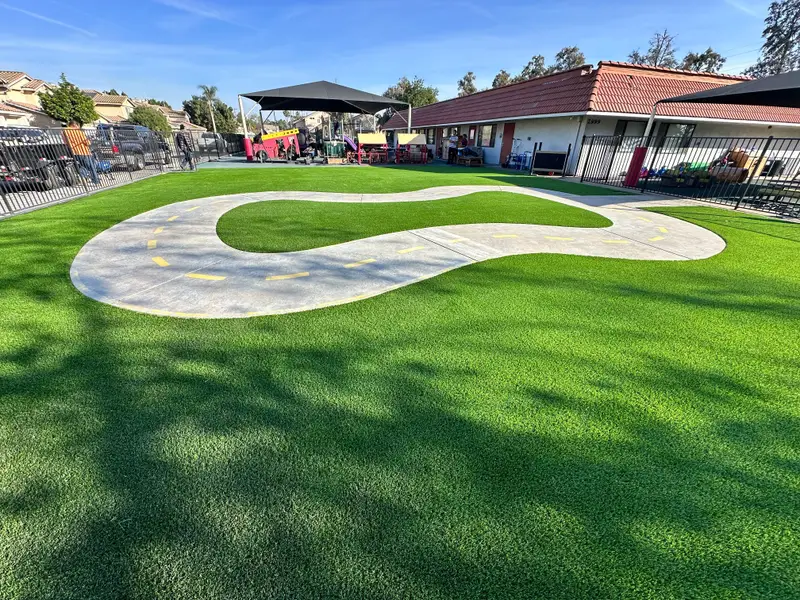
Artificial Grass Tennis Courts for Homes, Clubs and Schools
A softer, quieter court surface with a natural look, built on a flat, well drained base.
Quick answer
An artificial grass tennis court uses sand-filled synthetic turf over a flat, compacted base to create a softer surface than concrete or asphalt. It drains quickly, plays at a medium pace and needs less resurfacing than hard courts. Turbo Surfacing is licensed, bonded and insured, and builds home, club and school courts.
Key takeaways
- Turf courts are softer and quieter.
- Existing courts can often be converted.
- Inlaid lines last longer than paint.
- Regular brushing keeps play consistent.
Hard courts are loud, hot and tough on knees. Grass-style synthetic courts offer a gentler alternative with a green look that fits backyards and clubs.
This page explains how these courts are built, how they play and what upkeep to expect.
Types of tennis turf
Tennis turf comes in sand-filled, sand-dressed and unfilled versions. Sand-filled courts are the most common and provide a stable, medium-fast surface. Unfilled turf plays faster and suits certain training programs.
We show samples and discuss how you and your players prefer to play before selecting the system.
How the surface plays
Synthetic grass courts give a true bounce with slightly lower ball speed than hard courts. Players slide less than on clay, and the cushioning reduces stress on joints. The surface suits beginners, seniors and competitive players.
Because ball speed depends on infill and pile, we adjust specifications to the type of player you expect.
Base preparation
The court needs a flat, well drained base. For an existing asphalt or concrete court, we check for cracks, birdbaths and slope, then repair and level the surface. For new courts, a compacted rock base with drainage is built to tight tolerances.
A flat base is essential. Any dip will show up in ball bounce and in puddling.
Installing over existing courts
Turf can often be installed over an existing court if the surface is stable and drains. We repair cracks, fill low spots with leveling material and add a shock pad when desired. Fence lines, posts and net anchors are reset.
This approach saves excavation and cost and gets the court back in use quickly.
Line markings
Lines are inlaid or sewn to match court dimensions for singles and doubles. Pickleball and multi-sport lines can be added in different colors. Layout precision matters, so we measure twice and mark before cutting.
Inlaid lines last longer than paint and do not need repainting.
Drainage and weather
Water must leave the court quickly. Perforated turf backing lets water pass through, and the base is sloped to drains or edges. After rain, courts dry faster than many hard surfaces.
We design drainage with your site conditions in mind, including neighboring slopes and landscaping.
Net posts, fencing and lighting
Net posts need strong footings, and fences must be straight and secure. Lighting poles and wiring are planned before the turf goes down. We coordinate with fence and electrical contractors where needed.
Clear drawings prevent conflicts and keep the schedule intact.
Backyard courts and private estates
Private courts blend with landscaping and privacy screens. Turf looks natural, reduces noise and keeps shoes cleaner than clay. We design borders, seating and nearby planting so the court feels like part of the property.
Neighbors often appreciate the softer visual and lower glare.
Clubs, schools and community centers
Clubs and schools need courts that stand up to constant use. Turf resists wear when brushed and maintained. Multi-sport lines, shade structures and spectator seating can be added.
We plan schedules around league play, lessons and tournaments to minimize downtime.
Maintenance and brushing
Brush the court regularly to keep infill level and fibers upright. Remove leaves and debris, treat moss in shaded areas and check seams. Heavy traffic zones near the baselines need extra attention.
A weekly routine keeps the surface playing consistently.
Pickleball and multi-use courts
Many owners want a court that serves tennis and pickleball. Turf can carry both sets of lines, with nets and posts adjusted. Lines are kept clear by color, and surface speed is balanced.
We help you choose a layout that works for your players.
Comfort, noise and joint impact
Players notice less impact and less glare on turf courts. The surface also reduces noise from shoes and balls, which neighbors appreciate. Sock-friendly traction means fewer slips on dry days.
Shade and water access make long sessions more comfortable.
Colors and finishes
Turf colors range from classic green to blended tones. Some owners add colored borders or logos. Matching fence screens and windscreens complete the look.
We bring samples so you can see how colors read in daylight and under lights.
Court speed and playing style
Pace depends on pile height, infill depth and surface preparation. A deeper sand fill slows the ball and gives more predictable bounce, while a lighter fill speeds play. Club players who enjoy long rallies often like a medium pace, and coaches who run drills may prefer a quicker surface.
We can build a test panel, or arrange a visit to an existing court, so you can hit on the surface before choosing.
Resurfacing existing hard courts
Many tennis courts have cracked asphalt, peeling paint and low spots. Turf can be installed over a stable court after cracks are filled, birdbaths are leveled and the surface is cleaned. We may install a pad first to add comfort and mask small imperfections.
If the old court has major structural problems, we explain whether repair or rebuild is the better route.
Windscreens, shade and spectator comfort
Windscreens soften wind and improve ball flight, and shade structures protect players and spectators on hot afternoons. We coordinate posts, footings and attachments with the fence line so the screen stays tight without bending the posts.
Benches, scoreboards and water stations are placed outside the playing area but close enough to be convenient.
Planning and phasing a court project
A tennis court can be completed in stages. Some owners start with the base and drainage, then add turf and lighting later. Others convert an old court first and add fencing and shade over time.
We provide a scope that lists each phase, so you can match the work to your schedule and finances.
Noise and neighborhood considerations
Hard courts echo with every shot, and neighbors notice. Turf absorbs more sound, and the quieter surface can improve relations around clubs and private courts. Landscaping, fencing and screens help further.
We discuss lighting hours and glare too, so evening play does not disturb nearby homes.
Lighting for evening play
Evening play extends the useful hours of any court. Fixtures should light the full playing area evenly without shining into neighboring windows. We coordinate pole locations, wiring runs and timers with your electrician before the base is built, so trenches do not cut through new turf later.
Lights with shields and warm color temperatures keep glare down and make the court feel welcoming after dark.
Junior programs and lessons
Junior players often start on softer, slower surfaces, and turf gives them time to learn strokes without hard impacts. Coaches like the cushioning, and parents appreciate fewer scrapes. Portable low nets and colored lines can be set up for short court lessons.
We plan storage and access for ball machines and baskets so lessons run smoothly.
Getting an estimate
Our artificial grass cost guide explains what moves the price. Send photos and rough dimensions through the free estimate form and we respond within 24 hours. Site walks are available the next day or later, depending on availability, and you receive a written scope after the visit.
What to know before you start
Agree on net-post service access before turf cutting. A removable cover or fixing should remain identifiable rather than disappear into the finished court border.
Frequently Asked Questions
Sources
Last reviewed:
By Turbo Surfacing Solutions team · Planning updated:
KEEP EXPLORING.
Other Southern California surfacing projects we specialize in — handpicked because they share the same materials, standards, or installation crew as this page.
Related Artificial Grass & Resources
Sibling services, cities where we install this, and blog posts that go deeper.
More Artificial Grass
- Artificial Grass InstallationProfessional Installation
- Turf Installation ProcessOur Process
- Artificial Grass MaintenanceMaintenance Guide
Get a Quote for Artificial Grass for Tennis Courts
Get a free, no-obligation estimate for your project. Our team responds within 24 hours.
Request Tennis Court Quote