- Licensed CA Contractor·
- ADA Compliant Installs·
- Serving All of Southern California·
- Free Estimates·
- Licensed, Bonded & Insured
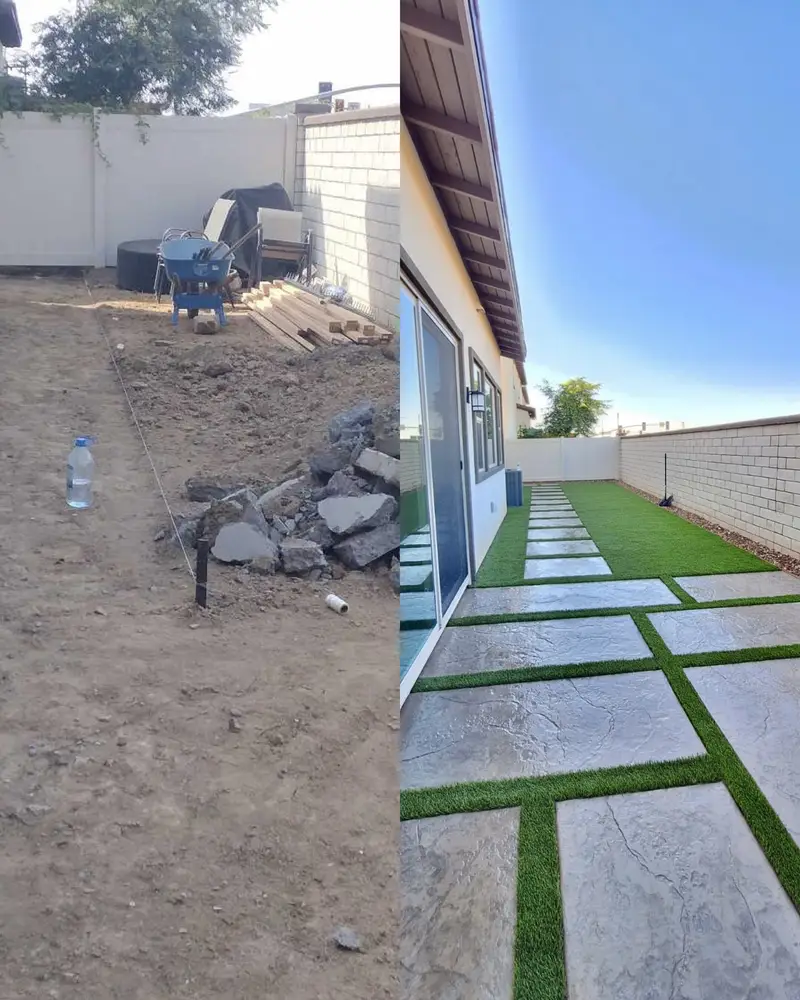
Artificial Grass Installation for Southern California Yards and Commercial Sites
Excavation, base, drainage and turf installed as one system, so the lawn stays flat, drains well and looks natural.
Quick answer
Artificial grass installation removes the existing surface, builds a compacted rock base with drainage, lays turf with tight seams and secures the edges, then finishes with infill and brushing. A quality install depends on the base, not the turf alone. Turbo Surfacing is licensed, bonded and insured, and provides a written scope.
Key takeaways
- The base decides how long the lawn stays flat.
- Drainage must be planned, not assumed.
- Edges and seams control how it looks.
- Compare estimates by scope, not price alone.
Good artificial grass is more than a green carpet. It sits on a base that controls drainage, flatness and long term settling, and the turf itself must be chosen for your use and your sun exposure.
This page explains what a complete installation includes, what separates a lasting lawn from a short lived one and how to compare estimates.
What a complete installation includes
A full installation covers removal of old lawn or surface, grading, base rock, compaction, weed barrier where needed, turf placement, seaming, edge fastening, infill and a final brush and cleanup. Each stage affects the next, and shortcuts show up as ripples, puddles or lifting edges.
Your written scope should list each step. If an estimate does not mention base depth, compaction and edging, ask what is included before comparing prices.
Site walk and measurements
We start by measuring the area, noting slopes, sprinkler lines, trees, gates and utility boxes, and asking how the lawn will be used. Dogs, children, play equipment and entertaining all change the turf and infill we suggest.
We also check access for equipment, because narrow side yards may need smaller machines and hand work. Photos and a rough sketch help us prepare a clear scope before the visit.
Removing the existing surface
Natural grass, weeds, roots and old irrigation heads are cut out to the depth needed for a proper base. Sod is hauled away, and sprinkler lines are capped or rerouted to avoid future leaks under the turf.
Removing too little leaves organic material that rots and settles. We dig to a consistent depth so the finished surface sits level with patios, walkways and borders.
Base rock, compaction and grading
The base is the foundation. Crushed rock is spread in layers and compacted with a plate compactor, then graded with a gentle slope so water leaves the area. A well made base stays flat for years, while a loose one develops dips that no brushing can fix.
Depth depends on soil and use. Clay soils and heavy play areas often need more base than a decorative front yard.
Drainage and soil conditions
Water must move through the turf, the base and into the soil or a drain. Permeable backing and open base rock handle normal rain and pet cleanup. Where soil is dense or the yard is low, we add drainage lines or adjust slopes.
We watch for downspouts, planters and neighboring runoff that can pond water on the lawn. Solving these before installation avoids soft spots and odor later.
Choosing the right turf
Turf varies in pile height, blade shape, color blend and backing. Dense, shorter pile suits high traffic and dog use, while taller, softer blends look lush in decorative yards. Thatch layers and dual tone colors add realism.
We bring samples so you can compare in your own light, at different times of day. Color looks different in shade than in full sun, and samples avoid surprises.
Seaming, edges and borders
Seams are joined with seam tape and adhesive, with fibers aligned so the joint disappears. Edges are fastened with nails or spikes along a border, or tucked and secured against concrete, pavers or headers. Curves need careful cutting for a clean line.
Strong edging stops the lawn from lifting and keeps weeds from creeping in. Where turf meets planters or walls, we detail the transition so debris does not collect.
Infill, brushing and finishing
Infill adds weight, keeps blades upright and supports the turf under traffic. Silica sand is common, and antimicrobial or cooling infills are used in pet areas or hot exposures. We spread infill evenly and power brush the fibers upright.
A final cleanup removes cut scraps, rocks and dust. We walk the finished lawn with you and fix any areas that need adjusting.
Installations for dogs and pets
Pet lawns need good drainage, smooth backing and infill that controls odor. We may add a deodorizing infill, a more porous base and a rinse routine. Seam placement and edge detail matter because dogs dig at weak spots.
Tell us about your pets during the visit, including size, number and favorite spots. These details guide the system we recommend.
Slopes, tight spaces and uneven yards
Not every yard is flat. Slopes need staging and extra fastening, while tight side yards need hand compaction and careful turf handling. Uneven ground is graded to a consistent surface, and retaining edges are reinforced.
We tell you early if a challenging yard needs special methods, so the scope covers the real work.
Play areas and activity zones
Playgrounds, putting areas and fitness zones need extra cushion, firmer edges or specific turf types. A shock pad can be added under turf for softer landings, and heavier infill supports sports use.
We coordinate with other trades, such as play equipment installers, so footings and surfaces fit together. A plan that treats the whole area as one system works better than separate pieces.
Southern California conditions
Hot afternoons can make turf and tools uncomfortable, and heat expands materials during seaming. We schedule seaming and adhesive work for suitable temperatures and protect fresh work from irrigation overspray.
Wind, dust and coastal moisture are factored into scheduling and cleanup. Most residential installs are completed in a few days when conditions cooperate.
Timeline and what to expect
A typical yard takes two to five days, depending on size, access and base work. Larger commercial areas are phased. We let you know the schedule ahead of time and tell you which areas will be unavailable.
Noise is mostly from the compactor and cutting tools. We keep work areas tidy, protect adjacent surfaces and clean up each day.
Comparing estimates fairly
Estimates can look similar while describing very different work. Compare base depth, compaction method, turf specifications, edge details and infill type. Ask who does the work, how seams are made and what happens if a problem appears.
We encourage questions and put answers in the written scope. A clear estimate is easier to trust and easier to compare.
Materials, delivery and staging
Rock, turf rolls, seam tape, nails and infill arrive on separate trucks, and each needs a place to wait. We plan staging so materials stay clean, out of the way of neighbors and off sprinklers and driveways. Turf rolls are heavy, so we agree on a clear path for carrying them in.
Leftover pieces are saved for you. Keeping a remnant makes later repairs much easier because pile height and color match exactly.
Borders, headers and transitions
Where turf meets concrete, pavers, planters or garden beds, the edge detail decides how neat the result looks. Wood, metal or plastic headers hold the perimeter firm, and tucked edges against hardscape keep the turf from lifting.
Transitions at doors and steps are set to avoid trip lips. We also leave a clean gap for irrigation or lighting access where it is needed.
Getting an estimate
Our artificial grass cost guide explains what moves the price. Send photos and rough dimensions through the free estimate form and we respond within 24 hours. Site walks are available the next day or later, depending on availability, and you receive a written scope after the visit.
What to know before you start
Before cutting rolls, photograph the dry layout from the main viewing direction. Ask for approval while the roll orientation can still change, rather than after seams and edges have been fixed.
Frequently Asked Questions
Sources
Last reviewed:
By Turbo Surfacing Solutions team · Planning updated:
KEEP EXPLORING.
Other Southern California surfacing projects we specialize in — handpicked because they share the same materials, standards, or installation crew as this page.
Related Artificial Grass & Resources
Sibling services, cities where we install this, and blog posts that go deeper.
More Artificial Grass
- Turf Installation ProcessOur Process
- Artificial Grass MaintenanceMaintenance Guide
- Commercial Artificial GrassCommercial Solutions
Get a Quote for Artificial Grass Installation
Get a free, no-obligation estimate for your project. Our team responds within 24 hours.
Schedule Measure