- Licensed CA Contractor·
- ADA Compliant Installs·
- Serving All of Southern California·
- Free Estimates·
- Licensed, Bonded & Insured
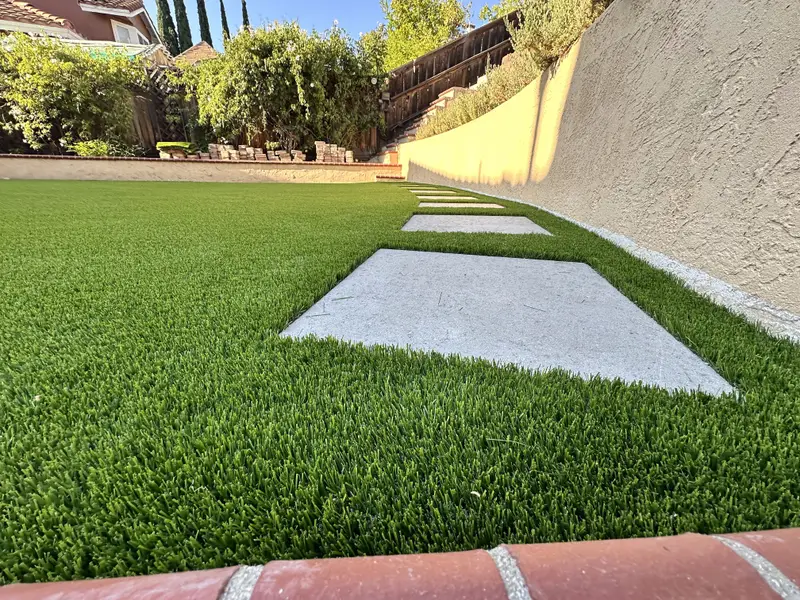
Commercial Landscaping with Artificial Turf for Shopping Centers and Business Parks
Where turf replaces thirsty, high-maintenance lawn on commercial properties, and where living plants should stay.
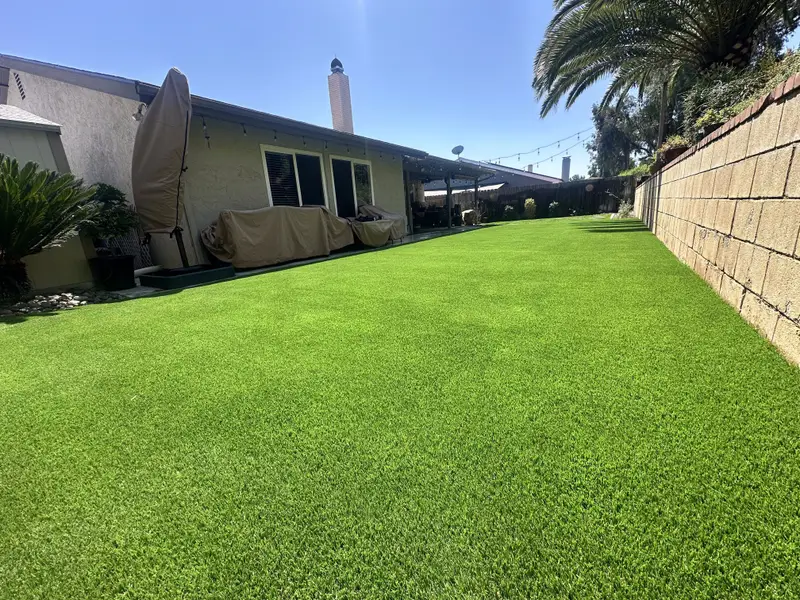
Quick answer
Commercial landscaping with artificial turf replaces mowing, edging and irrigation on lawn strips, medians, entries and common areas of retail centers, business parks and apartment communities. Turf works best where grass struggles. Turbo Surfacing is licensed, bonded and insured, and designs mixed layouts that keep trees and shrubs alongside turf.
Key takeaways
- Use turf where grass struggles.
- Keep living plants for shade and color.
- Phase work to protect customers.
- Compare costs using your own contract numbers.
Commercial landscape contracts are a steady line item, and lawn areas often cost the most for the least return. Narrow strips, shaded corners and parking islands take the same visits as open lawns but rarely look better.
This page explains where turf makes sense on commercial properties, how to blend it with plants and how to plan work around customers and tenants.
Where turf pays off on commercial sites
The best candidates are narrow parkway strips, parking lot islands, entry features, shaded areas under buildings, steep banks and spots where sprinklers overspray onto paving. These areas are costly to mow safely and often look patchy anyway.
We walk the property with the manager and mark each lawn area with notes on shade, slope, foot traffic and current cost, so decisions rest on facts.
Mixing turf with plants and trees
Good commercial landscapes use a mix. Turf provides clean green areas and walkable surfaces, while trees, shrubs and grasses supply shade, seasonal color and habitat. We design borders so irrigation to the plants stays separate from the turf area.
Keeping living plants in the right places maintains curb appeal and avoids the flat, all green look that makes a property feel artificial.
Retail centers and storefronts
Shoppers notice entry lawns, planters and sidewalks. Turf stays neat through summer foot traffic and avoids mud when sprinklers run before opening. Tenants appreciate a tidy frontage, and managers appreciate fewer irrigation complaints.
We schedule work for early mornings or off hours and keep storefront access open with temporary paths and clear signage.
Apartments and multi-family communities
Courtyards, pool surrounds, dog areas and play lawns see constant use. Turf holds up to kids, pets and gatherings, and it keeps shoes and floors cleaner than patchy dirt. Dog runs use pet-specific infill and drainage.
We coordinate with property staff on notices to residents, parking changes and closed areas, and we phase work so amenities stay available.
Medians, islands and driveways
Medians and islands put crews close to traffic. Turf reduces visits and exposure. Edges are set against curbs, and drainage connects to existing inlets. Where cars cross, we use paving or reinforced edges.
Planning traffic flow before installation prevents tire damage and keeps the turf looking sharp.
Slopes and banks
Steep banks are hard to mow and prone to erosion. Turf with a firm base and strong edge fastening handles moderate slopes, while very steep areas may be better suited to ground cover or terracing. We tell you which approach fits.
Where drainage matters, we add swales or subsurface drains to protect the slope.
Irrigation and water management
Removing sprinklers from turf areas reduces water use and the chance of overspray on windows, cars and sidewalks. We cap or reroute irrigation lines, mark valves and leave access boxes visible.
Plants nearby keep their own drip lines. Clear labeling helps landscape crews avoid watering the turf by mistake.
Working with your landscape contractor
Your current landscape firm still maintains trees, shrubs and irrigation. We hand over a short care guide and coordinate on boundaries, so crews know what to blow, rinse and brush. Many contractors welcome fewer mowing hours and can add turf care to their routes.
If you manage the property directly, we can recommend a seasonal checklist.
Associations and landlords
Business parks and associations often have landscape guidelines and approval steps. We supply samples, specification sheets, layouts and proof of insurance so boards can review quickly. Approval time is built into the schedule.
Consistent color across buildings matters, so we use the same turf throughout a property whenever possible.
Heat and surface comfort
Turf warms in direct sun, especially darker colors. Where people walk or sit, we suggest lighter blends, cooling infill and shade trees. Parking lot islands rarely need these steps, while patios and seating areas do.
A short test patch on site helps managers judge heat and appearance before they approve a large area.
Comparing contract costs and turf
Add up annual mowing, edging, fertilizer, irrigation repair, water and reseeding for each lawn. Compare this to the one-time cost of turf and its light maintenance. We help managers build a simple comparison using their own numbers.
Often the biggest savings come from the least healthy lawns, which cost the most to keep green.
Schedules that protect tenants and customers
Work is phased by zone, with signs, barriers and temporary paths. Noisy tasks are scheduled away from peak hours. We keep fire lanes, accessible routes and loading areas clear and share a daily update with the property contact.
Larger sites are broken into sections so the whole property is never torn up at once.
Edges against hardscape and curbs
Where turf meets concrete, curb, pavers or planters, firm edging prevents lifting and keeps debris out. We use nailer boards, metal edging or tucked edges depending on the transition. Curves are cut carefully for a clean line.
Crisp edges make the property look maintained, even when other details are plain.
Signage, lighting and wayfinding
Commercial sites often include monument signs, lighting and bollards. We protect these during excavation and keep surfaces clear around them. Turf sets cleanly against bases, and cut-outs are sealed to keep soil out.
Planning around fixtures prevents damage and makes later service easier.
Records for managers and owners
Property managers keep files for vendors, contracts and repairs. We provide product data, photos and a simple map showing turf areas, drains and valve boxes. These records help new managers and contractors understand what is under the surface.
A tidy record also helps when you sell or refinance, since buyers like clear maintenance histories.
Night work, security and after hours access
Many commercial sites are busiest in the evening, so we plan work for morning hours or between peak periods. Lighting, security staff and gate access are arranged with the property manager before the crew arrives.
Material deliveries are timed to avoid delivery trucks, shoppers and school pickup traffic. Tools and materials are secured each night, and the work area is left clean and safe.
Weeds, pests and sanitation
Lawn strips beside parking collect trash, cigarette butts and wind blown litter. Turf is easy to blow or rake clean and does not hide debris in tall grass. Weeds appear only at the edges, where a quick spot treatment or hand pull handles them.
Pest problems tied to irrigation, such as snails and fungus, disappear from the turf area. Nearby plantings still need normal care.
Tenant improvements and new construction
New buildings and tenant improvement projects often reach landscaping last and under budget pressure. Turf gives a finished look quickly, without waiting for grass to establish. It also avoids the risk of dead sod in a hot summer opening.
We coordinate with general contractors on grading, utilities and punch list timing so turf goes in when the site is ready.
Getting an estimate
Our artificial grass cost guide explains what moves the price. Send photos and rough dimensions through the free estimate form and we respond within 24 hours. Site walks are available the next day or later, depending on availability, and you receive a written scope after the visit.
What to know before you start
Show the boundary between turf and mulched beds on the maintenance drawing. Agree how loose mulch will be kept out of the turf rather than expecting brushing to solve repeated migration.
Frequently Asked Questions
Sources
Last reviewed:
By Turbo Surfacing Solutions team · Planning updated:
KEEP EXPLORING.
Other Southern California surfacing projects we specialize in — handpicked because they share the same materials, standards, or installation crew as this page.
Related Artificial Grass & Resources
Sibling services, cities where we install this, and blog posts that go deeper.
More Artificial Grass
- Artificial Grass InstallationProfessional Installation
- Turf Installation ProcessOur Process
- Artificial Grass MaintenanceMaintenance Guide
Get a Quote for Commercial Landscaping Turf
Get a free, no-obligation estimate for your project. Our team responds within 24 hours.
Request Landscape Quote