- Licensed CA Contractor·
- ADA Compliant Installs·
- Serving All of Southern California·
- Free Estimates·
- Licensed, Bonded & Insured
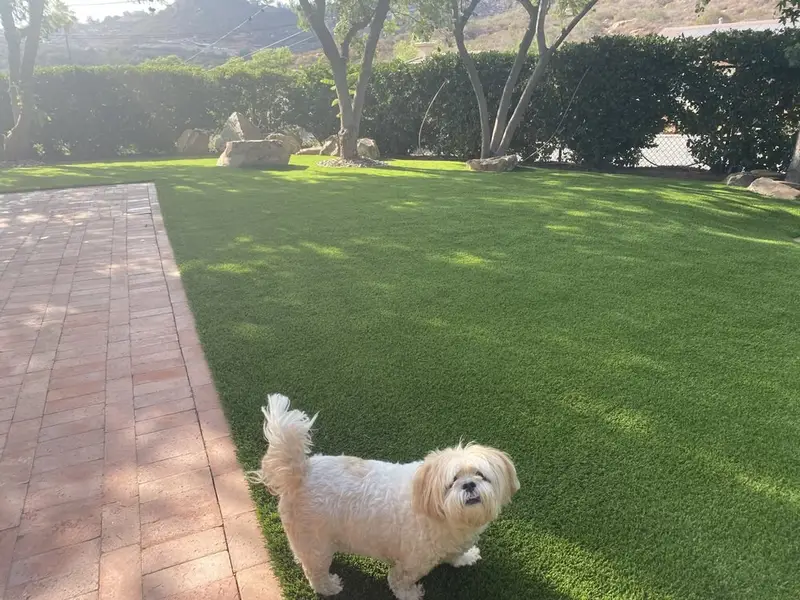
Artificial Grass for Dog Runs and Dog Parks
Pet areas that drain, rinse clean and hold up to constant use, for homes, HOAs, apartments and public parks.
Quick answer
Turbo Surfacing installs artificial grass for dog runs, relief areas and dog parks over a compacted, drained base. Drainage, infill, cleaning access and heat decide whether a pet area stays usable, so we plan them before we choose turf. We are licensed, bonded and insured and respond within 24 hours.
Key takeaways
- Drainage in the base decides whether a pet area stays fresh.
- Choose turf with a draining backing and infill suited to your animals.
- Plan a place to rinse and a routine to pick up waste.
- Shade and lighter colors reduce heat in sunny areas.
- Secure edges and gate thresholds so dogs cannot lift the turf.
A dog run is the hardest job a lawn can have. It takes concentrated traffic, urine in the same spots every day and sun on a surface that cannot recover between visits. Natural grass often turns to mud and bare patches, and a poorly built turf area can turn into a smell problem that no one wants to walk past.
A pet area works when it is built to drain and to be cleaned. This page explains how we plan the base, the turf and the details around them for a backyard run, an apartment relief area or a public dog park.
The base is what makes it drain
Urine and rinse water have to leave the surface, pass through the turf backing and drain through the base into the soil or a drain. If any layer holds water, odor follows. We remove the existing lawn and soil to the depth the base needs and install a compacted aggregate base graded so water moves away from buildings and fences.
Clay soil, slopes and areas that hold water need extra planning, such as a deeper base, a slight slope or a drain at the low point. We look at where water goes now, and we ask for photos of the area after rain if you have them. A pet area that was built over unprepared soil is the most common cause of complaints.
Turf and infill for pet use
Pet turf is designed to drain and to resist matting. Look for a backing with drainage holes or a design that lets liquid pass, and fibers that stand up under traffic. Infill adds weight and helps the blades stand and the surface cushion. Some infills are chosen specifically for pet areas and some for play, and the right choice depends on how many animals use the space, how large it is and how hot it gets.
We explain the trade offs, name the product in the written scope and tell you what care keeps it working. Ask any contractor which infill they propose and why, and whether it suits your animals.
Cleaning and odor control
Plan cleaning from the start. Remove solid waste promptly and rinse the area with a hose, ideally daily in heavy use and as needed in light use. A drain and a slope make rinsing effective, and a spot where rinse water can run without bothering a neighbor or a patio is part of the design.
Pet owners sometimes use enzyme based cleaners or deodorizers for periodic deep cleaning. We discuss maintenance with you at closeout and note what the manufacturer recommends. An area that is rinsed and picked up regularly stays much more pleasant than one that is not.
Heat, shade and paws
Turf in full sun can run hotter than a natural lawn, particularly in inland areas and in summer afternoons. Shade from a tree, a shade sail or a roof makes a real difference, and so does a lighter color. Rinsing the surface cools it. If your dog uses the run in the afternoon, test the surface with your hand before you let them on it.
We talk through sun exposure at the site walk and recommend ways to reduce heat where it matters. In some cases, a different layout or a covered portion of the run solves the problem better than any product.
Small yards and relief areas
Not every pet area is a full run. Many homeowners and apartment communities need a small relief area on a balcony, a patio or a side yard. The same principles apply at a smaller scale: a base that drains, turf that lets liquid pass and a place to rinse. On balconies and rooftops, drainage and waterproofing deserve extra thought, so we look at how water leaves the surface and what is underneath.
A small area also gets more intense use per square foot. Plan for regular rinsing and, where it suits you, a second small area that can rest while the first is cleaned.
Choosing size and layout
A run that is too narrow gets worn in one line, while a wider one spreads traffic. Think about how your dog moves, where the door and the water bowl are and where shade falls. Corners and edges collect waste, so rounded corners and easy access for cleaning help. For several dogs, or for larger breeds, more space and more drainage capacity are worth planning for.
Bring photos and measurements, and tell us about your animals. We discuss options on the site walk and put the layout in the written scope.
A simple care routine
Pick up solid waste promptly. Rinse the area with a hose, and rinse thoroughly if urine has been left to dry. Brush the turf now and then to keep the fibers upright. Check edges and seams for lifting. Deodorizing products designed for pet turf can be used for periodic deep cleaning, and your written estimate explains the terms that apply to the products we install. Regular care keeps the area pleasant and helps the surface last.
Edges, gates and fences
Dogs dig at edges, so we secure the turf against curbs, headers or borders and finish the perimeter so it cannot lift. Gate thresholds and fence bottoms need attention, since a gap can let a dog dig out or let water collect. Transitions to walkways and patios should be level so no one trips.
If the run sits against a fence or a wall, we plan drainage so water does not collect against it. We also consider where waste will be collected and where a hose or a faucet will be.
Dog parks, HOAs and apartments
Public dog parks and community dog runs take far more traffic than a backyard. They benefit from durable turf, a deep, well compacted base, good drainage, shade and access for cleaning equipment. Associations and apartment communities should also think about rules for use, who is responsible for cleaning and how complaints will be handled.
If your project is publicly funded, send us your bid documents early. Civil Code section 5550 requires a reserve study for associations at least every three years, and a dog area belongs on the schedule like any other common surface.
Pricing and next steps
Pet turf pricing follows the same factors as other turf: area, excavation, base, drainage, turf and infill, edges and access. Our artificial grass cost guide explains each. Send photos and rough dimensions through the free estimate form and we respond within 24 hours. Site walks are available the next day or later, depending on availability, and you receive a written scope after the visit.
What to know before you start
Mark separate hose reach zones for the busiest corners of the run. Check that the cleaning team can rinse those points without dragging a hose through an occupied gate.
Frequently Asked Questions
Sources
Last reviewed:
By Turbo Surfacing Solutions team · Planning updated:
KEEP EXPLORING.
Other Southern California surfacing projects we specialize in — handpicked because they share the same materials, standards, or installation crew as this page.
Related Artificial Grass & Resources
Sibling services, cities where we install this, and blog posts that go deeper.
More Artificial Grass
- Artificial Grass InstallationProfessional Installation
- Turf Installation ProcessOur Process
- Artificial Grass MaintenanceMaintenance Guide
Get a Quote for Artificial Grass for Dog Runs & Dog Parks San Diego
Get a free, no-obligation estimate for your project. Our team responds within 24 hours.
Get Dog Park Quote