- Licensed CA Contractor·
- ADA Compliant Installs·
- Serving All of Southern California·
- Free Estimates·
- Licensed, Bonded & Insured
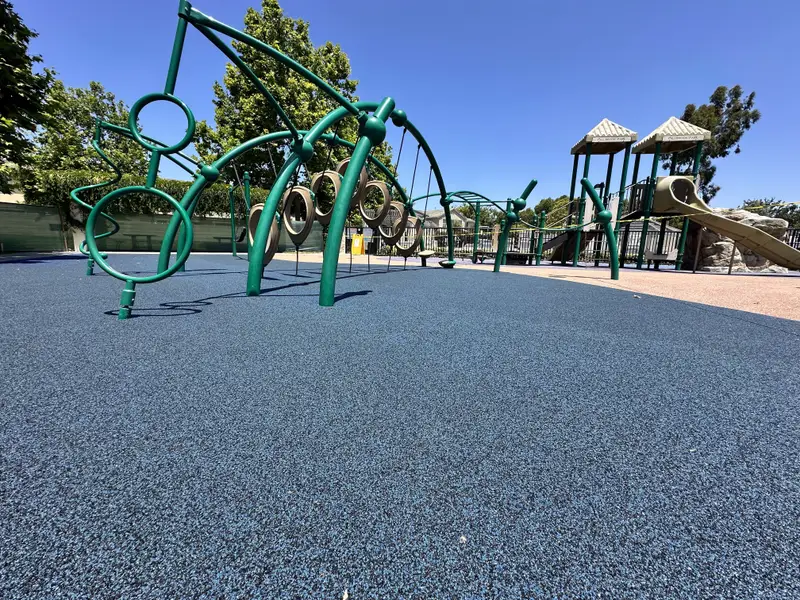
Rubber Surfaces for Baseball and Softball Fields
Durable, cleat-friendly rubber for dugouts, bullpens, batting cages, walkways and the areas around the diamond.
Quick answer
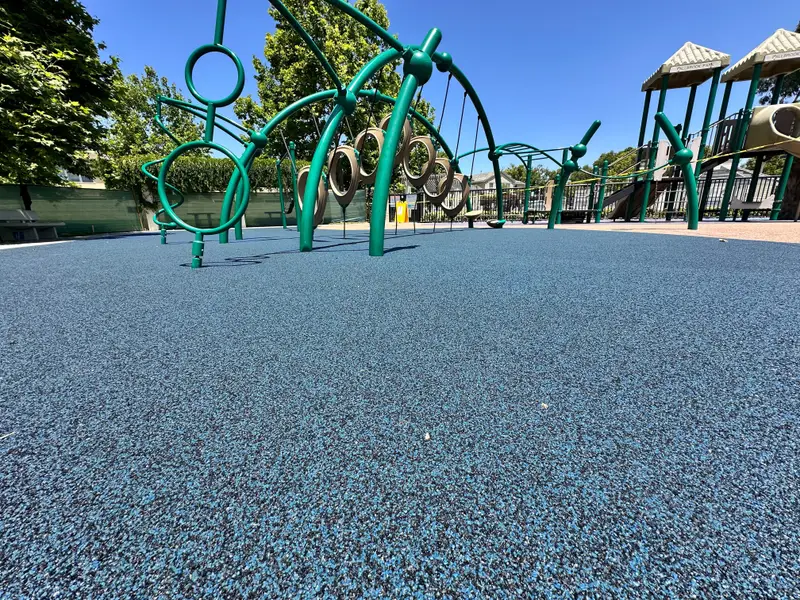
Poured-in-place rubber gives baseball and softball complexes durable, cleat-friendly surfaces for dugouts, bullpens, batting cages, walkways and concession areas. It drains quickly, softens footing and holds team colors. Turbo Surfacing is licensed, bonded and insured, and schedules work around league seasons and field maintenance.
Key takeaways
- Cleat-friendly traction suits dugouts.
- Drains keep cages dry.
- Colors and logos are poured in.
- Phases fit booster budgets.
The diamond gets the attention, but the areas around it wear out first. Dugout floors turn to mud, bullpens rut, walkways crack and batting cages collect water. Rubber gives those support areas a firm, quiet, low-maintenance surface.
This page explains where rubber fits around a baseball or softball field, how it is built and how work fits the season.
Dugout floors
Dugouts see cleats, spilled drinks and wet equipment. Rubber gives players secure footing and protects cleats from wear. It sheds water to a drain, so players are not standing in puddles, and it wipes clean after games.
Team colors and logos can be poured into the floor.
Batting cages and tunnels
Cage floors take pivots, drags and constant foot traffic. Rubber offers consistent footing for hitters and reduces noise from cleats. A slight slope sends water out after rain, and edges are sealed to keep soil from creeping in.
We coordinate net poles and footings before the pour.
Bullpens and warm-up areas
Pitchers repeat the same motion, which creates holes in dirt. Rubber under the mound area gives a stable landing zone and reduces upkeep. Mound clay can be built on top, or the area can be finished with a performance wearing course.
We work with coaches to match slopes and distances.
Warning tracks and edges
Players look for the edge of the field with their feet. A rubber warning track gives outfielders a clear cue and a surface that is less likely to rut. Colors contrast with the grass and dirt for visibility.
Fence lines and padding are coordinated with the contractor.
Walkways, concourses and plazas
Fans queue at gates and walk long distances between parking, seating and restrooms. Rubber walkways resist cracking from roots and hold up under strollers and coolers. They are quiet underfoot and drain quickly after rain or sprinklers.
Color can mark entrances and separate pedestrian zones from service lanes.
Concession stands and restrooms
Concession areas need slip-resistant, easy-to-clean floors. Rubber handles spilled drinks and grease better than smooth concrete, and mats at windows keep standing areas comfortable for staff. Thresholds are flush for carts and wheelchairs.
We coordinate drains and grease control with the plumbing contractor.
Cleat traction
Metal cleats scratch concrete and slide on wet tile. Rubber grips cleats without tearing, and a textured finish gives steady footing. Over time, heavy use wears the surface, so we choose thickness and wearing courses accordingly.
Samples can be tested with the cleats your teams actually wear.
Drainage and field edges
Wet dugouts and cages cancel practices. We shape the base and slopes so water leaves quickly, and we connect to drains or landscape beds. Edges meet turf or dirt cleanly, so soil does not wash over the rubber.
We review grading with the field contractor.
Youth leagues and family areas
Little League complexes host siblings, grandparents and toddlers. A rubber play zone behind the backstop keeps young children safe while games continue. Thickness is sized to the equipment, and benches create shaded seating.
Clear sight lines help parents watch both game and play.
Sun, heat and shade
Hot sun heats dark rubber. Lighter colors, shade structures and trees help, especially near seating. We evaluate orientation and recommend shade placement.
Water stations help players and spectators during summer tournaments.
Team colors and branding
Teams, schools and sponsors like to show their colors. Rubber can be mixed in nearly any shade, with logos and numbers inlaid. Wear-resistant graphics last longer than paint.
Mockups let committees approve the look before work begins.
Accessibility
Fans and players of all abilities need safe routes. Rubber gives firm, stable paths to seating and restrooms, with flush transitions. Accessible viewing areas are coordinated with the site's consultant.
A clear route from the parking lot to the field is part of the plan.
Cleaning and care
Sweep dirt from dugouts and walkways, rinse with water and wipe up spills quickly. Avoid solvents and heavy petroleum products. After tournaments, a deeper wash removes dust and food.
We provide a checklist for grounds crews and volunteers.
Repairs and refreshes
Worn areas at dugout steps and gates can be cut out and replaced. Color can be refreshed with a new top layer. Records of colors and thickness help repairs match.
Fix small problems before the next tournament.
Scheduling around the season
Leagues are busy in spring and summer and quiet in winter. We schedule work during the off-season or between series, build in sections and cure each area before it opens. A written calendar helps coaches and administrators plan.
Rain delays are communicated promptly.
Budgets, boosters and phasing
Boosters and leagues often raise money in stages. We divide work into phases that stand on their own, starting with the dugouts or the main walkway. Written scopes and drawings help with donor presentations.
Option pricing for colors and added areas helps committees decide.
Starting a field project
Send photos, a site plan and your league schedule. Tell us about the areas that give you trouble. We will visit, measure and return a written scope with samples.
Lighting and scoreboards
Evening games need lights, scoreboards and sound systems. Pole bases, conduit and cabinets should be set before surfacing so that nothing is cut into finished rubber. We coordinate with electricians and scoreboard installers on locations.
Clear paths around equipment help crews work safely.
Getting an estimate
Our poured-in-place rubber cost guide explains what moves the price. Send photos and rough dimensions through the free estimate form and we respond within 24 hours. Site walks are available the next day or later, depending on availability, and you receive a written scope after the visit.
What to know before you start
Mark the interface between rubber and the field's loose material on the drawing. Agree how staff will keep that boundary identifiable when raking or moving equipment nearby.
Frequently Asked Questions
Sources
Last reviewed:
By Turbo Surfacing Solutions team · Planning updated:
KEEP EXPLORING.
Other Southern California surfacing projects we specialize in — handpicked because they share the same materials, standards, or installation crew as this page.
Related Poured-In-Place Rubber & Resources
Sibling services, cities where we install this, and blog posts that go deeper.
More Poured-In-Place Rubber
- PIP Rubber InstallationProfessional Installation
- PIP Installation ProcessOur Process
- PIP Rubber MaintenanceMaintenance Guide
Cities We Serve
- Poured-In-Place Rubber in Chula Vista
- Poured-In-Place Rubber in San Diego
- Poured-In-Place Rubber in Oceanside
Get a Quote for Baseball Field Surfaces
Get a free, no-obligation estimate for your project. Our team responds within 24 hours.
Request Baseball Quote