- Licensed CA Contractor·
- ADA Compliant Installs·
- Serving All of Southern California·
- Free Estimates·
- Licensed, Bonded & Insured
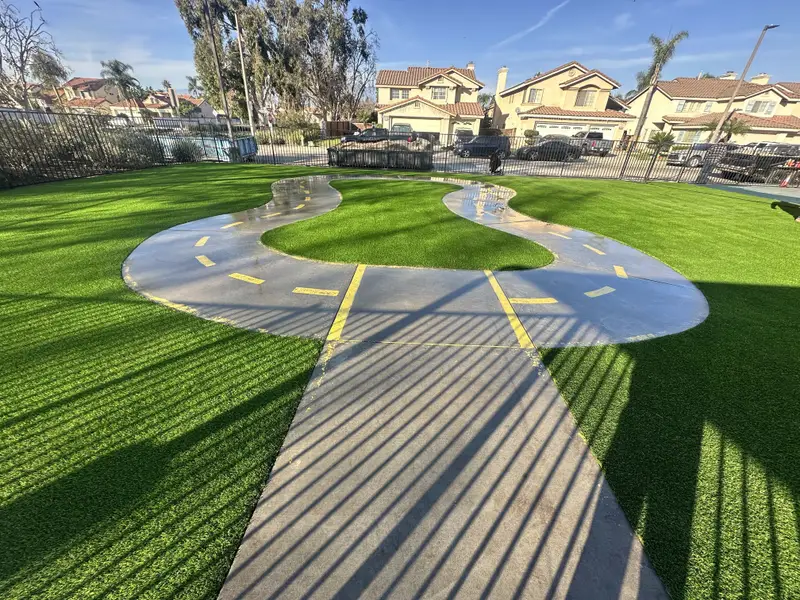
Artificial Putting Greens for Backyards and Commercial Spaces
Contoured greens, chipping areas and fringe built over a compacted, drained base.
Quick answer
Turbo Surfacing builds artificial putting greens for backyards, clubs and commercial spaces over a compacted, drained base. Design, contour, turf and edges decide how the green plays and ages. We are licensed, bonded and insured and respond to estimate requests within 24 hours.
Key takeaways
- The base and grading decide how true a green rolls.
- Speed depends on fiber, pile height, density and infill.
- Gentle contours need careful grading in the base.
- Fringe and edges affect looks, safety and durability.
- Check HOA approval requirements before you order.
A good putting green rolls true, drains after rain and looks right next to the house. A poor one has bumps where the base settled, puddles where water collects and edges that lift. The difference comes from design and from what is under the turf.
This page is for homeowners, clubs and businesses planning a green. It explains how contour, base, turf and edges work together, what affects how fast a green plays, how to plan size and placement and what upkeep looks like.
Backyard greens, short game areas and commercial greens
A backyard green is often a few hundred square feet with a cup or two and a fringe of turf around it. A short game area adds a chipping surface and sometimes a bunker. Commercial and club greens, in offices, clubs and golf facilities, are larger and see heavier use.
Each type has different demands. A backyard green is judged mostly on looks and feel. A practice facility is judged on consistency, durability and how well it handles dozens of rounds a week. We ask who will use it, how often and for what, and we design accordingly.
Contour and design
A flat green is easy to build and quickly boring. Gentle contours make putting more interesting, but they also need careful grading, because a small error in the base shows up as a bump in the surface. We lay out the green with stakes and string, build the contour into the compacted base and check slopes before the turf goes down.
Think about where the cups go, how the ball will break and where players will stand. A green that sits in a corner of the yard, with room to walk around it, is easier to use than one wedged against a fence.
The base decides how it plays and how it lasts
Putting turf is only as true as the base under it. We remove the existing lawn and soil to the depth the base needs, install a compacted aggregate base and grade it carefully for drainage and contour. Drainage matters because water that sits under a green makes it soft and uneven.
Clay soil and slopes need extra planning, such as a deeper base or a drain at the low point. We also consider tree roots, irrigation lines and where water from a roof or hardscape runs. Tell us about any drainage problems in the yard.
Turf choices and speed
Putting turf uses short, dense fibers and is usually filled with sand to stand the fibers up and give the surface weight. Speed depends on the fiber, the pile height, the density and the amount and type of infill. A faster green has shorter pile and less infill, and a slower green has more. Many people prefer a medium speed that rolls true without being punishing.
We name the product in the written scope and explain how it plays. If you have played a green you liked, tell us, and we will talk through what to match. Warranty terms vary by product and system and are provided in writing with each estimate.
Fringe, chipping areas and edges
The fringe is the turf that surrounds the green. It is usually longer than the putting surface, which helps keep a ball on the green and softens the transition to the rest of the yard. A chipping area uses a different turf that tolerates more divots and a different fiber.
Edges matter for looks and durability. We secure the turf to a border, whether it is concrete, a plastic header or a natural edge, so it does not lift or creep. Transitions to patios, walkways and planting beds should be clean and level so no one trips.
Sun, shade and placement
Turf in full sun can run warm, and a green in deep shade may stay damp. Placement affects comfort, drainage and how the green looks in different light. We walk the site with you and discuss where the sun falls, where water runs and how the green will be seen from the house.
If your community has an HOA, check its architectural process before you order, and keep your approval packet ready. Civil Code section 4735 limits how far governing documents can go in prohibiting artificial turf on an owner's property, though reasonable standards can apply.
Upkeep
A putting green needs less care than a lawn. Brush the surface periodically to keep the fibers upright, remove leaves and debris, rinse dust and pet waste and check edges and seams. Heavy foot traffic in the same spot can wear the turf, so rotate cup positions when you can.
We give you care instructions at closeout, and your written estimate explains the terms that apply to the products used.
Rooftop, indoor and commercial putting areas
Putting greens are not only for yards. Rooftops, patios, offices, retail spaces and clubs use them too. Rooftops and balconies need extra attention to drainage, waterproofing and weight, so we look at what is under the surface and how water leaves. Indoor greens may use a different base and no infill, depending on the product.
Commercial greens see heavier use, so durability, edges and repair access matter more. Tell us where the green will go and who will use it, and we will tell you what the site requires.
Planning size and cup layout
Bigger is not always better. A green about the size of a room can still give good putting practice if the contour and cup positions are well planned. More space allows longer putts and more variety, and it needs more base work and turf. Think about the longest putt you want, how many cups you will use and whether you want a chipping area or a bunker.
Mark the footprint on the ground with a hose or paint and live with it for a few days. We help refine the layout on the site walk and put the final size, contour and cup positions in the scope.
What to expect during installation
A backyard green is usually a multi day project. The existing surface is removed, the base is installed and compacted, the contour is checked, the turf is laid and the infill is brushed in. Weather can move the schedule, especially if rain is forecast during base work.
Expect some noise and equipment access, so tell us about gates, side yards and pets. We agree on a schedule in writing and keep you updated.
Cost and next steps
Our artificial grass cost guide explains what moves the price of a turf project, including size, contour, base work and access. Send photos and rough dimensions through the free estimate form and we respond within 24 hours. Site walks are available the next day or later, depending on availability, and you receive a written scope after the visit.
What to know before you start
Record cup positions against fixed reference points before finishing the green. Keep that plan for later cup adjustments so a new hole does not land unexpectedly on a seam.
Frequently Asked Questions
Sources
- California Civil Code section 4735, artificial turf in common interest developments
- California Contractors State License Board license lookup
Last reviewed:
By Turbo Surfacing Solutions team · Planning updated:
KEEP EXPLORING.
Other Southern California surfacing projects we specialize in — handpicked because they share the same materials, standards, or installation crew as this page.
Related Artificial Grass & Resources
Sibling services, cities where we install this, and blog posts that go deeper.
More Artificial Grass
- Artificial Grass InstallationProfessional Installation
- Turf Installation ProcessOur Process
- Artificial Grass MaintenanceMaintenance Guide
Get a Quote for Artificial Grass Putting Greens San Diego
Get a free, no-obligation estimate for your project. Our team responds within 24 hours.
Get Putting Green Quote