- Licensed CA Contractor·
- ADA Compliant Installs·
- Serving All of Southern California·
- Free Estimates·
- Licensed, Bonded & Insured
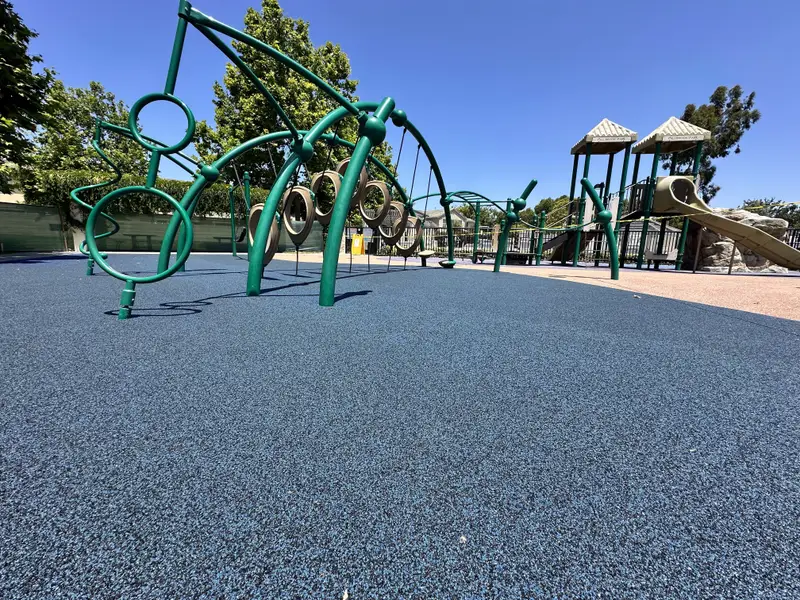
Rubber Surfaces for Sports and Recreation
Cushioned, colorful surfaces for ball courts, fitness zones, walkways and gathering spaces around fields and gyms.
Quick answer
Poured-in-place rubber gives sports and recreation areas a cushioned, slip-resistant surface for ball courts, fitness zones, bleacher walkways and gathering spaces. It is easier on joints than concrete, holds color and drains quickly. Turbo Surfacing is licensed, bonded and insured, and schedules work around seasons, leagues and tournaments.
Key takeaways
- Rubber is softer than asphalt.
- Inlaid lines and logos last.
- Work is scheduled around seasons.
- Patches repair worn spots.
Recreation facilities do more than host games. Players warm up, spectators queue, kids run between fields and coaches carry gear along the same paths. Every one of those places needs a surface that is safe, comfortable and easy to keep clean.
This page explains where rubber fits around courts, fields and gyms, how it is built and how work is scheduled around your season.
Small courts and ball walls
Handball walls, half courts and practice areas see constant repetition. Rubber is softer than asphalt, so landing and cutting cause less stress on knees and ankles. Lines can be inlaid, so they do not fade like paint.
We pour to a consistent slope so balls roll true and water drains off.
Fitness zones and outdoor gyms
Outdoor gyms have pull-up bars, benches and balance beams. Rubber under stations absorbs the drop from a jump and protects the floor from dropped weights. Stations can be colored to mark circuits, and signs show exercises.
Equipment footings are set before the pour so no rubber is cut later.
Bleacher aprons and spectator areas
Crowds gather around fields and courts. A rubber apron in front of bleachers handles foot traffic, spilled drinks and strollers, and it keeps mud off seating. Edges are finished flush, and slopes carry water away from the stands.
We coordinate with the bleacher supplier on anchors and clearances.
Dugouts, benches and team areas
Players wait on benches and scrape cleats on concrete floors. Rubber pads under benches make a quieter, safer place to stand, and they protect cleats from wear. A drain and a gentle slope keep dugouts dry after rain.
Team colors can be poured into the surface.
Walkways between fields
Cleats, carts and equipment wear down asphalt walkways. Rubber paths are friendlier to feet and quieter for carts, and they keep their color. Where fields flood, a well-drained base prevents puddles on the path.
We map the busiest routes with facility staff before drawing the plan.
Warm-up areas and stretching zones
Athletes need safe places to stretch and warm up. Rubber gives a clean, forgiving surface outside the gym or near the field, so players do not lie on wet grass or hot concrete. Shade structures and benches complete the area.
Hand-washing and water stations nearby make the space more useful.
Youth sports and play zones
Youth leagues bring siblings, toddlers and grandparents. A small rubber play zone near the fields keeps younger children safe while older ones play. Thickness is sized to the equipment fall height.
Clear sight lines let parents watch games and play at once.
Traction and wet weather
Rain, sprinklers and sweat make surfaces slick. A textured wearing course keeps footing steady, and drains move water off quickly. Because the surface is continuous, there are no cracks to trap puddles.
Regular sweeping prevents sand and grit from reducing traction.
Heat, sun and shade
Courts and walkways in full sun can get hot. Lighter colors, shade sails and trees help. We discuss orientation and exposure during the site visit, and we offer samples for testing on a sunny day.
Water stations and misters are helpful for summer tournaments.
Team colors, logos and lines
Color builds identity. School and club colors, mascots and sponsor logos can be poured into the surface. Court lines and lane markings are inlaid and last far longer than paint.
We provide drawings and mockups for committees to approve.
Equipment, carts and field maintenance
Mowers, line markers and ball carts roll over recreation paths. Where light vehicles drive, we increase the base strength. We ask for the weight of your heaviest equipment and plan around it.
Turning zones are reinforced because wheels twist the surface.
Accessibility
Spectators and players of all abilities use the facility. Rubber gives firm, stable routes to bleachers, restrooms and concessions, with flush transitions and gentle slopes. Accessible viewing areas are coordinated with the site's consultant.
A smooth route from parking to seating is part of the plan.
Cleaning and care
Staff can sweep, blow and rinse the surface with water. Gum and spills lift with mild cleaners, and solvents should be avoided. After tournaments, a quick wash removes dust and food stains.
We provide a simple checklist for grounds crews.
Repairs and refreshes
Worn spots at entrances and chokepoints can be cut out and replaced. Color can be refreshed with a new top layer. Records of colors and thickness help repairs match, and small cracks are filled quickly.
Walk the site each season and note trouble spots.
Scheduling around seasons and tournaments
Leagues have busy seasons and quiet breaks. We schedule work during the off-season or between events, and we cure each section before it opens. A written calendar helps coaches and administrators plan.
Weather delays are communicated promptly.
Budgets, grants and phasing
Parks departments, schools and clubs often rely on grants and donations. We divide work into phases that stand on their own, starting with the busiest area. Written scopes and drawings support applications.
Option pricing for colors and added zones helps committees decide.
Starting a recreation project
Send photos, a site plan and a list of the sports and events you host. Tell us about equipment, vehicles and peak days. We will visit, measure and return a written scope with samples.
Concessions, restrooms and storage areas
Snack bars, restrooms and storage buildings sit on the busiest part of the site. Water from hoses, spills and cleaning crews makes smooth floors slick, and heavy carts rut soft ground. A rubber apron at these buildings gives traction, rinses clean and keeps mud out of the doors.
We detail thresholds so wheelchairs and carts cross without a bump.
Lighting and evening use
Many fields run under lights after dark. Surfaces should show edges and steps without glare on wet rubber. We coordinate pole bases, conduit and fixture locations with the electrician before the pour.
Well-lit paths also make parents and players feel safer walking to the parking lot.
Getting an estimate
Our poured-in-place rubber cost guide explains what moves the price. Send photos and rough dimensions through the free estimate form and we respond within 24 hours. Site walks are available the next day or later, depending on availability, and you receive a written scope after the visit.
What to know before you start
Record how portable nets and goals will be moved between activities. Approve their contact and storage arrangements before one rubber area is assigned several recreation uses.
Frequently Asked Questions
Sources
Last reviewed:
By Turbo Surfacing Solutions team · Planning updated:
KEEP EXPLORING.
Other Southern California surfacing projects we specialize in — handpicked because they share the same materials, standards, or installation crew as this page.
Related Poured-In-Place Rubber & Resources
Sibling services, cities where we install this, and blog posts that go deeper.
More Poured-In-Place Rubber
- PIP Rubber InstallationProfessional Installation
- PIP Installation ProcessOur Process
- PIP Rubber MaintenanceMaintenance Guide
Cities We Serve
- Poured-In-Place Rubber in Chula Vista
- Poured-In-Place Rubber in San Diego
- Poured-In-Place Rubber in Oceanside
Get a Quote for Sports & Recreation Surfaces
Get a free, no-obligation estimate for your project. Our team responds within 24 hours.
Request Recreation Quote