- Licensed CA Contractor·
- ADA Compliant Installs·
- Serving All of Southern California·
- Free Estimates·
- Licensed, Bonded & Insured
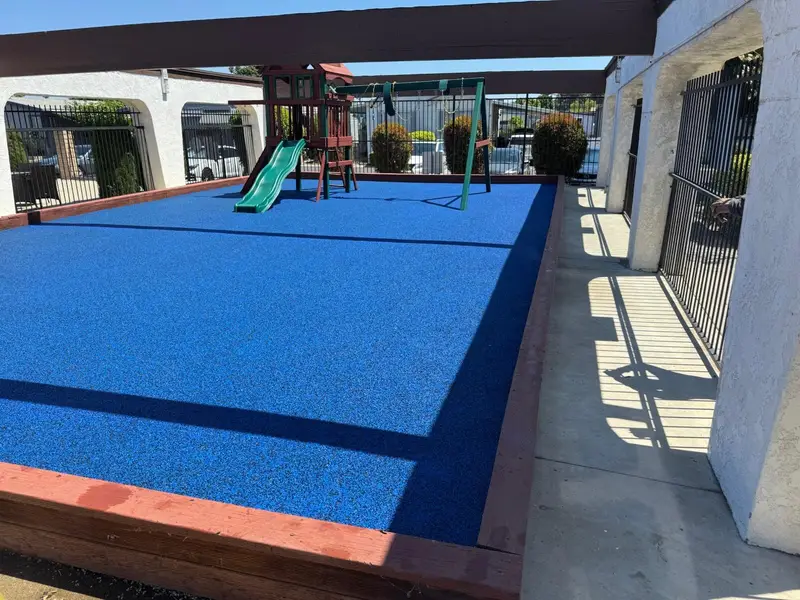
Poured-in-Place Rubber for Preschools, Daycares and Church Playgrounds
Soft, clean, bright play surfaces for young children, planned around fall height, cleaning routines and your calendar.
Quick answer
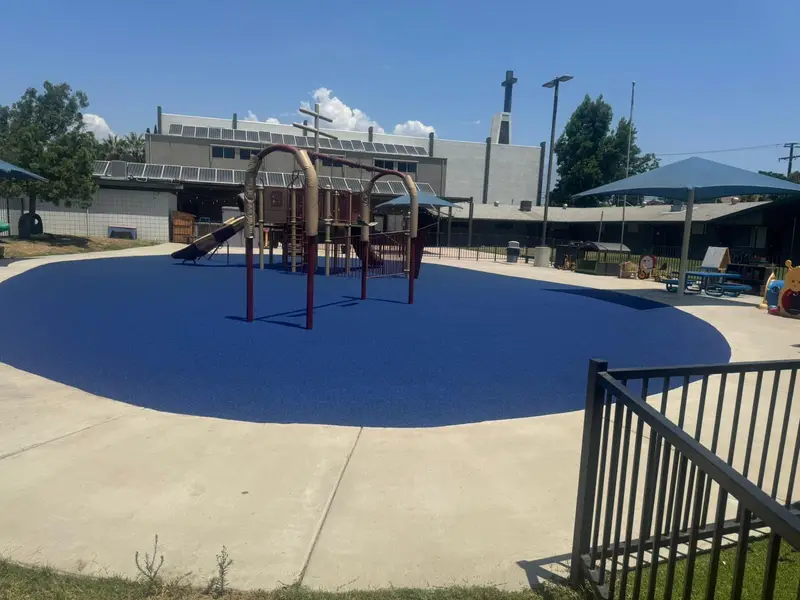
Poured-in-place rubber gives preschools, daycares and church playgrounds a soft, seamless surface that is easy to clean and does not scatter like wood chips. Thickness is matched to the highest equipment, and colors can mark play zones. Turbo Surfacing is licensed, bonded and insured, and schedules work around classes, services and licensing visits.
Key takeaways
- Thickness matches equipment height.
- Rubber is easy to clean and dries fast.
- Work is scheduled around programs.
- Phases fit donor budgets.
Young children fall often, put things in their mouths and run in every direction. Playground surfaces for them need to be soft, clean, easy to supervise and easy to maintain.
This page explains how rubber surfacing is planned for preschools, daycares and churches, and what directors, pastors and parents should know.
Toddler and preschool needs
Toddlers walk unsteadily and fall frequently from low heights. A cushioned surface reduces the impact of those falls and gives caregivers some peace of mind. Rubber is firm enough for strollers and tricycles while still soft underfoot.
We lay out separate zones for toddlers and older preschoolers, with low equipment, clear sightlines and gentle paths.
Fall height and equipment
Each structure has a critical fall height. We confirm it from the manufacturer and size the cushion to match. Impact attenuation is tested under ASTM F1292, and we recommend asking for test information for the proposed build-up.
Many preschool structures are low, so a thinner build-up may be enough, which helps budgets.
Cleaning and hygiene
Young children touch everything. Rubber can be swept, rinsed and wiped clean, and it does not hold on to bark, sand or insects. Staff can wash it with mild soap and water during the week, then rinse it down on weekends.
A care sheet explains which products are safe and which should be avoided.
Drying and rain
Playtime often follows a storm. Rubber dries faster than dirt or chips, and proper slopes prevent puddles. Drains and gentle falls move water to landscape areas, so children can go outside sooner.
Teachers appreciate fewer muddy shoes and fewer wet floors inside.
Colors, shapes and learning games
Color blends make play areas inviting. Inlays can form hopscotch grids, number lines, alphabets, animals and tricycle paths. These graphics turn a surface into a teaching tool and give children a sense of ownership.
We bring samples and mockups for staff and parent committees to approve.
Shade and sun
Sun exposure matters for children and surfaces. Shade sails and trees keep temperatures down, and lighter colors stay cooler. We discuss sun angles during the walk and sketch locations for shade supports.
A quick rinse before play also cools the surface.
Licensing visits and documentation
Early childhood programs have licensing visits and insurance reviews. We supply a plan, product data and installation records to share with inspectors and insurers. Photos before and after help document improvements.
Directors tell us that having paperwork ready makes those visits easier.
Church campuses and community programs
Churches serve toddlers during services, school-age children in weekday programs and neighbors on weekends. A single rubber play area can serve all of them. We coordinate timing around Sunday services, midweek events and special programs.
Volunteers can maintain the surface with a broom and a hose.
Budgets, donors and phasing
Many churches and small centers fund projects through donations and fundraisers. We provide clear scopes and drawings that support appeals, and we can break the work into phases so one zone is finished at a time.
Option pricing for colors, graphics and added areas helps leaders decide what to include.
Scheduling around programs
Work can be done during school breaks, summer sessions, weekends and holidays. We block the area, protect doors and walkways and tell families what to expect. The play area is closed until the rubber has cured.
A written schedule shows which days are likely to work and what weather could change.
Fencing, gates and borders
Fences and gates keep children safe. We work around existing fences, protect gate hardware and finish rubber flush at the edges. Borders keep mulch and soil from washing onto the surface.
Gates are checked for clearance so they can swing freely after the rubber is installed.
Sand, water play and sensory areas
Many programs include sand tables and water play. We design borders to keep sand off the rubber and drains to move water away. Rinsing nearby surfaces regularly prevents buildup.
Sensory gardens and music areas can sit beside the rubber with clear boundaries.
Replacing chips, sand or old tiles
Older play yards often have wood chips, sand or worn tiles. We remove them, correct the base and install a seamless rubber surface. Hidden problems such as roots or soft soil are discussed before moving ahead.
The result looks new and requires less labor each week.
Daily care and inspections
Sweep or blow debris, rinse spills and check for cracks, loose edges and wear. Keep sharp items off the surface, and report problems promptly. Written logs help satisfy insurers and directors.
We can visit for seasonal checks and repairs.
Talking with parents and boards
Parents care about safety, cleanliness and appearance, and boards care about cost and upkeep. We provide one-page summaries, photos of similar projects and plain answers to common questions. A short presentation at a parent night or board meeting helps everyone feel included and informed.
Clear communication also builds support for fundraising and future phases.
Zones, tricycle paths and gathering spots
A good yard has places for running, climbing, quiet play and gathering. Winding rubber paths invite tricycles and wagons, while circles and benches give storytime a home. Separating active and quiet zones reduces collisions and makes supervision simpler.
We sketch these zones before ordering materials, so staff can picture the day-to-day flow.
Allergies, pests and mulch alternatives
Wood chips can hide insects, mold and splinters, and some children react to dust. Rubber does not rot, and it gives pests fewer places to hide. Rinsing the surface regularly keeps pollen and dust down.
Families with sensitivities often appreciate the change, though staff should still follow their program rules.
After installation
When the rubber has cured and the area reopens, walk the yard with staff and explain care routines. We leave contact information and a list of products to avoid. Questions in the first weeks are common, and we answer them promptly.
A follow-up visit can be scheduled after the first season to review wear and make adjustments.
Working with your playground vendor
If you are buying new equipment, schedule the surfacing after posts are set and before slides and decks are attached, when possible. This avoids damage and lets us cut sleeves precisely. We coordinate with installers to agree on heights, footings and who protects what.
Sharing the equipment drawings early saves everyone time.
Staff training and daily routine
Teachers and volunteers rotate often. A one-page routine posted near the supply closet tells them when to sweep, how to clean spills and what to report. We are glad to walk new staff through it during a visit.
Noise and neighbors
Mixing and troweling are quieter than demolition, though trucks and tools make some noise. We start at reasonable hours and tell neighbors about delivery days, so nearby homes and classrooms know what to expect.
Getting an estimate
Our poured-in-place rubber cost guide explains what moves the price. Send photos and rough dimensions through the free estimate form and we respond within 24 hours. Site walks are available the next day or later, depending on availability, and you receive a written scope after the visit.
What to know before you start
Compare the weekday child-care gate route with the weekend congregation route on one drawing. If they enter the same rubber area from different sides, include both transitions in the walkthrough.
Frequently Asked Questions
Sources
Last reviewed:
By Turbo Surfacing Solutions team · Planning updated:
KEEP EXPLORING.
Other Southern California surfacing projects we specialize in — handpicked because they share the same materials, standards, or installation crew as this page.
Related Poured-In-Place Rubber & Resources
Sibling services, cities where we install this, and blog posts that go deeper.
More Poured-In-Place Rubber
- PIP Rubber InstallationProfessional Installation
- PIP Installation ProcessOur Process
- PIP Rubber MaintenanceMaintenance Guide
Cities We Serve
- Poured-In-Place Rubber in Chula Vista
- Poured-In-Place Rubber in San Diego
- Poured-In-Place Rubber in Oceanside
Get a Quote for PIP for Preschools, Daycares & Churches
Get a free, no-obligation estimate for your project. Our team responds within 24 hours.
Request School/Church Quote