- Licensed CA Contractor·
- ADA Compliant Installs·
- Serving All of Southern California·
- Free Estimates·
- Licensed, Bonded & Insured
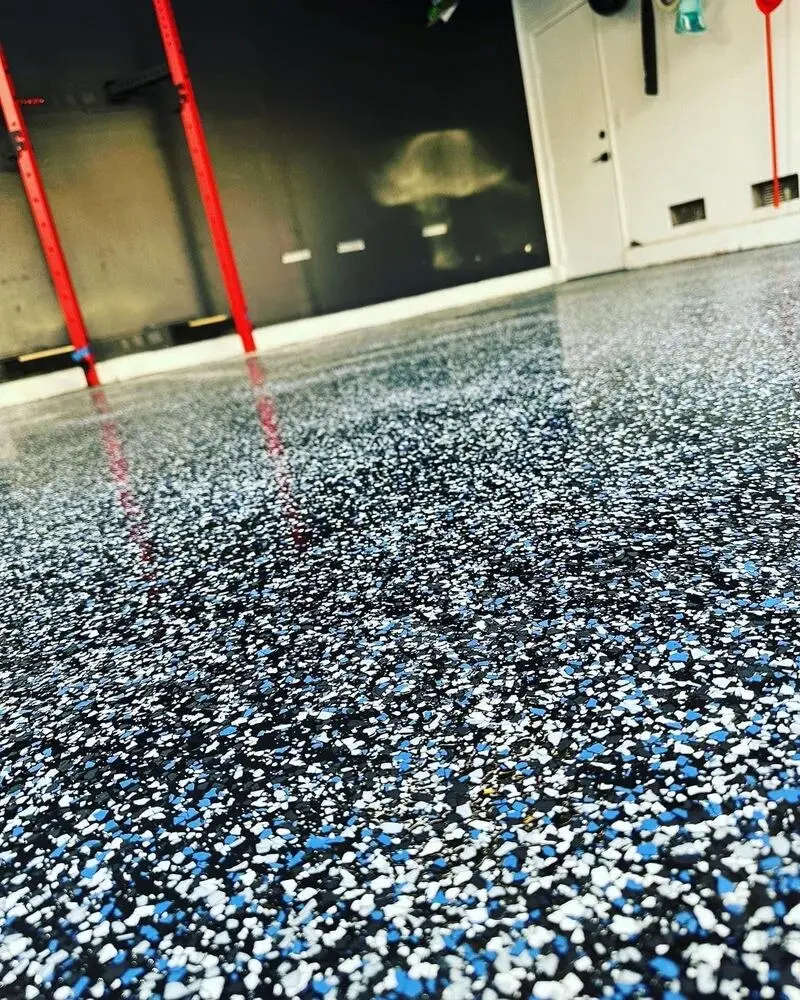
Self-Leveling Concrete for Uneven Floors and Smooth Finishes
A flowing cement based layer that fills low spots and creates flat, smooth floors for coatings and finish flooring.
Quick answer
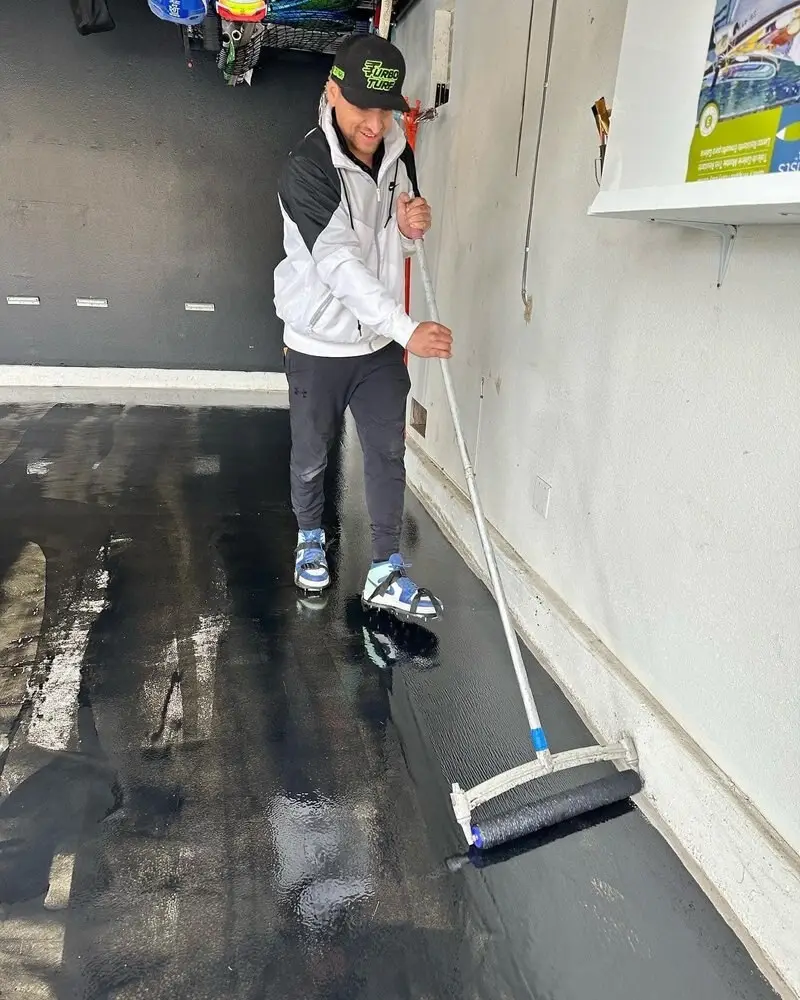
Self-leveling concrete is a flowable cement based material that fills low spots and creates a flat, smooth surface over an existing slab. It prepares floors for coatings, tile, wood or resilient flooring, and can also serve as a finished surface. Turbo Surfacing measures, primes, pours and finishes it. We are licensed, bonded and insured.
Key takeaways
- Self-leveling concrete flattens uneven slabs.
- Prep and priming prevent bubbles and cracks.
- It is not for sloped drainage areas.
- Moisture readings guide flooring timing.
Flooring installers and coating crews both need a flat base. When a slab dips, slopes or has patches and ridges, self-leveling concrete can smooth it out in one pour.
This page explains how it works, where it fits and where other solutions are better.
What self-leveling concrete is
Self-leveling concrete is a cement based mix with additives that make it flow like thick pancake batter. Poured over a primed slab, it seeks its own level and cures hard and smooth.
Underlayment versions sit under other flooring. Topping versions are made to be walked on directly or sealed as a finished floor.
Common uses
Typical uses include preparing for epoxy, tile, wood, vinyl or carpet, smoothing old patched slabs, correcting slopes in garages and creating flat workshops, showrooms and kitchens. It is also used in remodels to match floor heights.
It works well indoors where control of flow and temperature is easy.
Limits
Self-leveling products do not fix structural problems or large slopes by themselves. They have minimum and maximum thicknesses, and thin edges can crack. They also need a stable, clean, primed slab.
Floors that need drainage slope are not good candidates, because the material wants to be flat. We discuss alternatives when slope is required.
Measuring the slab
Before quoting, we check flatness with straightedges, levels or lasers and map high and low spots. High spots are ground down, and low spots are noted for depth.
Measurements tell us how much material is needed and whether one pour will do the job.
Preparation and priming
Dust, oil, adhesive and loose concrete ruin adhesion. We grind or shot blast the slab, vacuum thoroughly and repair cracks. Primer seals pores so air does not bubble up through the pour.
Priming also improves bond, and the primer must dry fully before pouring.
Dams, joints and transitions
Self-leveling material flows, so we dam doorways, drains and edges. Control joints are respected or recreated so the new layer does not crack randomly.
Transitions to adjacent floors are detailed so thin edges are protected.
The pour
Materials are mixed in batches with measured water and pumped or poured quickly. The crew spreads and gently tools the material to remove air and help it level. Timing is tight, so a prepared crew matters.
Temperature, humidity and airflow affect behavior, and we manage them.
Cure and drying times
Most products can be walked on within hours and covered with flooring after a day or more, depending on thickness and moisture limits. Moisture sensitive flooring needs readings before installation.
We give you a schedule showing when each trade can proceed.
Using it as a finished surface
Decorative toppings can be colored, polished, stained or sealed. They give a smooth, seamless look for showrooms, studios and homes.
Care is simple: sealers protect the surface, and occasional resealing keeps it fresh.
Compared with grinding, patching and overlays
Grinding removes high spots. Patching fills small local areas. Overlays add a decorative surface. Self-leveling spans large areas and creates overall flatness.
We choose the method that gets the result you need with the least material and cost.
Care and long term performance
Keep the surface clean and dry, and protect it with a sealer or finish flooring. Avoid dragging heavy equipment across cured self-leveling concrete, and repair chips promptly.
Cracks that appear usually follow joints below. Recognizing the pattern helps prevent surprises.
Garages, shops and showrooms
Many garage and shop floors have worn spots, old patches and uneven control joints. A leveling pour smooths them out before an epoxy or polyaspartic coating, which makes the final finish look cleaner and easier to wash.
In showrooms and studios, a leveled and polished or sealed topping creates a seamless backdrop. Level floors also help carts, lifts and equipment move smoothly.
Mistakes that cause failure
Skipping primer, pouring over dusty or oily concrete, using too much water in the mix or pouring in direct sun and wind all cause cracks, bubbles or poor adhesion. Underestimating the volume leads to cold joints when material runs out mid pour.
We avoid these problems with preparation, measured mixing and a crew sized for the area. A good pour looks simple because the planning was careful.
Moisture and vapor from below
Concrete releases moisture for months, and some slabs push vapor continuously. Moisture sensitive flooring can fail if installed too soon. We test the slab, discuss mitigation options and recommend primers or vapor barriers where needed.
Telling you the readings and what they mean lets you plan flooring dates realistically.
Thickness, edges and feathering
Every product has a minimum and a maximum thickness. Very thin edges can crack, and very thick pours can shrink. We plan the pour so most areas fall within the product range and use primers and edge details to protect feathered areas.
Where a step or threshold changes height, we recommend a physical transition rather than a thin feathered edge.
Retail, healthcare and light commercial interiors
Stores, clinics and offices often renovate floors where old tile or sheet goods once sat. Adhesive residue and ridges show through new flooring, so leveling is a quiet but important step. A flat base gives better seams, cleaner transitions and longer life for the finished floor.
We work in phases around opening hours and keep noise and dust under control. Fast setting materials shorten the wait before flooring crews arrive.
Ramps, transitions and accessibility
Where two floors meet at different heights, self-leveling products can feather a gentle transition. They help carts, wheelchairs and equipment roll smoothly across thresholds.
We design the taper within the product limits and use physical transitions where the change is large. Careful planning keeps edges durable and safe for traffic.
Coordinating with flooring trades
Floor installers, tile setters and coating crews all depend on the base being ready. We coordinate pour dates, moisture readings and handoff walks so each trade starts on a proper surface. Clear written handoffs avoid finger pointing if a problem appears later.
We also share the product data for each material, which helps installers confirm compatibility with their adhesives and coatings.
Mockups and test pours
On large or sensitive jobs we can pour a small test area. It shows flow, finish, set time and how the material behaves in your room's temperature and humidity. Adjustments made on a test pour save time on the real thing.
Test pours are also useful when color or polish is involved, because they let you judge the final look before committing.
Getting an estimate
Our epoxy floor cost guide explains what moves the price. Send photos and rough dimensions through the free estimate form and we respond within 24 hours. Site walks are available the next day or later, depending on availability, and you receive a written scope after the visit.
What to know before you start
Survey fixed equipment feet and door thresholds before defining the leveling area. Mark which elevations are fixed so the pour boundary is not decided solely by the lowest visible spot.
Frequently Asked Questions
Sources
Last reviewed:
By Turbo Surfacing Solutions team · Planning updated:
KEEP EXPLORING.
Other Southern California surfacing projects we specialize in — handpicked because they share the same materials, standards, or installation crew as this page.
Related Epoxy & Concrete Polishing & Resources
Sibling services, cities where we install this, and blog posts that go deeper.
Get a Quote for Self-Leveling Concrete
Get a free, no-obligation estimate for your project. Our team responds within 24 hours.
Get Self-Leveling Quote