- Licensed CA Contractor·
- ADA Compliant Installs·
- Serving All of Southern California·
- Free Estimates·
- Licensed, Bonded & Insured
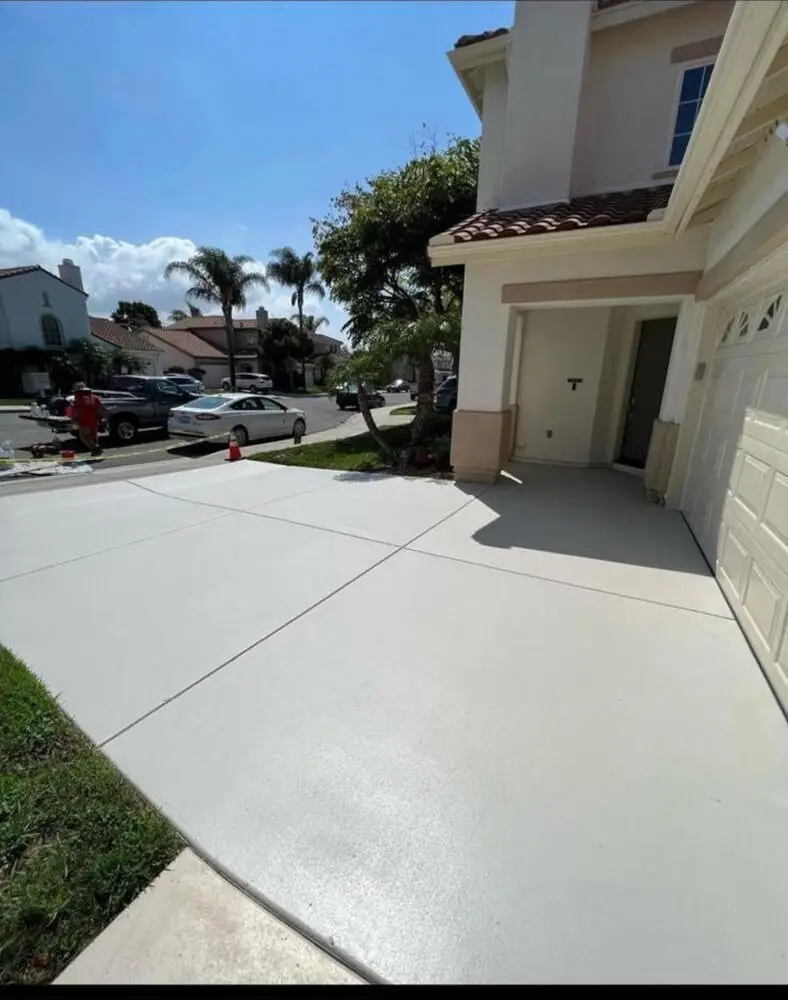
Acid Staining for Concrete Floors, Patios and Walkways
Rich, translucent color that becomes part of the concrete, with a sealer that protects it.
Quick answer
Acid stain is a reactive solution that chemically colors concrete in earthy, variegated tones such as tan, brown, terra cotta and blue green. The color is part of the surface and does not peel, though results vary with each slab. Turbo Surfacing prepares, stains, neutralizes and seals. We are licensed, bonded and insured.
Key takeaways
- Acid stain reacts with concrete for permanent color.
- Results vary by slab and cannot be perfectly predicted.
- Neutralizing and sealing are essential steps.
- Maintenance focuses on the sealer.
Acid staining turns plain gray concrete into something that looks like stone, leather or aged marble. The color is not a paint. It reacts with the concrete itself, which is why no two floors look exactly alike.
This page explains how acid stain works, what to expect from your slab and how the finish is sealed and cared for.
How acid stain works
Acid stain contains mineral salts in a mildly acidic solution. When it contacts the free lime in concrete, it reacts and leaves permanent color deposits. The color shifts from pale to deep as the reaction proceeds and the stain dries.
Because the reaction depends on the concrete itself, results vary with age, finish, cement type and moisture. That variation is what gives acid stained floors their natural, marbled look.
Colors and what to expect
Acid stain comes in a limited palette of earth tones: tans, browns, rusts, terra cotta and blue greens. Colors are translucent rather than solid, so the slab's own character shows through.
Expect variation. Trowel marks, patches, cracks and old coatings may appear as part of the pattern. We show sample boards and, when possible, test a hidden area so you know what to expect before the full floor.
Which slabs are good candidates
Acid stain works best on plain, clean, bare concrete. Slabs with sealers, paint, adhesives or heavy oil stains block the reaction and must be prepared first. Very new concrete may need to cure before staining.
If a slab has been heavily patched or covered with an overlay, color can be uneven. We inspect your slab and tell you honestly whether stain is a good fit.
Surface preparation
Preparation is the key step. We clean the slab, remove coatings and stains by grinding or blasting and repair cracks and holes. Patches may stain differently, so we discuss how much of the repair will be visible.
Masking protects walls, trim and nearby surfaces. A well prepared slab gives a clean, even response to stain.
How we apply and neutralize the stain
Stain is applied with sprayers and brushes in layers. We work the color to build depth, create variation and control the mottled effect. After the reaction, the surface is neutralized and rinsed to remove residue.
Neutralizing matters, because leftover acid can prevent sealers from bonding. We let the slab dry fully before sealing.
Designs, borders and scoring
Saw cut lines, borders, bands and patterns add structure. Scoring can mimic tile, stone or large format pavers. We plan the layout with you and cut lines before staining so the color settles cleanly around them.
Stencils and masking can add logos or decorative motifs. Simple patterns often look best.
Sealers and sheen
The stain is permanent, but a sealer protects the surface and deepens the color. Sealers range from matte to glossy, and from thin acrylic films to harder urethane topcoats.
For indoor floors, we often recommend a harder sealer with a wax or finish on top for easy maintenance. Outdoors, we choose an ultraviolet stable sealer with added texture for traction.
Indoor and outdoor use
Acid stain works in living rooms, restaurants, retail spaces, patios, walkways and entries. Outdoors, sun exposure and weather call for a durable sealer and periodic re sealing.
Indoors, furniture pads and walk off mats extend life. We adjust the plan to your setting.
Acid stain compared with dyes and paint
Water based or solvent based dyes give brighter, more uniform colors but do not react with the concrete. They can fade in strong sun. Paints and epoxy coatings sit on top and can peel.
Acid stain offers lasting, natural variation but a narrower palette. We help you pick based on the look you want and the conditions the floor faces.
Care and maintenance
Sweep or dust mop regularly. Clean with a neutral cleaner and avoid acidic or harsh products. Floor finishes or waxes can be refreshed as needed, and exterior sealers should be renewed when the sheen dulls.
The stain itself does not wear off, so maintenance focuses on the sealer. A simple routine keeps the floor looking rich for years.
Planning before you stain
A good stain job starts with decisions. We talk through color families, how much variation you like and whether you want borders, scoring or a plain field. We also look at lighting, furniture and surrounding finishes so the stain complements them.
Protecting plants, walls and nearby surfaces comes first, because acid is hard on metal, glass and landscaping. We mask and cover carefully, ventilate indoor spaces and control runoff outdoors. Planning these details avoids damage and keeps the schedule smooth.
Cracks, patches and flaws
Stain highlights what is in the concrete. Cracks, saw cuts, trowel marks and patches become part of the design, so we decide with you which flaws to embrace and which to hide.
Hairline cracks often look natural in a stained floor. Larger cracks can be filled, but the filler may take stain differently. We show test samples of filled areas so you can judge before the floor is finished.
Stripping, re sealing and refreshing
Over time, sealer on a heavily used floor wears thin. A tired stained floor often needs only a good cleaning and a fresh coat of sealer to look new again. If wax or finish has built up unevenly, we strip it and start over.
Because the color is in the slab, refreshing a stained floor is far easier than refinishing a painted one. This is one of the main reasons owners choose stain.
Where stain fits in a budget
Acid stain is one of the less expensive ways to add color to existing concrete, because it uses the slab you already have. The main costs are preparation, labor and the sealer, so a clean, sound slab keeps the project affordable.
Heavily damaged slabs, large patches or old coatings add work, and in some cases a different finish such as a dye, overlay or polish makes more sense. We give you honest options before you commit.
Timing, weather and drying
Stain reacts slowly and drying times vary with temperature and humidity. Outdoor jobs avoid rain and extreme heat, and indoor jobs need ventilation while the surface dries before sealing. We build the schedule around drying so sealer is never applied over damp concrete, which would cloud the finish and shorten its life.
We also tell you when furniture, foot traffic and vehicles can return, because sealers need time to cure.
Getting an estimate
Our epoxy floor cost guide explains what moves the price. Send photos and rough dimensions through the free estimate form and we respond within 24 hours. Site walks are available the next day or later, depending on availability, and you receive a written scope after the visit.
What to know before you start
Locate the stain test where it can remain in the completed floor if accepted. Photograph the result before choosing adjacent colors, since an off-site color card is not a sample of this slab.
Frequently Asked Questions
Sources
Last reviewed:
By Turbo Surfacing Solutions team · Planning updated:
KEEP EXPLORING.
Other Southern California surfacing projects we specialize in — handpicked because they share the same materials, standards, or installation crew as this page.
Related Epoxy & Concrete Polishing & Resources
Sibling services, cities where we install this, and blog posts that go deeper.
Get a Quote for Acid Staining
Get a free, no-obligation estimate for your project. Our team responds within 24 hours.
Get Staining Quote