- Licensed CA Contractor·
- ADA Compliant Installs·
- Serving All of Southern California·
- Free Estimates·
- Licensed, Bonded & Insured
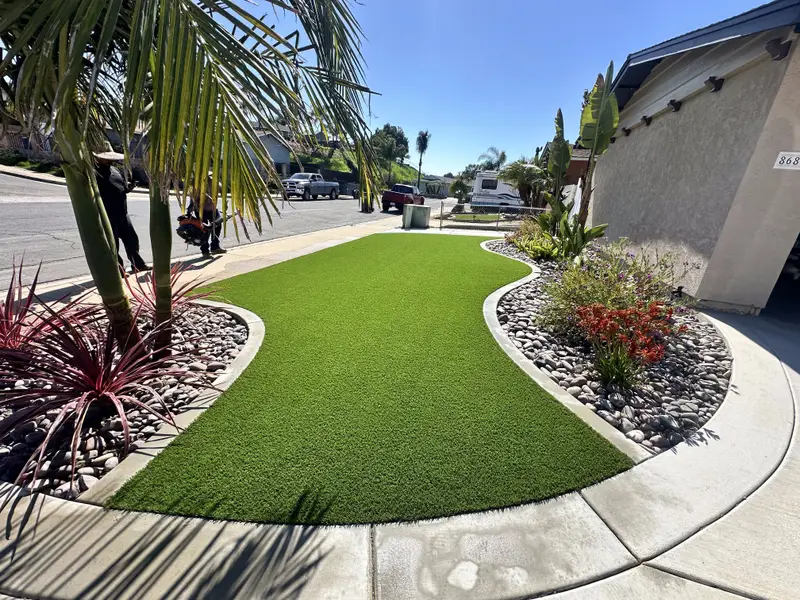
Artificial Grass for Cities, Parks and Municipal Projects
Durable turf for medians, civic spaces, small parks and public works yards, installed with the documentation cities expect.
Quick answer
Municipal artificial grass covers medians, civic plazas, pocket parks, dog areas and city facility grounds with durable turf that uses little water and needs little upkeep. City projects often follow competitive bidding and public works rules. Turbo Surfacing is licensed, bonded and insured, and prepares clear scopes, schedules and records.
Key takeaways
- Turf cuts mowing, watering and exposure near traffic.
- Submittals and records are organized for reviewers.
- Utility locates come before excavation.
- A light maintenance routine fits crew schedules.
Cities manage thousands of small landscape areas, from median strips to library lawns. Many are hard to water, hard to mow safely and expensive to maintain.
This page explains where municipalities use turf, how projects are scoped and bid and how to plan for public use and long term care.
Where cities use turf
Common uses include street medians, traffic islands, library and community center lawns, pocket parks, dog areas, fire station frontage, public works yards and civic plazas. Many of these areas are narrow or oddly shaped, which makes mowing awkward.
We map the sites with city staff and identify where turf delivers the clearest savings in labor, water and safety exposure.
Medians and traffic islands
Medians put maintenance crews close to moving traffic. Replacing high maintenance lawn with turf reduces the number of visits and the time workers spend near vehicles. Base work is tuned to handle runoff from roads, and edges are set against curbs.
We coordinate lane closures, signage and traffic control with the city's requirements and keep work zones compact.
Pocket parks and community spaces
Small parks need durable surfaces that can handle picnics, kids and events. Turf stays green through summer use, drains quickly after rain and avoids muddy patches around benches and play areas.
We design layouts that fit the park plan, including borders, tree wells and paths, and we choose materials that suit the neighborhood.
Dog areas and off leash zones
Dog areas are hard on natural grass. Turf with strong drainage, odor control infill and durable seams handles heavy use. We include rinse access and maintenance guidance in the plan.
Fences, gates and entry mats help keep debris off the surface. We coordinate with city staff on rules, signs and hours.
Competitive bids and public works
Cities typically solicit competitive bids and follow public works rules. We read the bid documents closely, ask clarifying questions in writing and provide a scope that matches the plans. Prevailing wage reporting is handled through the Department of Industrial Relations when it applies.
Our proposals identify base depth, drainage, turf specifications and cleanup, so reviewers can compare bids on equal terms.
Submittals and approvals
City reviewers need product data, samples, installation methods and sometimes mockups. We organize submittals in the order requested and track comments through approval. Having this ready early keeps the schedule on track.
After approval, we deliver materials that match the submitted samples and keep records of lot numbers.
Public safety and neighbor communication
City projects draw attention. We post signage, mark work areas and keep walkways clear. Notices can be provided to neighbors and business owners, and a point of contact is assigned for questions.
We schedule noisy work for suitable hours and keep dust down during excavation.
Utilities, irrigation and underground conditions
Public rights of way hold utilities of every kind. We request locates, review plans and hand dig near known lines. Existing irrigation is capped or reworked so water does not collect under the turf.
When conflicts arise, we photograph and report them immediately, and we propose practical alternatives.
Drainage and stormwater
Municipal sites often connect to storm drains or bioswales. We grade turf areas so water leaves cleanly and does not undermine edges. Permeable systems can allow rainwater to soak through where the soil allows.
Maintenance staff receive guidance on keeping drains clear of debris.
Water savings and community goals
Cities set goals for water use and landscape maintenance. Turf replaces thirsty lawns in areas where plants struggle, while trees and shrubs continue elsewhere. This balance keeps public spaces attractive and reduces irrigation demand.
We help staff document before and after conditions, which supports reporting and community updates.
Heat, shade and comfort
Turf can get warm in direct sun. Light colors, cooling infill and shade trees help. For areas where people sit or children play, we discuss surface temperature and design for comfort.
We can recommend placement of shade structures and tree wells during planning.
Wear, vandalism and repairs
Public sites see wear and occasional damage. Turf can be spot repaired by replacing sections, and remnants are stored for future use. Seams and edges are detailed to resist lifting.
Quick repairs keep spaces looking cared for and safe.
Maintenance plan for public works crews
We provide a clear routine for debris removal, brushing and periodic infill checks. Crews can follow a simple schedule that fits existing routes. Periodic inspections catch issues early.
A defined plan keeps the turf looking good with minimal added workload.
Libraries, fire stations and civic buildings
Civic buildings share one problem: small lawns that look poor unless crews visit often. Turf in front of a library, fire station or city hall stays tidy between visits and handles foot traffic from visitors, kids and dogs. Edges are set tight against walkways so strings and trimmers are never needed.
We coordinate with building staff about entrances, deliveries and emergency access, and we keep apparatus aprons and fire lanes clear while work is underway.
Events, farmers markets and festivals
Plazas and small parks host events that can wreck natural lawns. Turf recovers quickly with brushing and a quick rinse, and it can be repaired in sections if tables or stages leave marks. We recommend protective mats under heavy loads and tell staff how to set up vendors to reduce wear.
For recurring events, we plan the layout with city staff so wear is spread across the space instead of concentrated in one path.
Budgeting and phasing across fiscal years
Cities rarely fund everything at once. We help staff rank sites by labor and water savings, then split the work across budgets. Starting with the highest cost areas shows results early and builds support for the next phase.
Clear scopes, quantities and photos for each site let finance and council members review the plan without guesswork.
Protecting trees and roots
City sites include mature trees, and their roots matter. We hand dig near trunks, avoid cutting major roots and use breathable base layers near trees. Turf edges are set back from trunks, and tree wells are shaped so water and air still reach the roots.
If an arborist is involved, we follow their guidance and coordinate on timing.
Small sport areas and walking loops
Some cities add bocce courts, putting areas or short walking loops to parks. Turf gives these uses a clean, even surface without the mud and bare spots that come from natural grass. Layouts, lines and borders are planned with recreation staff, and base depth is matched to the activity.
Seating, shade and water fountains nearby make the space more inviting and spread use across the park.
Getting an estimate
Our artificial grass cost guide explains what moves the price. Send photos and rough dimensions through the free estimate form and we respond within 24 hours. Site walks are available the next day or later, depending on availability, and you receive a written scope after the visit.
What to know before you start
Put public-event fixture locations on the municipal turf plan. Ask how barriers and temporary seating will be fixed or lifted before event crews inherit the completed lawn.
Frequently Asked Questions
Sources
- California Contractors State License Board license lookup
- California Department of Industrial Relations public works
Last reviewed:
By Turbo Surfacing Solutions team · Planning updated:
KEEP EXPLORING.
Other Southern California surfacing projects we specialize in — handpicked because they share the same materials, standards, or installation crew as this page.
Related Artificial Grass & Resources
Sibling services, cities where we install this, and blog posts that go deeper.
More Artificial Grass
- Artificial Grass InstallationProfessional Installation
- Turf Installation ProcessOur Process
- Artificial Grass MaintenanceMaintenance Guide
Get a Quote for Artificial Grass for Cities & Municipalities
Get a free, no-obligation estimate for your project. Our team responds within 24 hours.
Request Municipal Quote