- Licensed CA Contractor·
- ADA Compliant Installs·
- Serving All of Southern California·
- Free Estimates·
- Licensed, Bonded & Insured
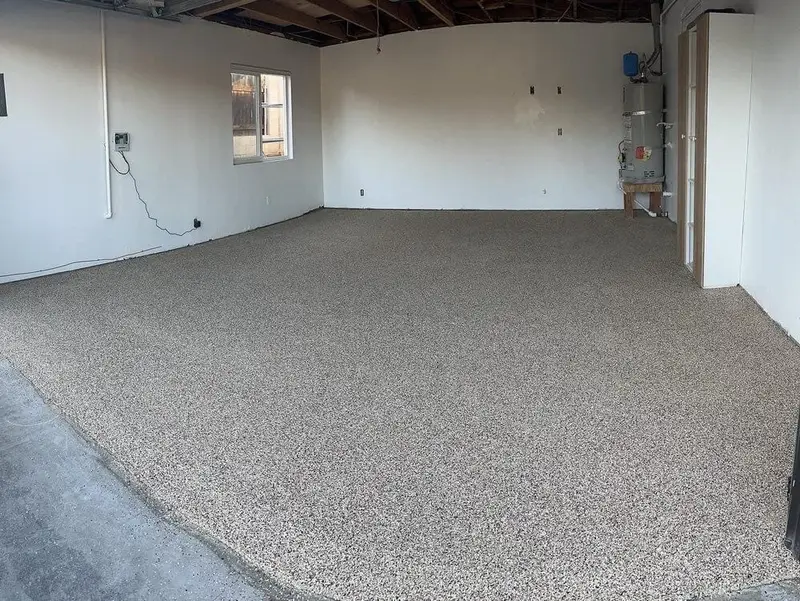
Basement Floor Coatings and Moisture Control for Southern California Homes
Moisture testing, repair and coating systems for basements, lower levels and below grade rooms.
Quick answer
Turbo Surfacing coats basement and below grade concrete floors only after checking moisture, because trapped vapor is the main cause of failure. We test, repair cracks, grind and apply a system suited to the slab. We tell you honestly when drainage or dampness has to be fixed first. We are licensed, bonded and insured.
Key takeaways
- Moisture testing comes before any basement coating.
- A coating cannot fix active leaks or poor drainage.
- Preparation removes old adhesives, paint and sealers.
- The finish should fit how you use the room.
Basement floors are different from garage floors. They sit below grade, often with no moisture barrier under the slab, and they may stay damp in winter and cool in summer. A coating that looks fine in a garage can blister in a basement within months.
This page explains how we evaluate a below grade slab, what we do about moisture and which finishes tend to work in lower level spaces.
Why moisture is the central question
Concrete is porous. Ground water and humidity move through a basement slab as vapor, and a coating that seals the surface can trap that vapor beneath it. The result is blistering, peeling or a cloudy film.
We start by looking for signs of moisture such as efflorescence, damp patches, staining and a musty smell, and then test the slab. If readings are high, we explain the options: a moisture mitigating primer, drying time, drainage improvements or a different finish. We would rather delay a coating than install one that fails.
When the problem is water, not the floor
Sometimes a damp basement slab is a symptom of a bigger issue, such as poor grading, clogged gutters or a downspout discharging next to the foundation. A coating cannot fix standing groundwater or active leaks.
If we see signs of active water entry, we tell you before recommending a finish. We may suggest that you address grading, drainage or a plumbing leak first, and then come back for the floor. This is part of being honest about what a coating can and cannot do.
Preparing a below grade slab
Basement slabs often have old paint, sealers, adhesives from removed carpet or tile, and dust. All of these block bonding. We remove them by grinding or mechanical scarifying and then vacuum thoroughly.
Cracks and holes are repaired with flexible or rigid materials depending on movement. Floor drains, sumps and wall to floor joints get special attention so the coating works with the drainage in the room instead of sealing over it.
Walls, joints and where the floor meets the foundation
The joint where a basement floor meets the wall is a common place for water to enter. Cove joints, wall cracks and gaps around pipes all deserve attention. We seal gaps that are suitable for sealing, and we note any that point to a larger issue.
If you want a finished look, a coated base along the walls keeps water from creeping behind trim and makes cleaning easier. Tell us if the basement will later be finished with framing, drywall or carpet, because the order of work matters.
Planning for later remodels
Many basement floors are coated once and then built over later. If you plan to add walls, flooring or a home theater, tell us now. The coating needs to suit the future use, and some finishes accept underlayment or adhesive better than others.
If you are not sure what you will do, a durable, easy to maintain floor is a good default. We also explain what to avoid, such as placing rubber backed mats on a coating that has not fully cured, which can cause discoloration.
Coating and finish choices
- Moisture mitigating primer with epoxy. A common choice for slabs with moderate vapor, creating a barrier before the main coat.
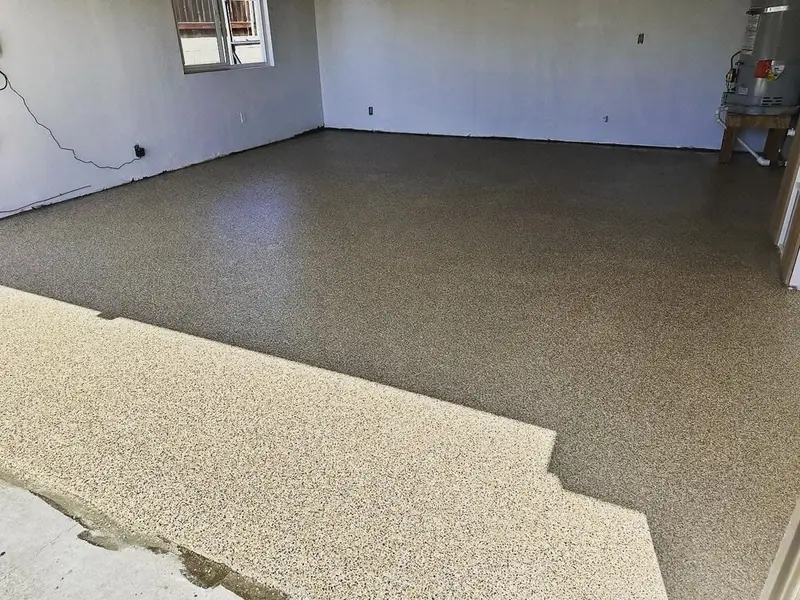
- Epoxy with flakes or quartz. A durable, easy to clean floor for workshops, gyms and laundry rooms.
- Polished or sealed concrete. For dry basements where you want a natural look, a densifier and sealer can work.
- Water based or breathable sealers. Some finishes allow vapor to pass, which can suit slabs that cannot be fully dried.
The right answer depends on your test results, not on a catalog. We explain why we recommend one over the others.
Floor drains, sumps and laundry areas
Many basements include floor drains, sump pits, water heaters and laundry hookups. Each one creates a detail to plan for. We coat toward the drain without blocking it, keep sump covers accessible and protect appliances from overspray and dust.
If a drain backs up or a sump runs frequently, we want to know before choosing a finish. Frequent water changes the equation, and a breathable or water tolerant system may be a better choice than a fully sealed film. We explain the reasoning so you can decide with full information.
Humidity, dehumidifiers and long term performance
Even a sound floor can struggle in a damp room. Running a dehumidifier, keeping gutters clear and venting dryers outside all reduce the load on the slab. A basement that stays dry makes any floor system last longer.
After the work, we suggest watching for signs of change such as new efflorescence, musty smells or damp corners. Small changes caught early are much easier to address than a failed coating. Tell us if you notice anything, and we will help you work out whether it is the floor or the building.
Fitting the finish to how you use the space
A basement can be a playroom, a home gym, a workshop or storage. Each use calls for different traction, impact resistance and comfort. A gym floor may need a mat over the coating, a workshop needs chemical resistance and a playroom may need warmth and softness.
Because basements are cool, we also talk about cure times, which are slower at lower temperatures. We plan the schedule so that coats cure properly before the next step.
Comfort, sound and temperature
Concrete is hard and cool underfoot. A coating does not change that, but it does make the floor easier to clean and brighter. If you want more comfort, area rugs, interlocking mats or a separate flooring layer can go over a fully cured coating.
Coated floors can also sound louder than bare concrete because they reflect noise. In a playroom or home theater, rugs and furniture help. Tell us about comfort goals at the site walk, and we will suggest finishes and add-ons that work together instead of fighting each other.
Cleaning and care for a basement floor
Basement floors are easy to maintain when you build a routine. Sweep or dust mop regularly, wipe spills and wash with a mild cleaner. Avoid strong solvents and rough pads, and use furniture glides under heavy items so they do not scratch the surface.
If you notice chips, lifting edges or damp patches, tell us early. Small repairs are easier than redoing a section, and early reports help us understand whether the cause is the coating or the building.
Ventilation, fumes and safety
Coatings give off vapors while they cure, and basements have limited air movement. We use ventilation, fans and, where needed, low odor products to keep the work area safe, and we keep you informed about when it is safe to re-enter and use the space.
Pets and children should stay out during the work. Tell us about any furnaces, water heaters or other equipment so we can protect them and plan access.
Getting an estimate
Our epoxy floor cost guide explains what moves the price. Send photos and rough dimensions through the free estimate form and we respond within 24 hours. Site walks are available the next day or later, depending on availability, and you receive a written scope after the visit.
What to know before you start
Locate the stored items that conceal wall-to-floor junctions before the basement review. Leave those junctions accessible for inspection rather than planning the coating from the visible center of the room alone.
Frequently Asked Questions
Sources
Last reviewed:
By Turbo Surfacing Solutions team · Planning updated:
KEEP EXPLORING.
Other Southern California surfacing projects we specialize in — handpicked because they share the same materials, standards, or installation crew as this page.
Related Epoxy & Concrete Polishing & Resources
Sibling services, cities where we install this, and blog posts that go deeper.
Get a Quote for Basement Flooring
Get a free, no-obligation estimate for your project. Our team responds within 24 hours.
Get Basement Quote