- Licensed CA Contractor·
- ADA Compliant Installs·
- Serving All of Southern California·
- Free Estimates·
- Licensed, Bonded & Insured
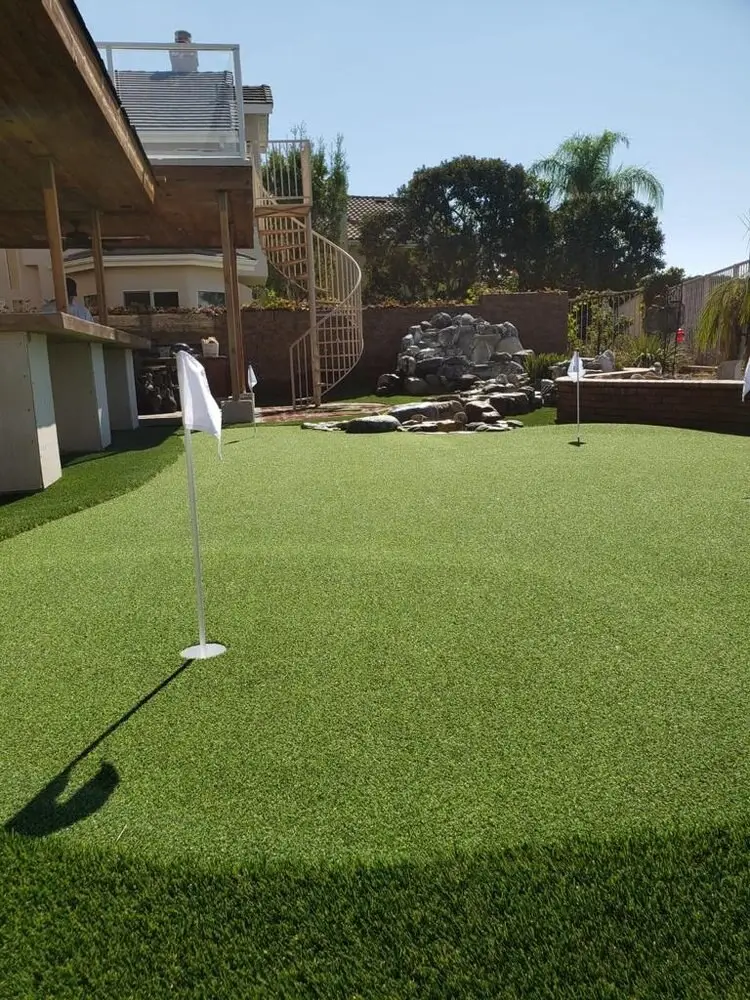
Artificial Grass Bocce Ball Courts for Homes, Clubs and Parks
A flat, fast, low-maintenance court with true ball roll, durable borders and clean drainage.
Quick answer
A bocce ball court built with artificial grass uses a compacted rock base, a smooth fine-pile turf, firm side boards and good drainage to deliver a true, fast surface. It needs far less care than crushed shell or natural grass. Turbo Surfacing is licensed, bonded and insured, and builds backyard, club and park courts.
Key takeaways
- Flat base and good drainage keep rolls true.
- Short dense turf plays fastest.
- Firm boards hold up to constant contact.
- Weekly brushing keeps the surface consistent.
Bocce is simple, but a good court is not. Balls need to roll straight, the surface must stay level, and the boards must hold up to constant contact.
This page explains how artificial grass bocce courts are built, what size to plan for and how to care for the surface.
Court size and layout
Full size courts are long and narrow, with firm side boards and end walls. Backyard courts are often shortened to fit the space, with the same width and board height. We measure your yard and propose a size that keeps play enjoyable.
Layout drawings include board position, seating areas, lighting and access paths.
Base and grading
A bocce court needs a flat, firm base. We excavate, compact crushed rock in layers and screed a smooth surface with a slight slope or crown for drainage. Laser leveling helps keep tolerances tight.
A flat base is the difference between a lively court and one that sends balls off line.
Turf selection
Short, dense turf with a tightly woven backing gives a smooth roll. Sand or fine infill adds weight and speed control. We test samples with actual bocce balls so you can see how they roll before choosing.
Color choices include classic green and blended tones. Slightly lighter colors reduce heat in direct sun.
Side boards and end walls
Boards contain the ball and define the court. Options include pressure treated wood, composite, concrete and stone. Each has a different look and maintenance profile. Edges must be smooth and firmly anchored.
We build boards to a consistent height and use corner details that avoid sharp edges.
Drainage
Water must drain through the turf and base or out the sides. We design the slope, add drains where needed and keep boards from trapping water. A court that drains well dries quickly after rain.
Neighboring runoff and sprinklers are also redirected away from the court.
Seams and surface finish
Full width turf rolls reduce seams. Where seams are needed, they are placed away from the main roll line and carefully joined. Fibers are brushed and aligned so the surface rolls evenly.
We test roll with a ball after installation and adjust where needed.
Lighting and evening play
Evening bocce is a social tradition. Low glare lighting, string lights or path lights make the court usable after dark. We run conduit before the turf goes down and place fixtures so shadows do not distort play.
Adding power outlets for speakers and heaters is easy during construction.
Seating, shade and social areas
Benches, shade sails, tables and fire pits turn a court into a gathering place. We design the surroundings with walkable pads, drainage and clear sight lines.
Planting and screens soften the edges and give the court a finished look.
Clubs, parks and senior communities
Community courts need stronger boards, wider paths and more frequent maintenance. Turf holds up to many players a day and is easy to keep clean. Accessible paths and seating make the court welcoming for all ages.
We coordinate with recreation staff on layout, hours and upkeep plans.
Care and maintenance
Brush the surface weekly, remove leaves and debris and rinse as needed. Check board anchors and corners each season. Add small amounts of infill if the turf feels thin. Keep sharp objects and heavy furniture off the court.
A little attention keeps the surface true for years.
Compared with crushed shell and natural grass
Crushed shell courts need frequent raking, wetting and replenishing. Natural grass requires mowing and watering and is slow when wet. Artificial turf offers consistent speed, fewer maintenance tasks and quick drying.
Traditionalists may miss the sound of shell, but many owners find the trade-off worthwhile.
Rules and play considerations
Court speed, board height and surface texture affect how the game plays. Leagues may have preferences about dimensions and materials. We ask about your play style and adjust the plan.
For social play, comfort and appearance often matter most.
Why bocce suits turf
Bocce is a patient game. Players study the roll, adjust their throw and chat between turns. A consistent surface rewards skill, and artificial grass provides that consistency season after season. The ball does not pick up moisture or leave divots, and boards stay clean.
For social courts, the playing surface becomes a reliable focal point for gatherings.
Evening courts and weather
Rain, dew and sprinklers can turn a court slick. Perforated backing and a sloped base clear water quickly, and we recommend turning sprinklers away from the court. In winter, brush leaves and mist away so the surface plays true.
Cool nights make bocce pleasant, and a lit court extends the season.
Installation steps and timeline
Typical steps are layout, excavation, base placement, board construction, turf placement, seam joining and infill. A backyard court takes a few days to a week, depending on boards and lighting. Clubs and parks take longer.
We provide a written schedule and walk the finished court with you, rolling balls to test the surface.
Families, kids and mixed groups
Bocce is easy for children and seniors. Turf keeps the surface safe for kids who sit or run alongside, and rounded board edges avoid bumps. Soft landing areas near seating add comfort.
Keep pets off the court during play, and rinse the surface if they use it.
Sunken, raised and custom boards
Some owners prefer boards set below grade, giving a clean look from the patio. Others want raised boards for easy ball containment. Each choice affects drainage and cost. Custom shapes, colors and finishes personalize the court.
We sketch the options and discuss tradeoffs before building.
Planning a budget and phases
A basic backyard court costs less than a full club court. Boards, lighting, seating and landscaping drive most of the difference. Many owners build the court first and add shade, lights and fire pits in later phases.
We write the scope in phases so the base, drainage and wiring are ready for future additions and nothing needs to be dug up again.
Dealing with leaves, pets and stains
Leaves, flower petals and pet hair collect on any outdoor surface. A leaf blower clears them quickly, and a brush lifts fibers back up. Stains from drinks or sunscreen wash out with mild soap and water, and spills should be wiped before they dry.
If a pet visits the court, rinse the area and brush the turf. Keep the surface free of sharp objects, which can snag fibers.
Getting an estimate
Our artificial grass cost guide explains what moves the price. Send photos and rough dimensions through the free estimate form and we respond within 24 hours. Site walks are available the next day or later, depending on availability, and you receive a written scope after the visit.
What to know before you start
Approve the court-end transition with the ball storage and retrieval route in place. A tidy playing strip alone does not show how staff will move equipment on and off it.
Frequently Asked Questions
Sources
Last reviewed:
By Turbo Surfacing Solutions team · Planning updated:
KEEP EXPLORING.
Other Southern California surfacing projects we specialize in — handpicked because they share the same materials, standards, or installation crew as this page.
Related Artificial Grass & Resources
Sibling services, cities where we install this, and blog posts that go deeper.
More Artificial Grass
- Artificial Grass InstallationProfessional Installation
- Turf Installation ProcessOur Process
- Artificial Grass MaintenanceMaintenance Guide
Get a Quote for Artificial Grass Bocce Ball Courts
Get a free, no-obligation estimate for your project. Our team responds within 24 hours.
Request Court Quote